New: Now, Mapped. 60 hard everyday moments, one next step each. See inside
Sale!

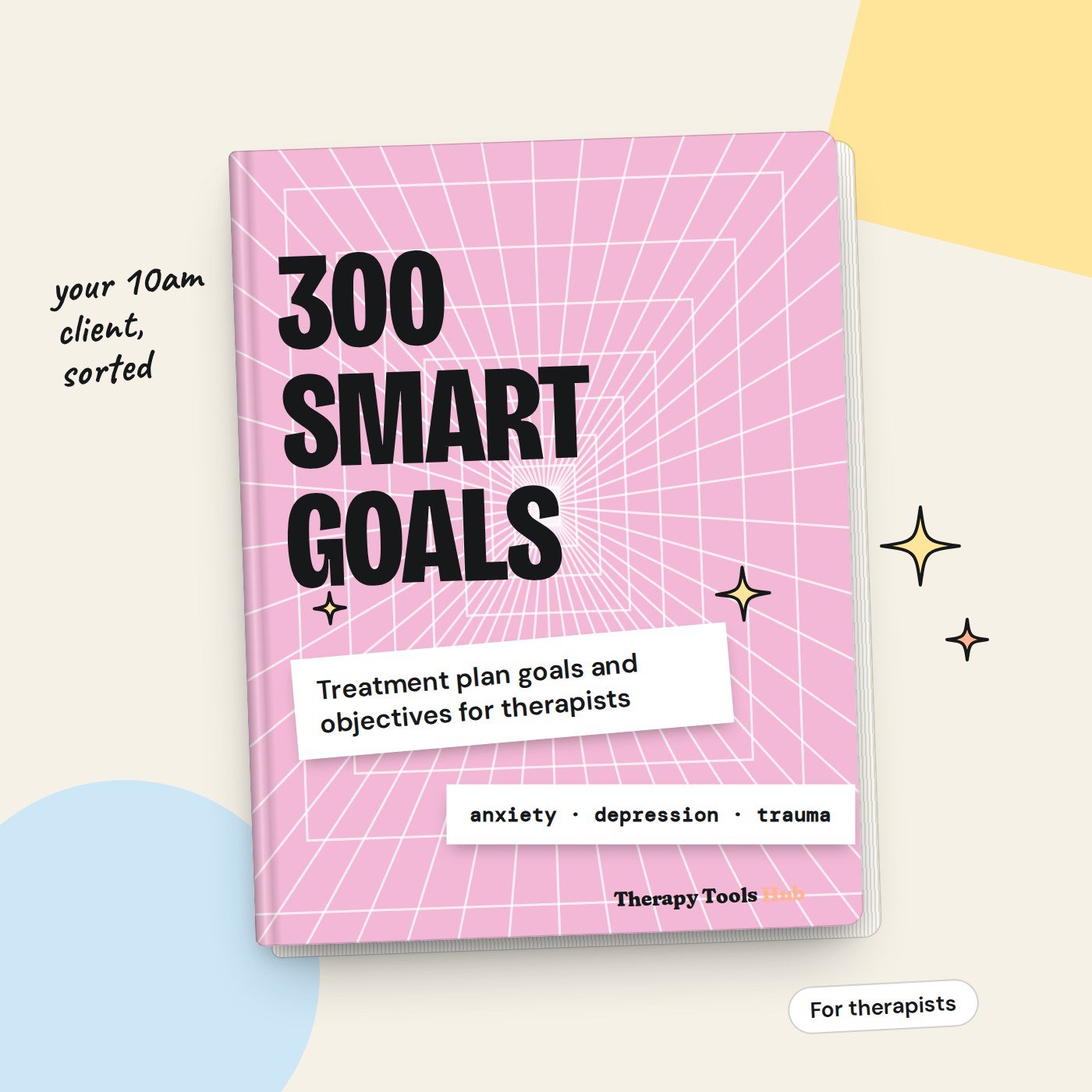
300 SMART Treatment Plan Goals and Objectives for Therapy

The treatment plan is due and the goal box is empty. These 300 pre-written SMART goals give you treatment plan goals to adapt in minutes, with therapy interventions for depression and anger management. For counsellors, therapists, psychologists and school counsellors.

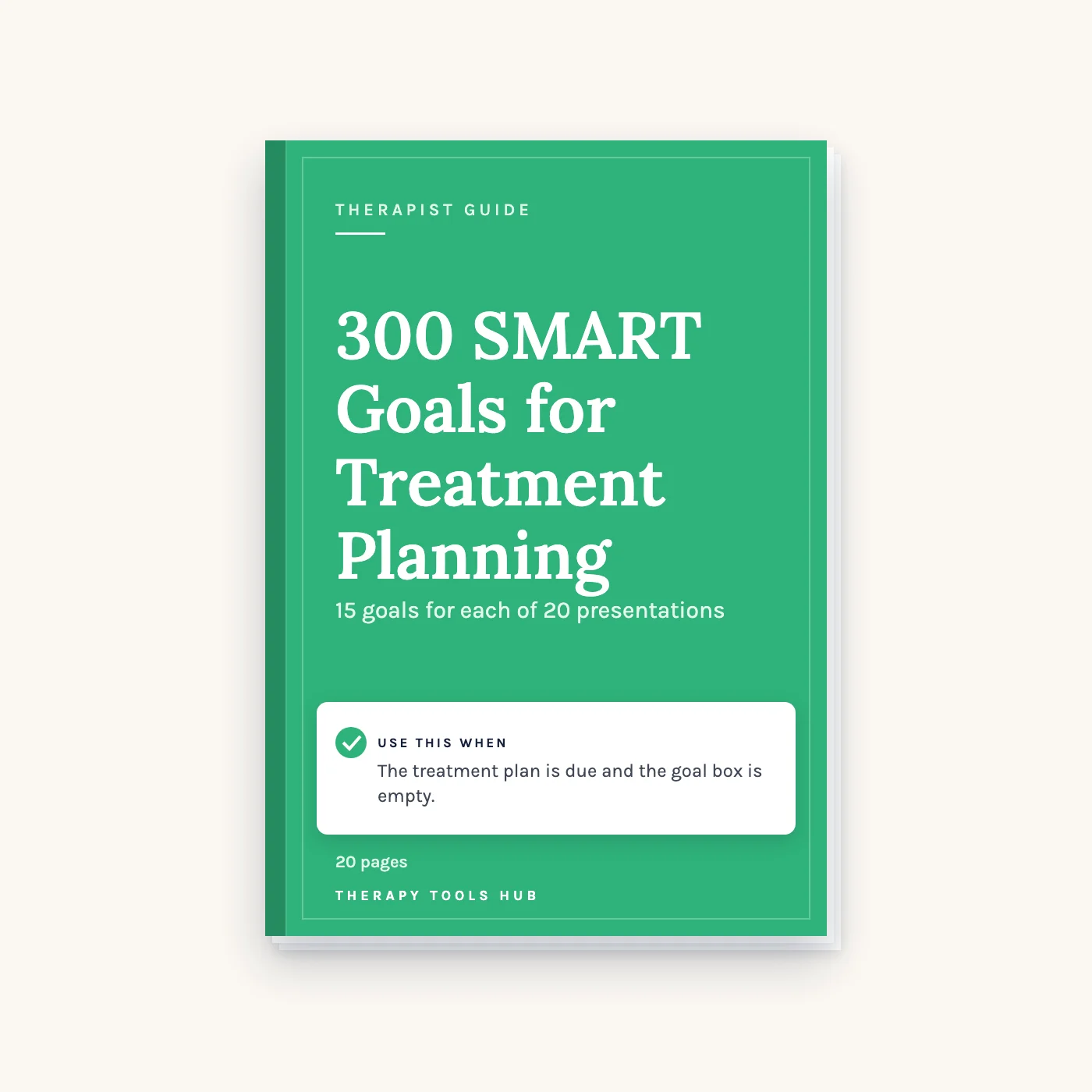
Use this when

The treatment plan is due and the goal box is empty.

Original price was: £15.00.Current price is: £6.50.

About this download

Three hundred goals which pass review

The treatment plan is due and 'client will feel better' will not get past your supervisor. You need a goal with a number, a behaviour and a date.

This 20-page guide gives you 300 SMART goals, 15 for each of 20 presentations. Pick the closest one, replace the numbers and dates with your client's own and agree the wording together in session. Each goal is written in the client-will form, so it drops straight into a plan.

Inside this guide

  • Anxiety, depression, ADHD and PTSD
  • Mood disorders and emotional regulation
  • Interpersonal skills, communication skills and relationship skills
  • Stress management and anger management
  • Self-esteem and self-awareness
  • Goal setting, organisation and sleep hygiene
  • Boundaries and assertiveness
  • Coping mechanisms and social support

SMART goals for therapy, written in the client-will form

Your client says the aim is to “stop feeling so anxious”. It is an honest goal and an impossible one to measure. A SMART goal turns it into something you both check at review: the client will identify three specific triggers for anxiety. Your client knows what to do this week, and you know what to ask about next session.

SMART stands for specific, measurable, achievable, relevant and time-bound. Goals written this way give supervisors and funders the evidence they look for. They give your client a clear task between sessions as well.

Who needs ready-made treatment plan goals

  • Counsellors writing treatment plans for EAP, agency or insurance work
  • Trainees who want examples before their first plan goes to a supervisor
  • Private practice therapists reviewing goals with long-term clients
  • Clinicians working with anxiety, depression, anger or poor sleep

How to adapt a goal for your client

Find the presentation closest to your client’s. The guide covers anxiety, depression, ADHD, PTSD, boundaries, sleep hygiene and 14 more. Read the 15 goals under it and pick the one your client recognises. Replace the numbers and dates with your client’s own, then agree the wording in session so the goal belongs to them.

Add the goal to your plan and refer to it in each progress note. The therapy interventions and progress note examples show how to link an intervention back to a written goal.

Questions about the SMART goals guide

What are examples of treatment plan goals for anxiety?

The anxiety section starts with a goal for the client to identify three specific triggers for anxiety. Fourteen more anxiety goals follow it, each in the same client-will form.

Does it include treatment plan goals for depression?

Yes. The depression section opens with a goal to identify three enjoyable activities and schedule them weekly. It holds 15 goals, like every other section.

What format is it?

A 20-page PDF. Print it at home or fill it in on screen. It downloads straight after payment.

Are the goals suitable for use with clients?

Yes. The guide is written or reviewed by a BACP registered therapist for use in sessions and for self-help at home.

PDF, 20 pages. Print or keep on screen. Instant download after payment. One purchase covers your own practice.

These materials support your clinical judgement. They do not replace training, supervision or the record-keeping rules of your own professional body.
See the pages before you buy

Real pages from the file you receive. Tap a card for what is on them.

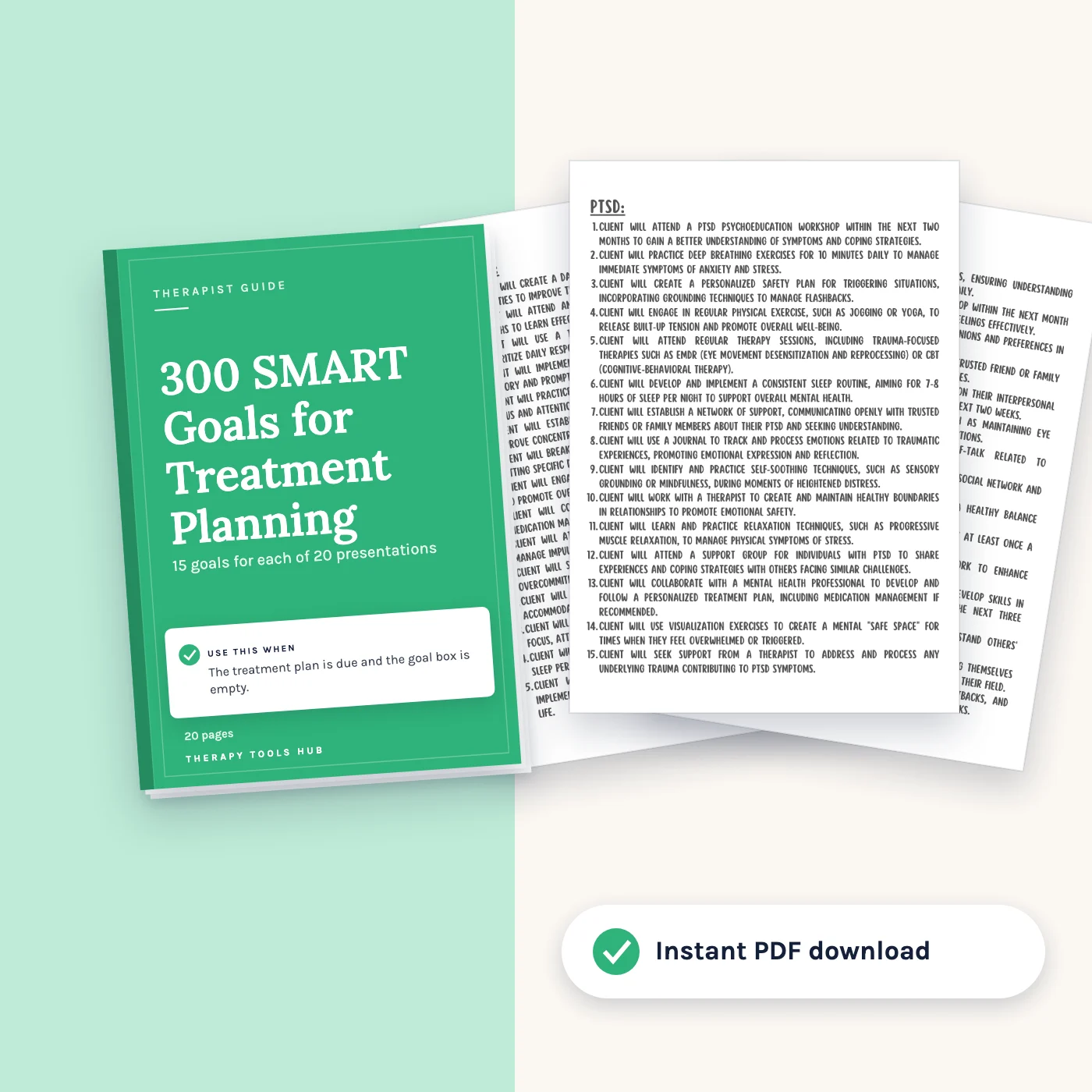
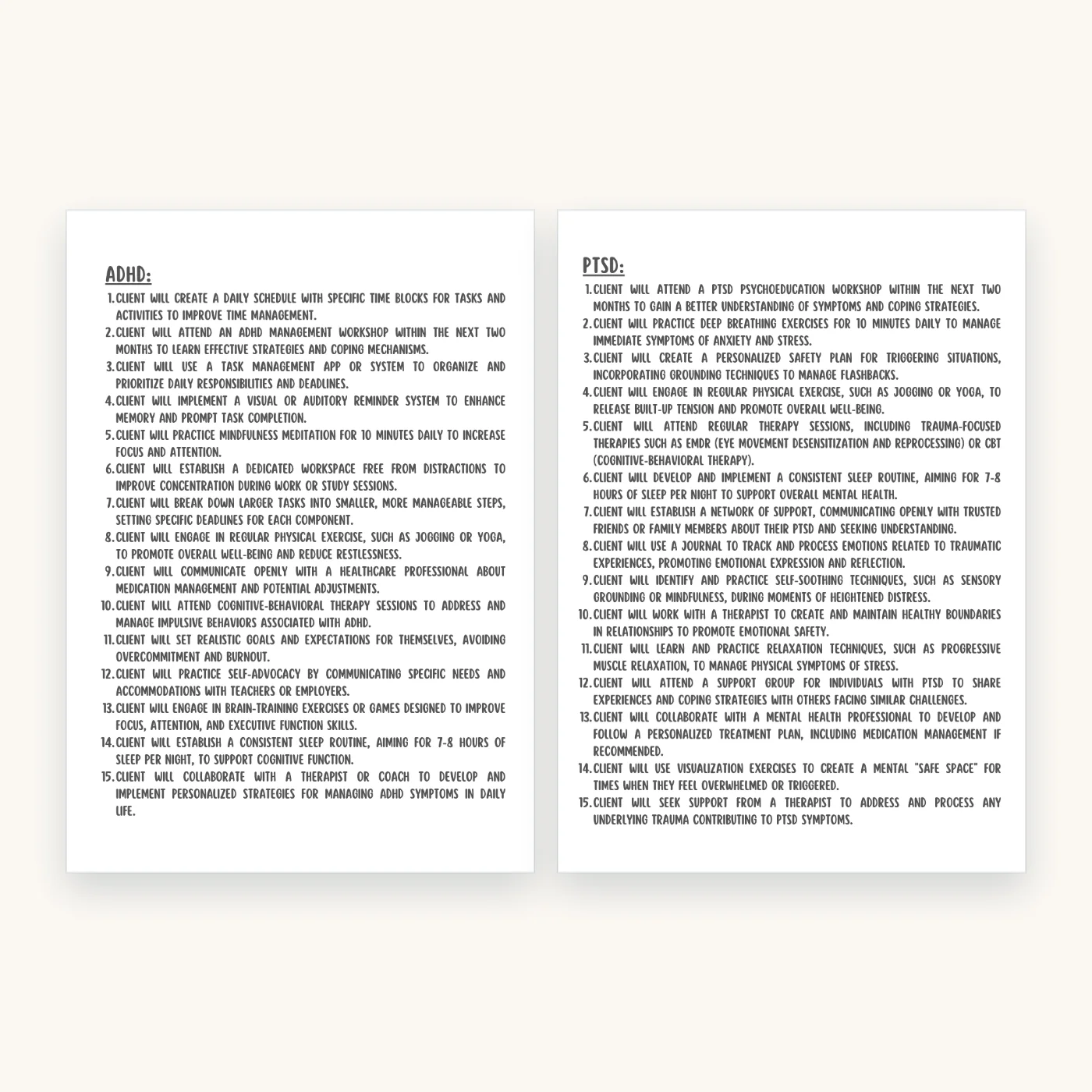
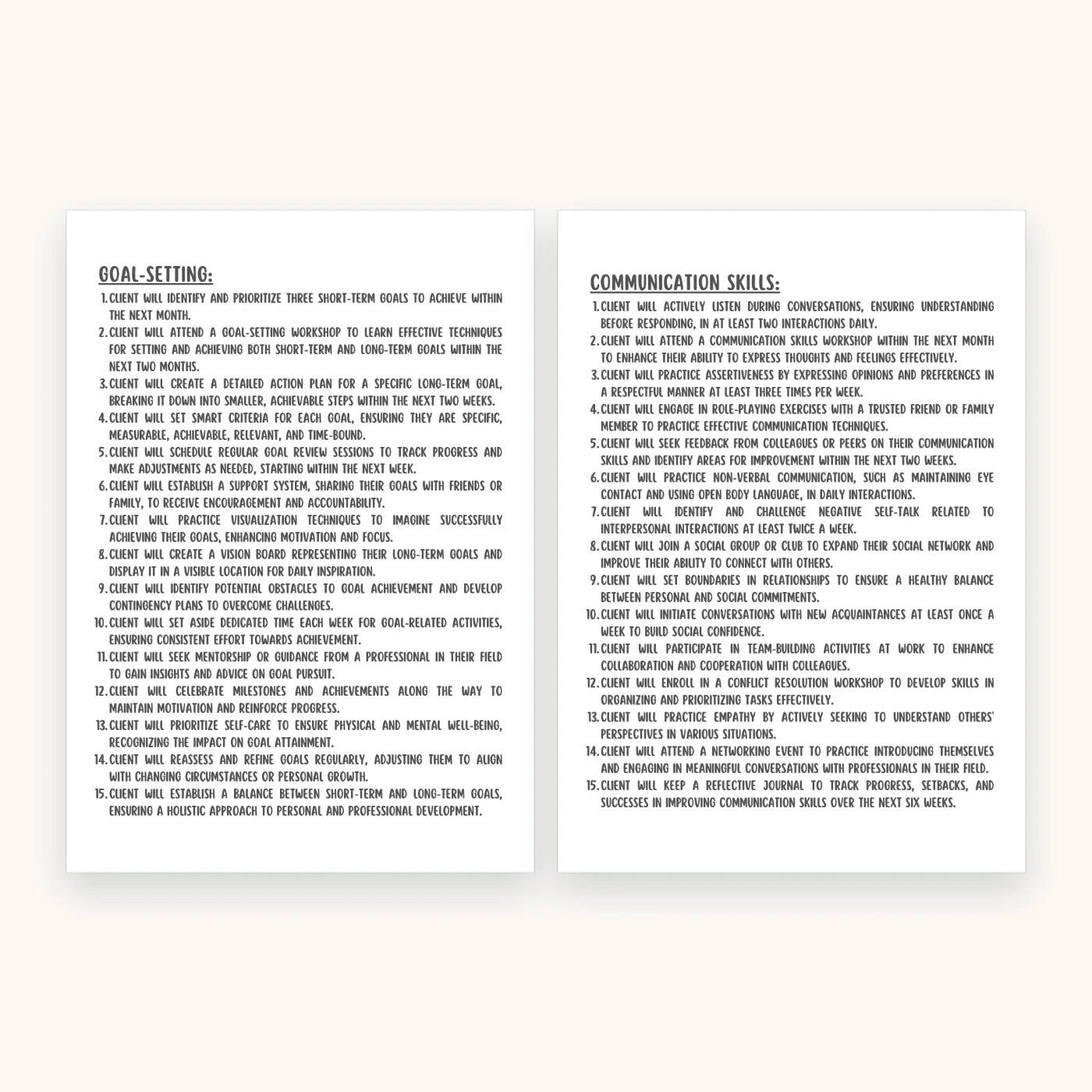
300 SMART Goals for Treatment Planning, inside pages 3 and 4

Pages 3 and 4

Tap to see what is on them

Tap to flip

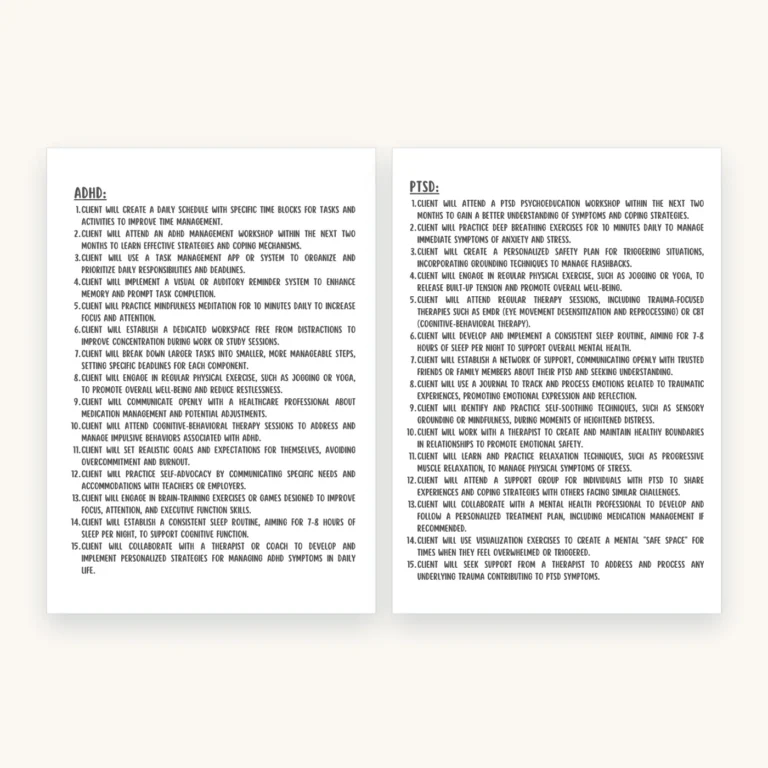
Pages 3 and 4

Page 3: ADHD: 1. CLIENT WILL CREATE A DAILY SCHEDULE WITH SPECIFIC TIME BLOCKS. Page 4: PTSD: 1. CLIENT WILL ATTEND A.

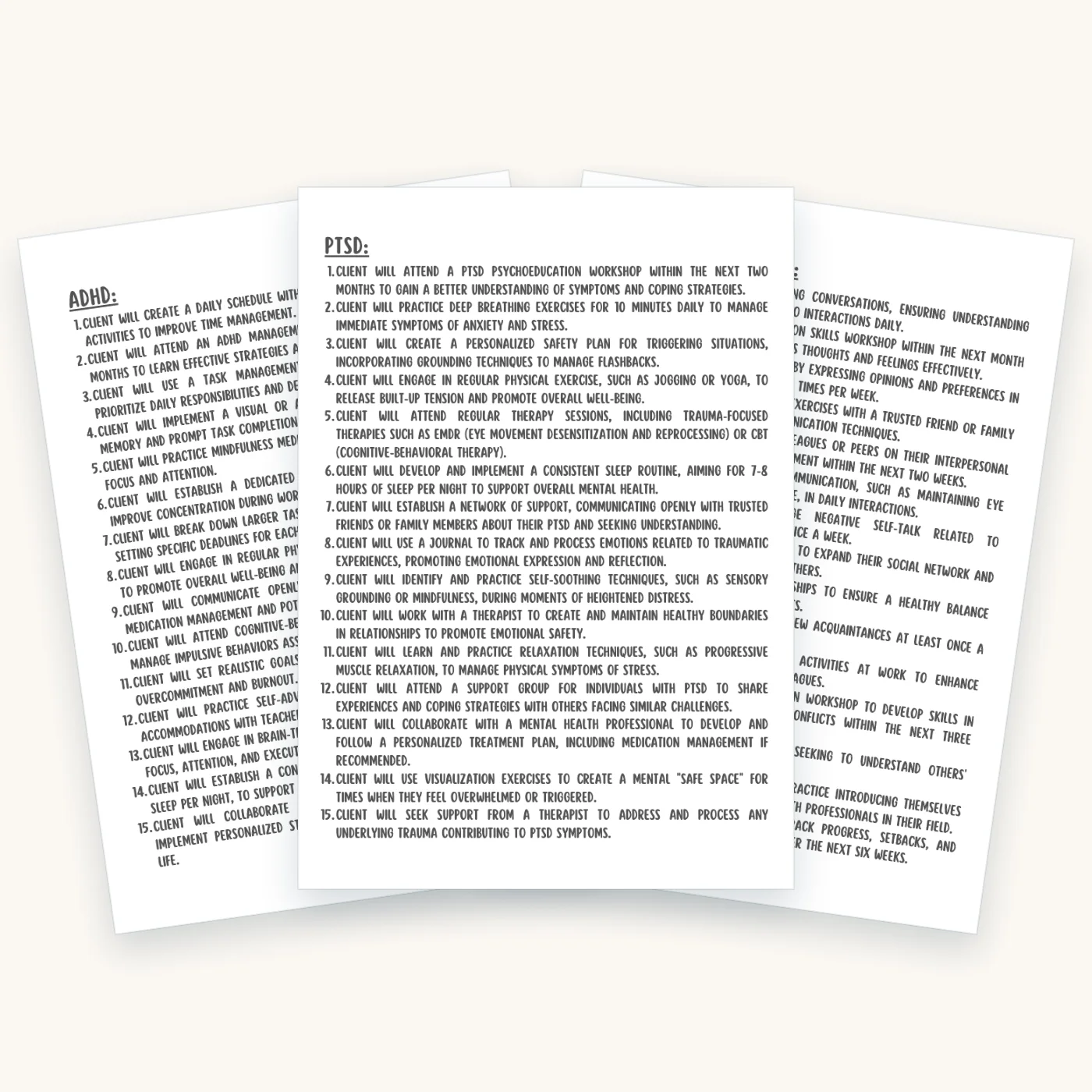
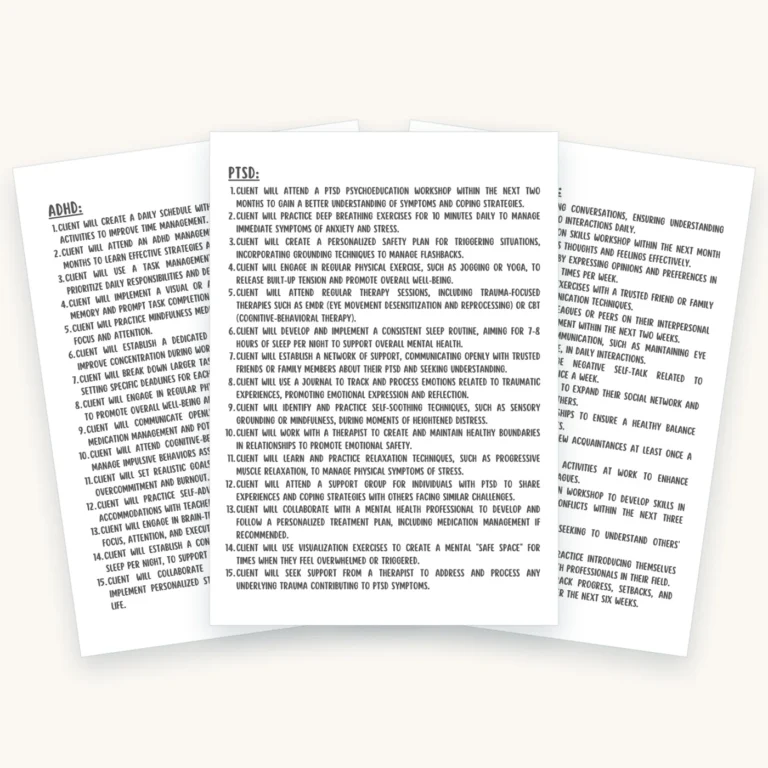
300 SMART Goals for Treatment Planning, pages 3, 4, 6 fanned out

Pages 3, 4 and 6

Tap to see what is on them

Tap to flip

Pages 3, 4 and 6

Page 3: ADHD: 1. CLIENT WILL CREATE A DAILY SCHEDULE WITH SPECIFIC TIME BLOCKS. Page 4: PTSD: 1. CLIENT WILL ATTEND A. Page 6: INTERPERSONAL SKILLS: 1. CLIENT WILL ACTIVELY LISTEN DURING CONVERSATI.

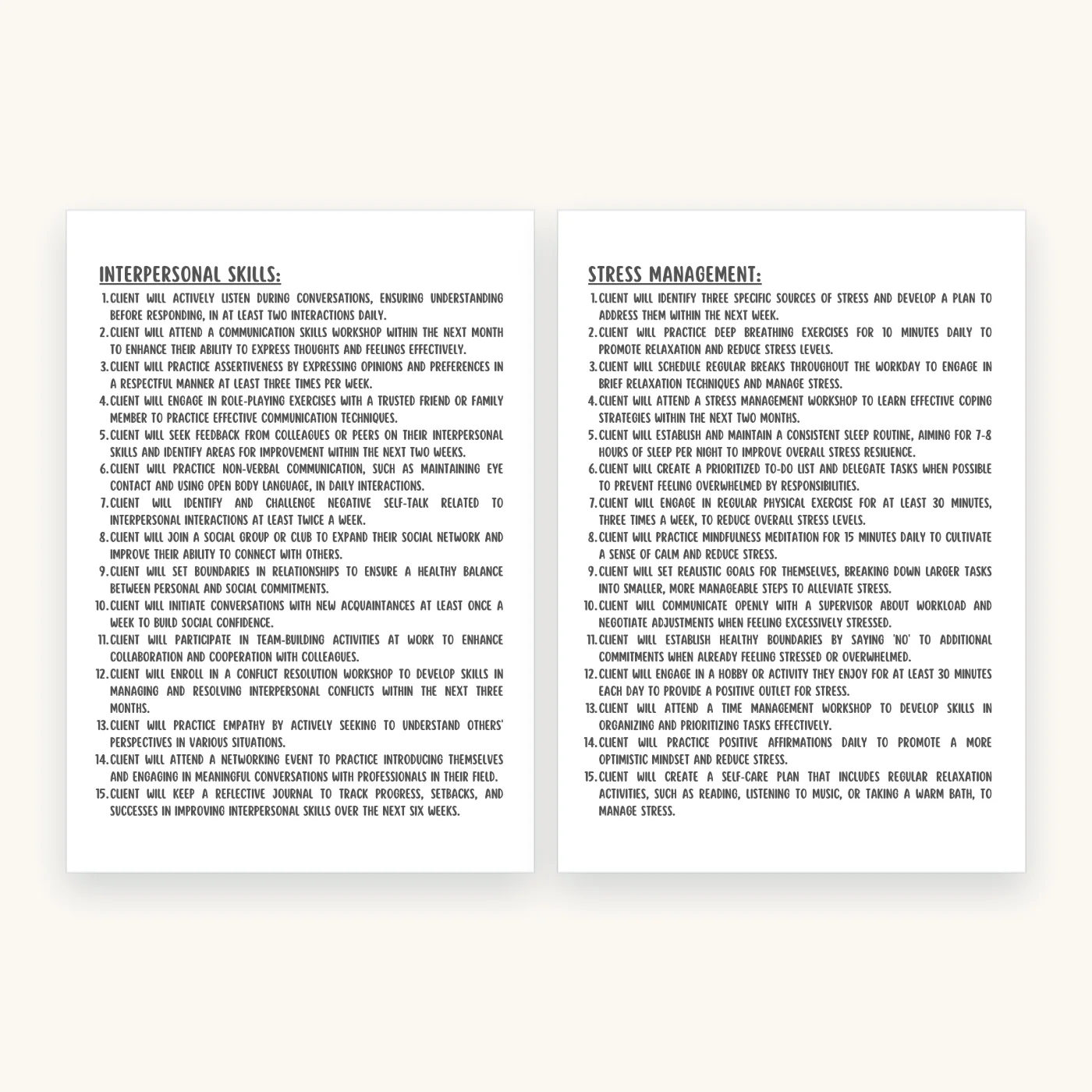
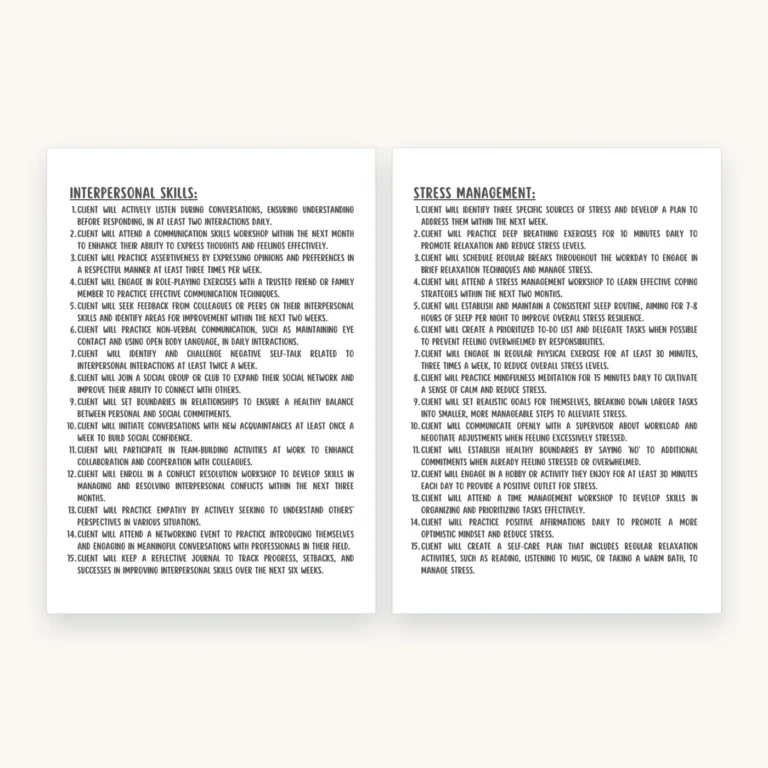
300 SMART Goals for Treatment Planning, inside pages 6 and 7

Pages 6 and 7

Tap to see what is on them

Tap to flip

Pages 6 and 7

Page 6: INTERPERSONAL SKILLS: 1. CLIENT WILL ACTIVELY LISTEN DURING CONVERSATI. Page 7: STRESS MANAGEMENT: 1. CLIENT WILL IDENTIFY THREE SPECIFIC SOURCES OF S.

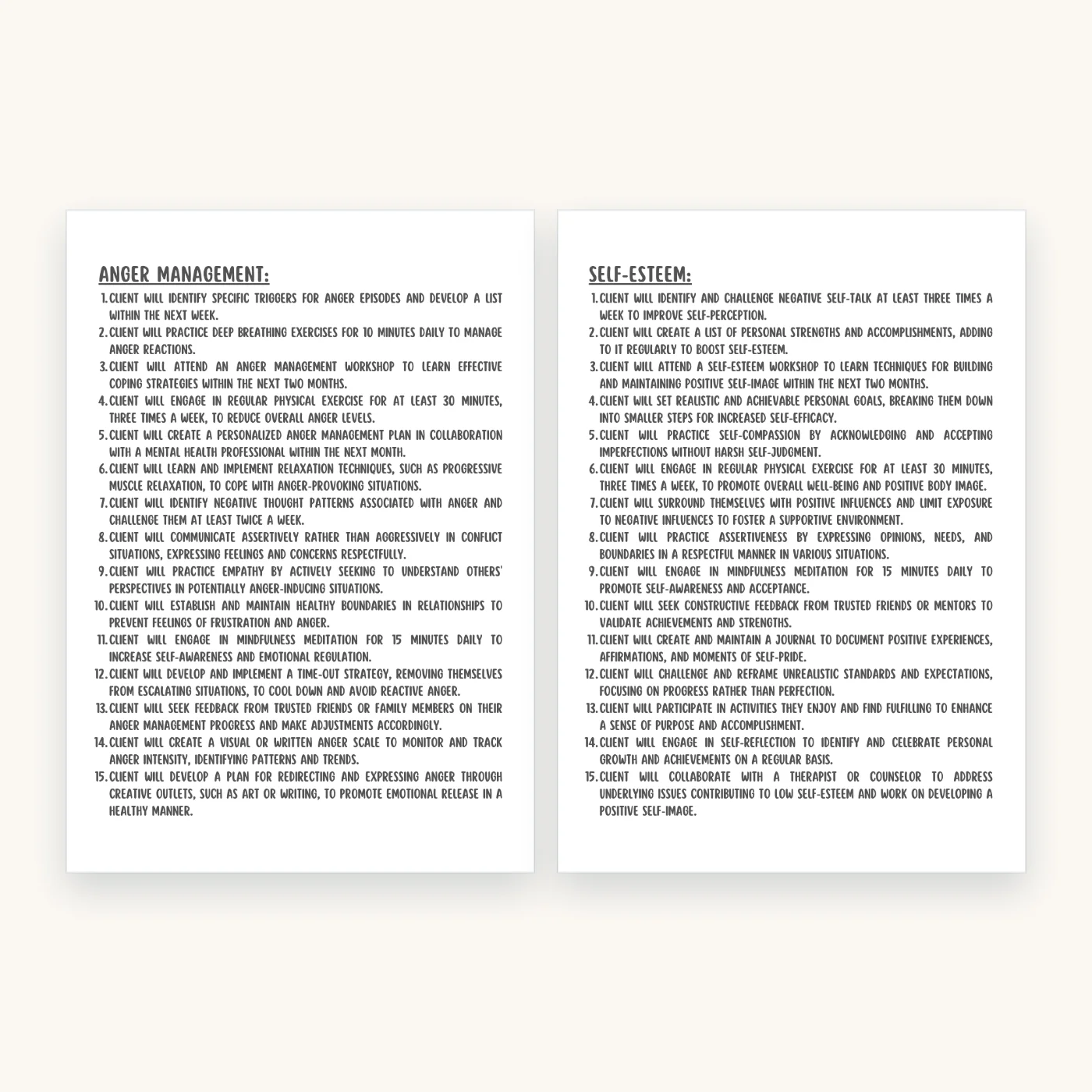
300 SMART Goals for Treatment Planning, inside pages 8 and 9

Pages 8 and 9

Tap to see what is on them

Tap to flip

Pages 8 and 9

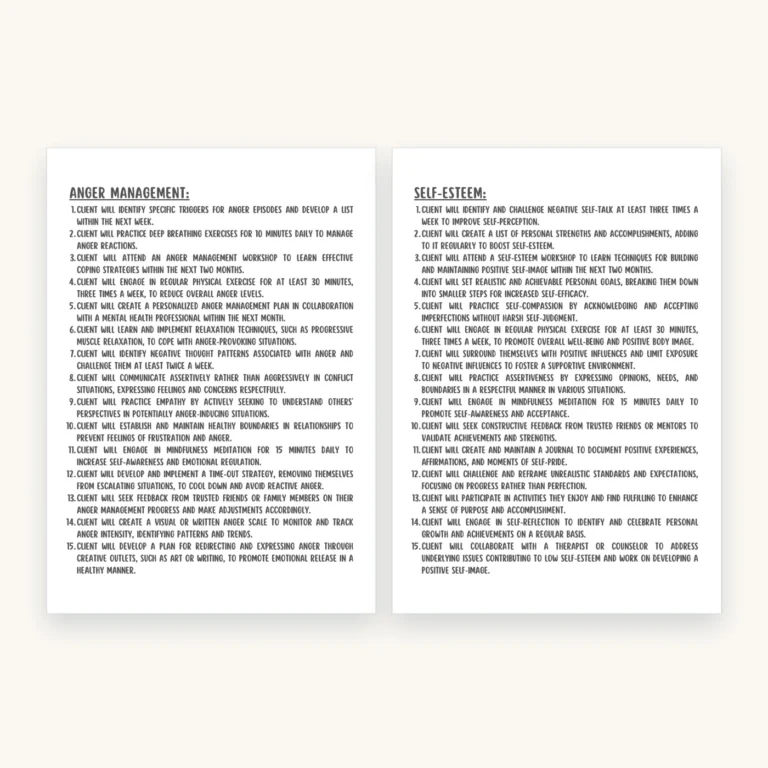
Page 8: ANGER MANAGEMENT: 1. CLIENT WILL IDENTIFY SPECIFIC TRIGGERS FOR ANGER . Page 9: SELF-ESTEEM: 1. CLIENT WILL IDENTIFY AND CHALLENGE NEGATIVE SELF-TALK .

Questions buyers ask

Are the progress note examples suitable for UK therapists?

Yes, as models for structure and clinical language. Record-keeping rules differ by country, so check the guidance from your own professional body and data protection law.

Do the SMART goals cover specific presentations?

The set holds 300 goals, with interventions for depression and anger management included. You adapt the wording to each client.

How do I receive the files?

As PDFs, on the order confirmation page and by email, once payment clears of payment.

How do I get the file after paying?

The download links appear on the order confirmation page and arrive by email once payment clears. No account is needed, and you keep the files.

When a worksheet is not enough

Some problems need another person in the room. Kita Tabachka, the BACP registered therapist behind this shop, works online with individuals and couples in the UK and abroad. The first consultation is free.

Description

Three hundred goals which pass review

The treatment plan is due and 'client will feel better' will not get past your supervisor. You need a goal with a number, a behaviour and a date.

This 20-page guide gives you 300 SMART goals, 15 for each of 20 presentations. Pick the closest one, replace the numbers and dates with your client's own and agree the wording together in session. Each goal is written in the client-will form, so it drops straight into a plan.

Inside this guide

  • Anxiety, depression, ADHD and PTSD
  • Mood disorders and emotional regulation
  • Interpersonal skills, communication skills and relationship skills
  • Stress management and anger management
  • Self-esteem and self-awareness
  • Goal setting, organisation and sleep hygiene
  • Boundaries and assertiveness
  • Coping mechanisms and social support

SMART goals for therapy, written in the client-will form

Your client says the aim is to “stop feeling so anxious”. It is an honest goal and an impossible one to measure. A SMART goal turns it into something you both check at review: the client will identify three specific triggers for anxiety. Your client knows what to do this week, and you know what to ask about next session.

SMART stands for specific, measurable, achievable, relevant and time-bound. Goals written this way give supervisors and funders the evidence they look for. They give your client a clear task between sessions as well.

Who needs ready-made treatment plan goals

  • Counsellors writing treatment plans for EAP, agency or insurance work
  • Trainees who want examples before their first plan goes to a supervisor
  • Private practice therapists reviewing goals with long-term clients
  • Clinicians working with anxiety, depression, anger or poor sleep

How to adapt a goal for your client

Find the presentation closest to your client’s. The guide covers anxiety, depression, ADHD, PTSD, boundaries, sleep hygiene and 14 more. Read the 15 goals under it and pick the one your client recognises. Replace the numbers and dates with your client’s own, then agree the wording in session so the goal belongs to them.

Add the goal to your plan and refer to it in each progress note. The therapy interventions and progress note examples show how to link an intervention back to a written goal.

Questions about the SMART goals guide

What are examples of treatment plan goals for anxiety?

The anxiety section starts with a goal for the client to identify three specific triggers for anxiety. Fourteen more anxiety goals follow it, each in the same client-will form.

Does it include treatment plan goals for depression?

Yes. The depression section opens with a goal to identify three enjoyable activities and schedule them weekly. It holds 15 goals, like every other section.

What format is it?

A 20-page PDF. Print it at home or fill it in on screen. It downloads straight after payment.

Are the goals suitable for use with clients?

Yes. The guide is written or reviewed by a BACP registered therapist for use in sessions and for self-help at home.

PDF, 20 pages. Print or keep on screen. Instant download after payment. One purchase covers your own practice.

These materials support your clinical judgement. They do not replace training, supervision or the record-keeping rules of your own professional body.

Reviews

There are no reviews yet.

Only logged in customers who have purchased this product may leave a review.

Kita Tabachka, BACP-registered therapistPrefer to talk it through?  Online therapy
300 SMART Treatment Plan Goals and Objectives for Therapy Original price was: £15.00.Current price is: £6.50.Add to cart