Description
The clinical word, when it will not come
You know what happened in the session. The word for it has gone, and the note has been open for twenty minutes.
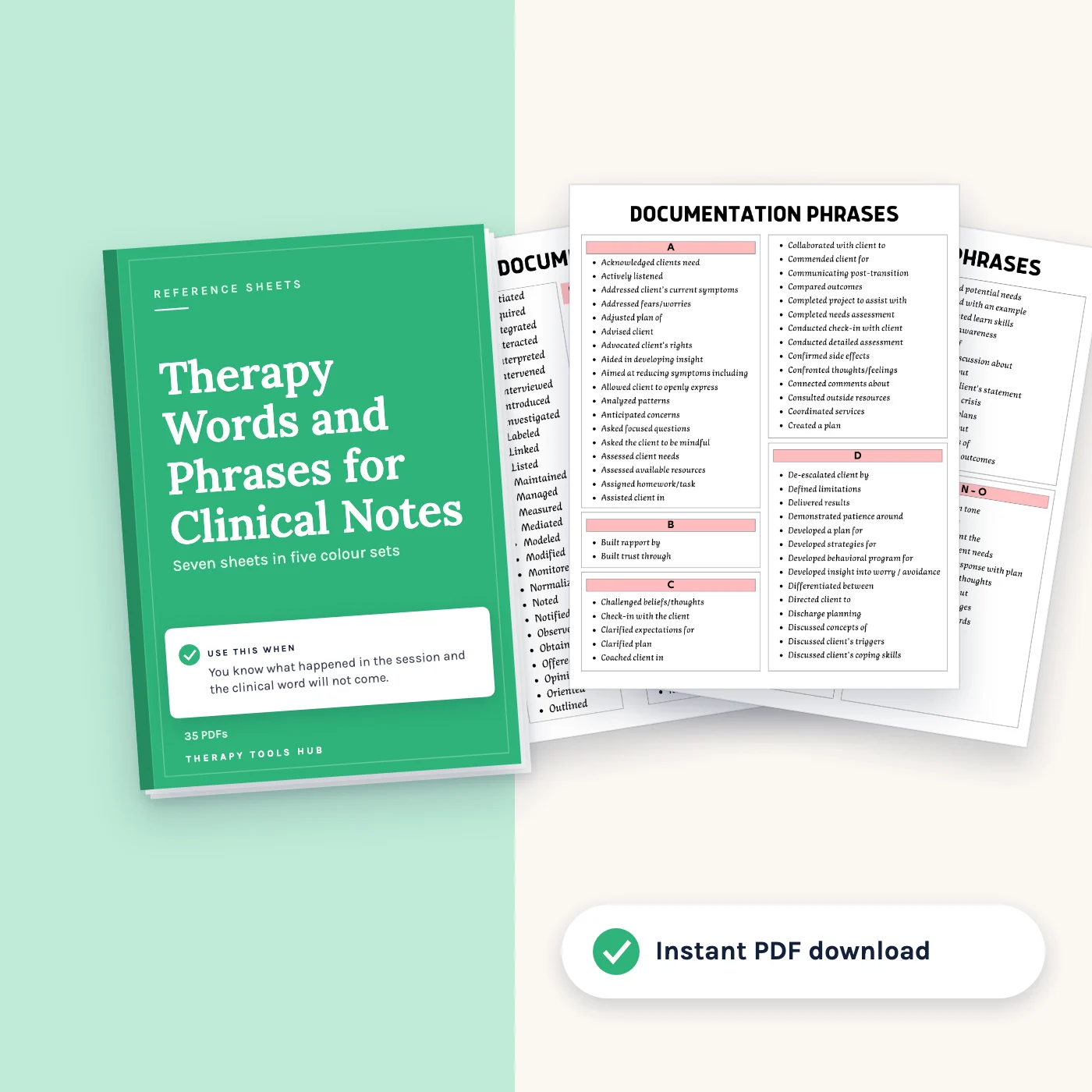
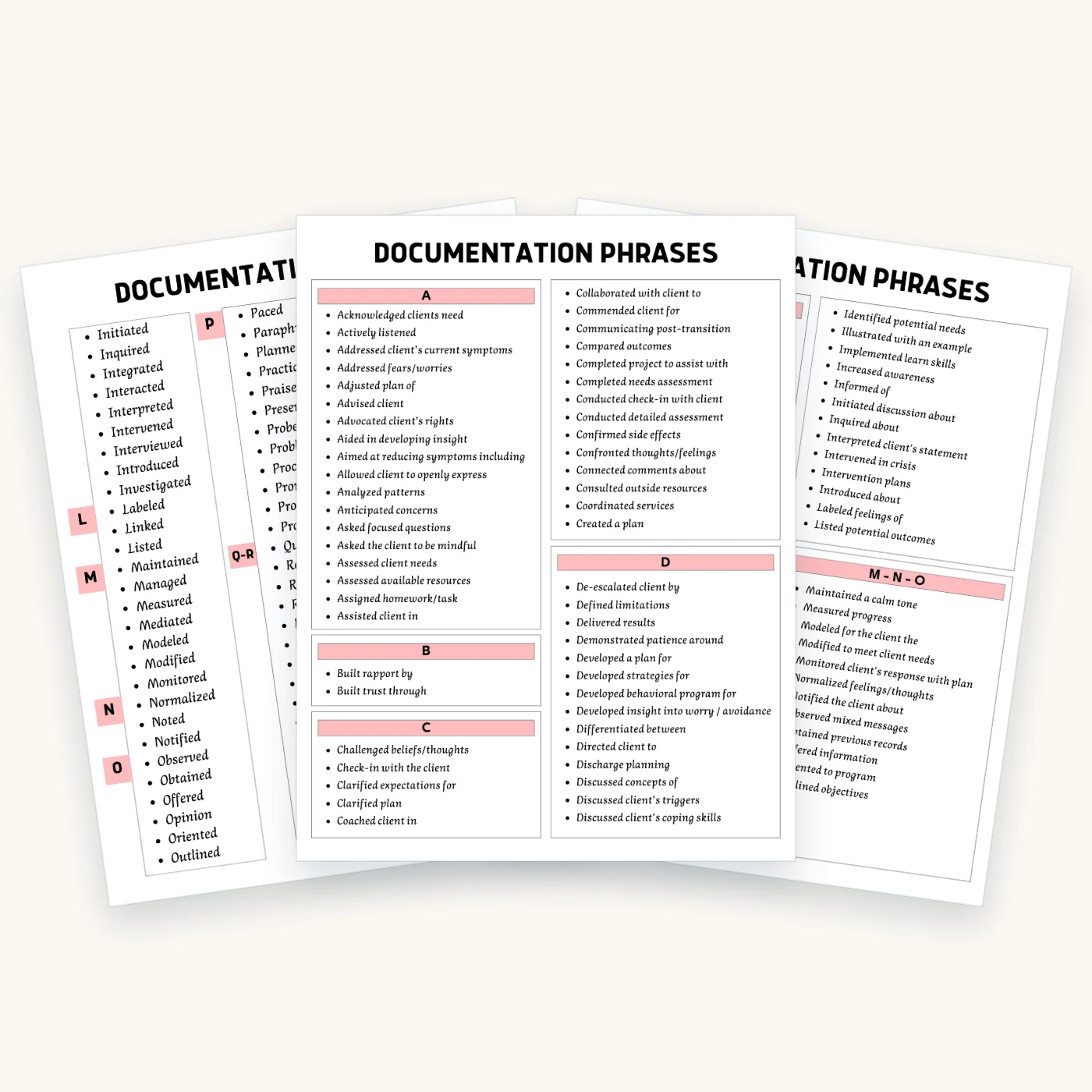
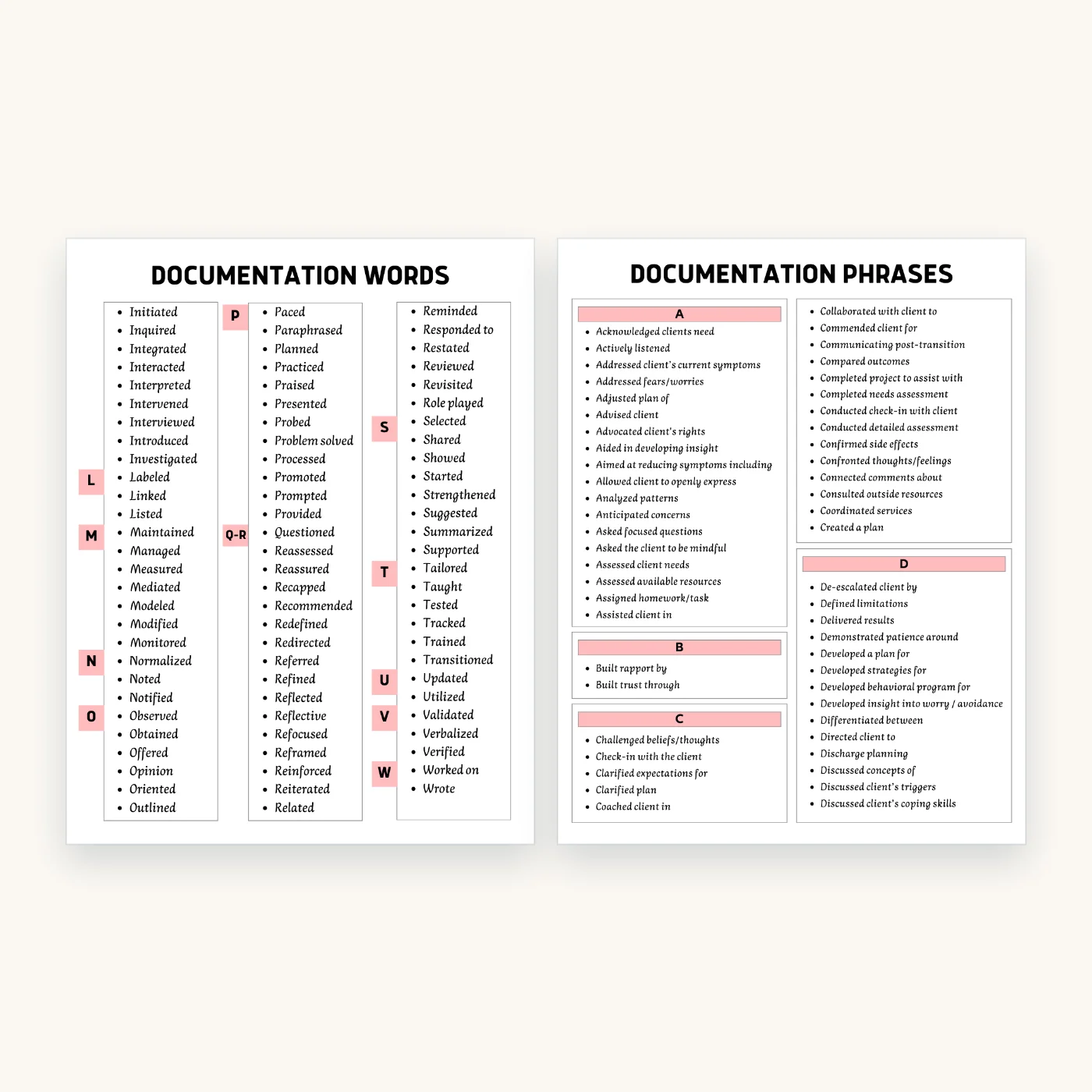
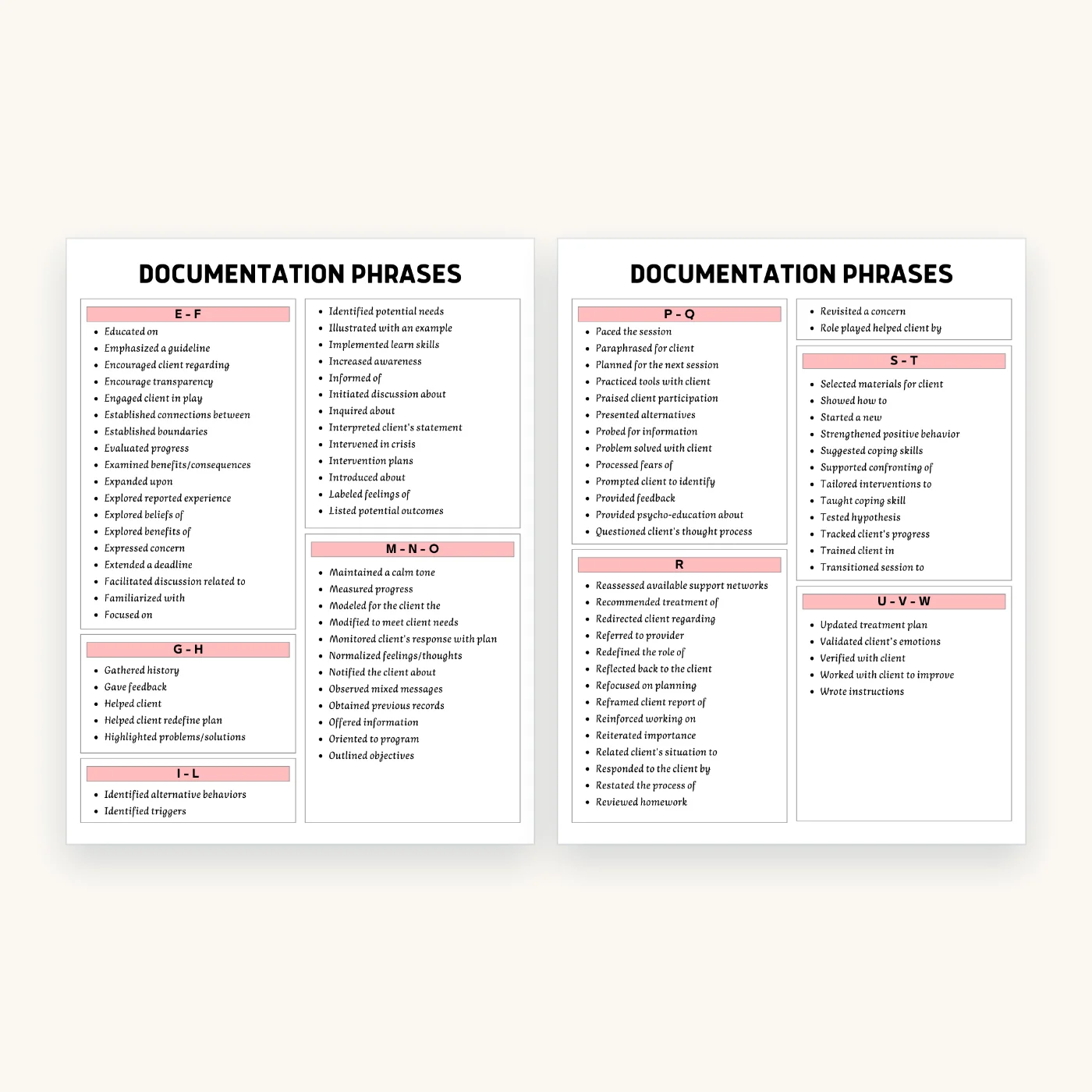
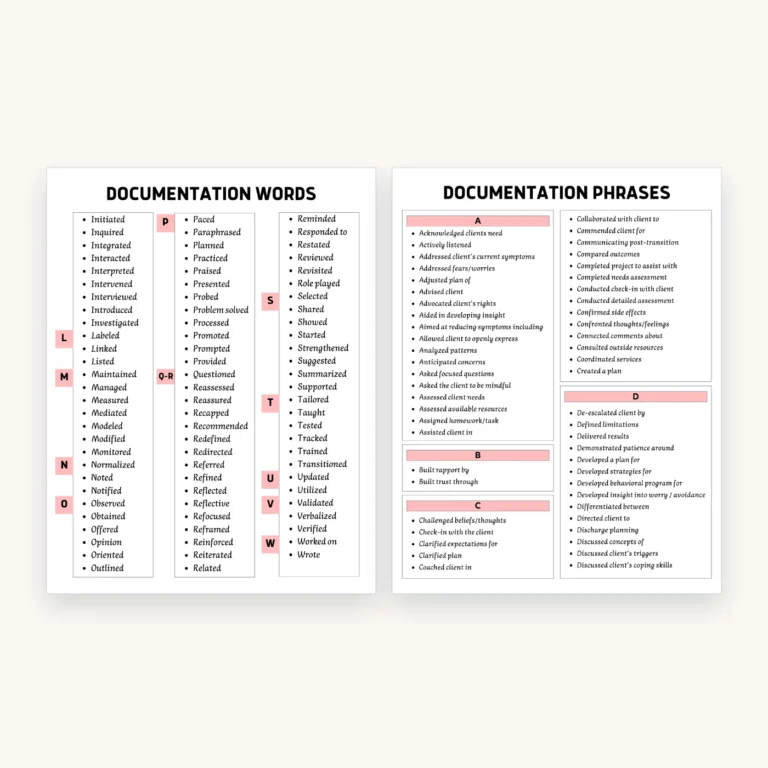
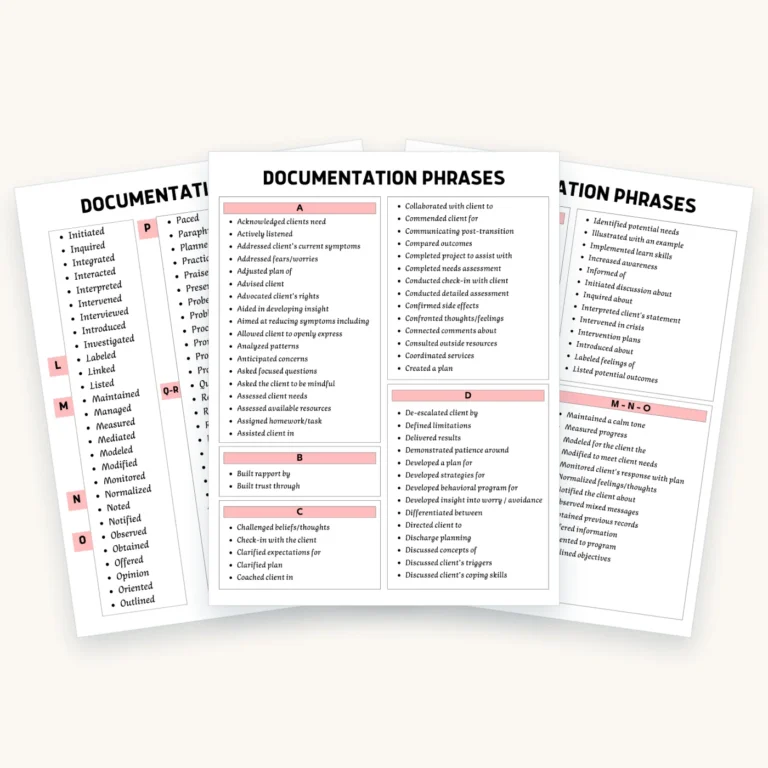
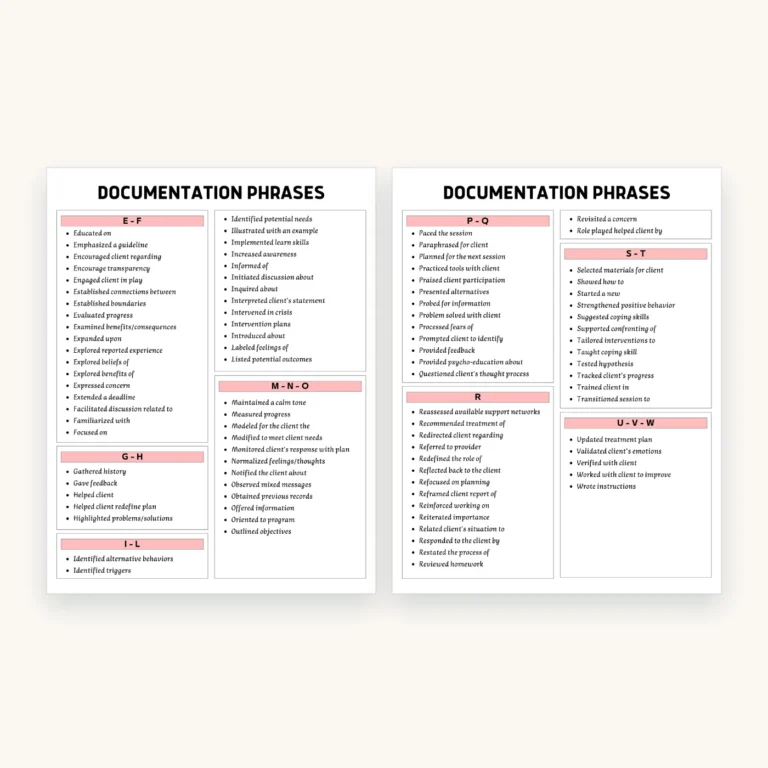
Seven reference sheets, supplied in five colour sets (pink, orange, green, blue and black), give you precise language for notes and treatment plans. Print one set and keep it beside the keyboard. The documentation phrases alone cover collaboration, identified concerns and revisited goals in the wording reviewers expect.
Inside the bundle
- Documentation words: accomplished, compared, ensured, integrated, intervened and more
- Documentation phrases
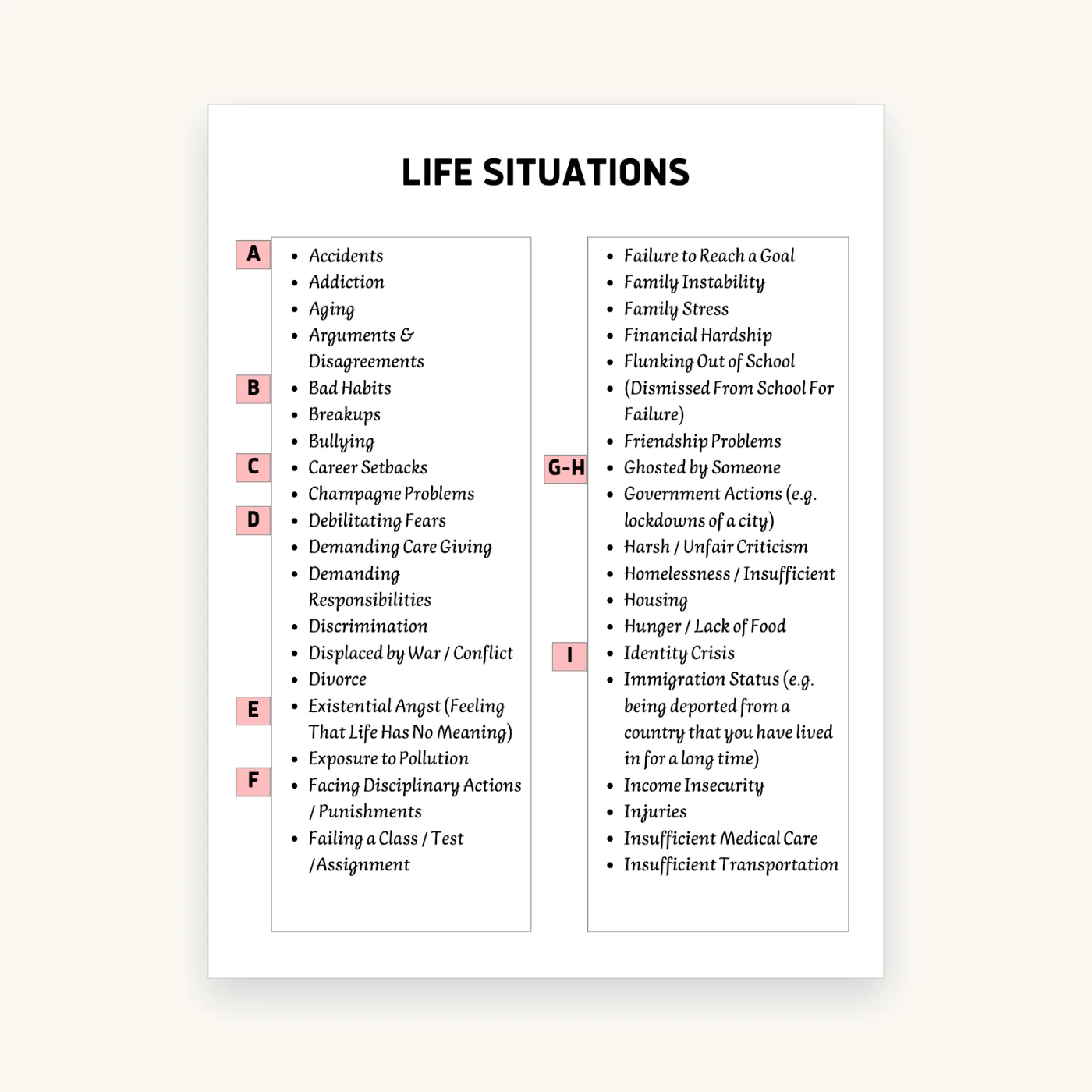
- Life situations, A to Z
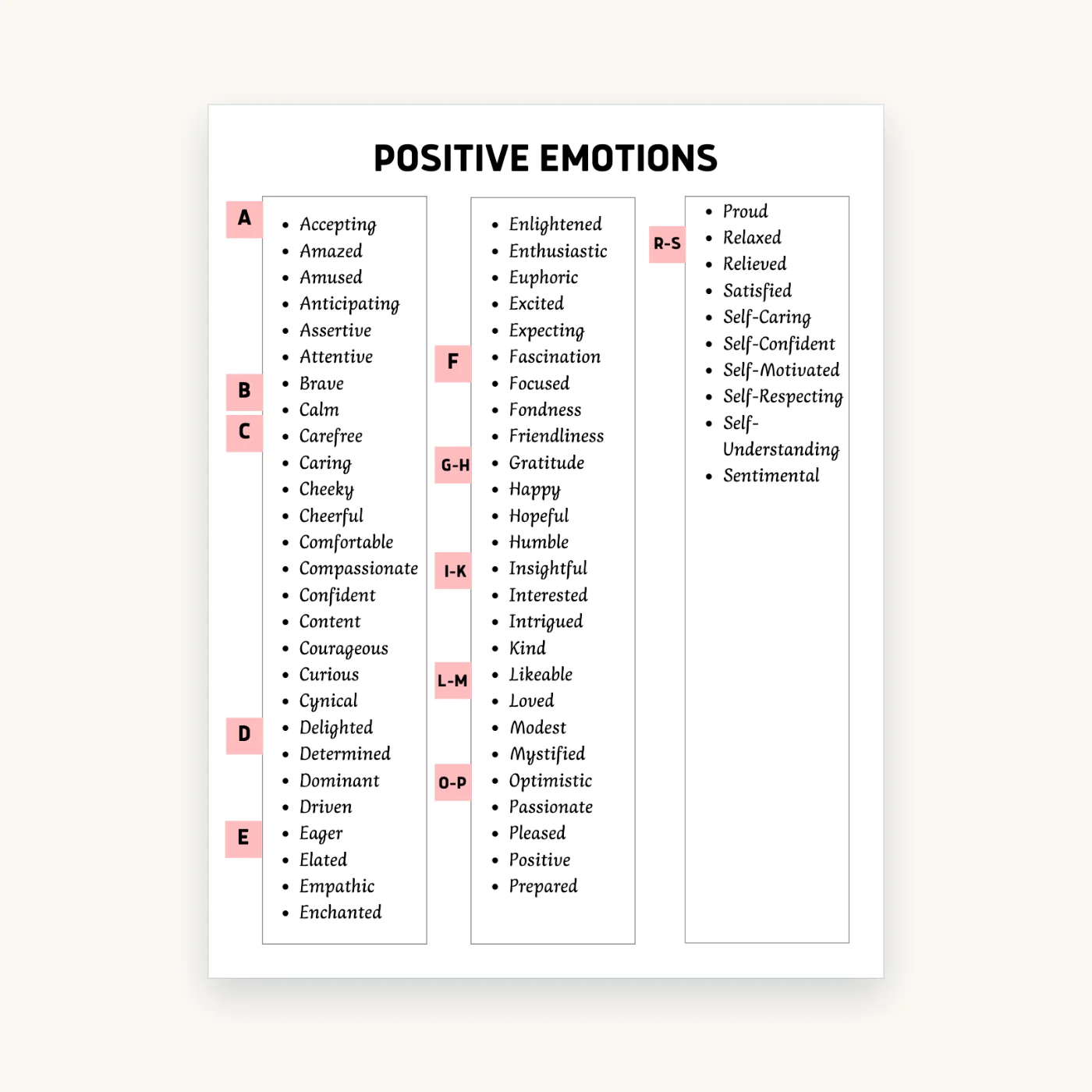
- List of emotions
- Negative self-talk and positive self-talk
- Words which describe behaviour
- Treatment plan interventions
Therapeutic words for progress notes, ready when your mind goes blank
It is 6pm, your last client left an hour ago, and you have written “client discussed feelings” three times this week. You know the session held more than this. The sheet beside your keyboard gives you “revisited a concern” and “collaborated with client to”, and the note takes four minutes instead of twenty.
Precise wording matters beyond speed. A supervisor, an auditor or a client reading their own file sees what you did in the room. Words such as “intervened” or “integrated” name your action. The documentation phrases tie the session back to the goals in the treatment plan.
Who uses these therapy terms for progress notes
- Counsellors and psychotherapists in private practice who write their own notes
- Trainees on placement
- Agency clinicians with a high caseload and a short gap between sessions
- Anyone who describes behaviour in reports and wants a wider vocabulary for it
How to put the sheets to work
Pick one colour set and print all seven sheets. Keep the documentation words and documentation phrases next to the screen, since you reach for those in every note. Store the list of emotions and the negative and positive self-talk sheets in a session folder. A client who struggles to name a feeling points to a word on the page.
Use the treatment plan interventions sheet when you write or review a plan. Match each goal to an intervention, then carry the matching phrase into your progress note after each session. The therapy interventions and progress note examples show this wording inside complete notes. For the habits around the writing itself, read how to write therapy progress notes faster.
Questions about the therapy words and phrases bundle
What words should I use in therapy progress notes?
Use verbs which describe your action and the client’s response, such as “intervened” or “ensured”. The documentation words sheet lists them, and the documentation phrases sheet turns them into sentence openers such as “Collaborated with client to”.
What format is it?
A ZIP download of 35 PDFs: seven sheets in five colour sets. Print it at home or keep it open on screen. It downloads straight after payment.
Are the sheets suitable for use with clients?
Yes. The bundle is written or reviewed by a BACP registered therapist for use in sessions and for self-help at home. The emotions and self-talk sheets work well on the table between you and a client.
Does it cover treatment plans as well as notes?
Yes. One of the seven sheets lists treatment plan interventions, so the wording in your plan matches the wording in your notes.
35 PDFs: seven sheets in five colour sets. Print or keep on screen. Instant download after payment. One purchase covers your own practice.
These materials support your clinical judgement. They do not replace training, supervision or the record-keeping rules of your own professional body.


Reviews
There are no reviews yet.