
Description
The note, finished before you leave the office
It is Friday evening and six notes are still blank. You remember the session. The clinical wording will not come.
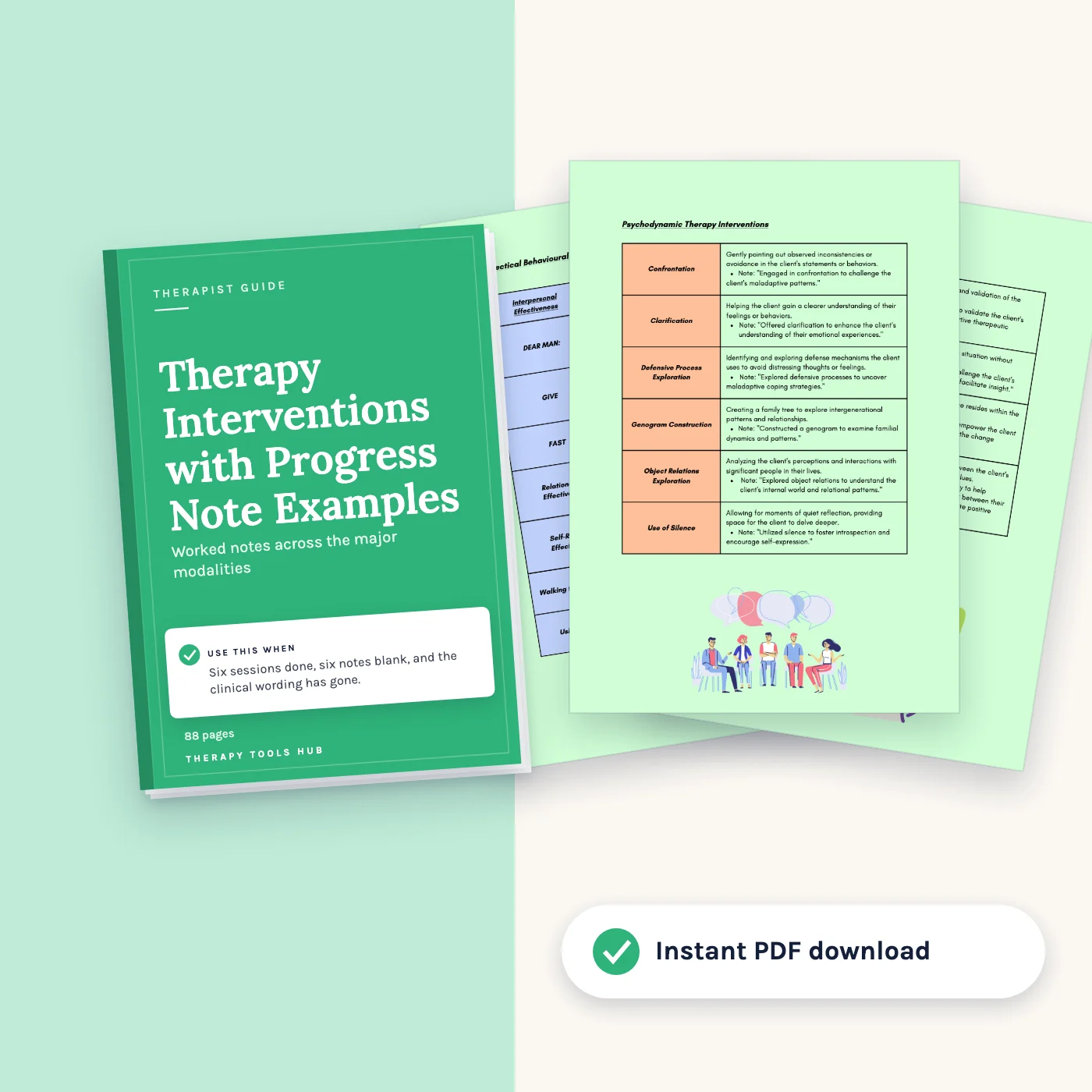
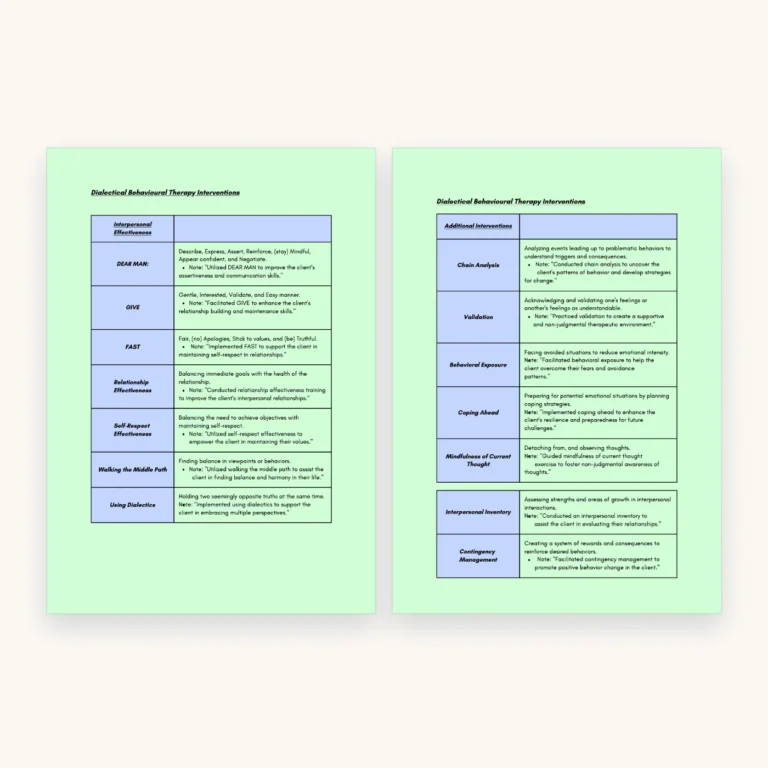
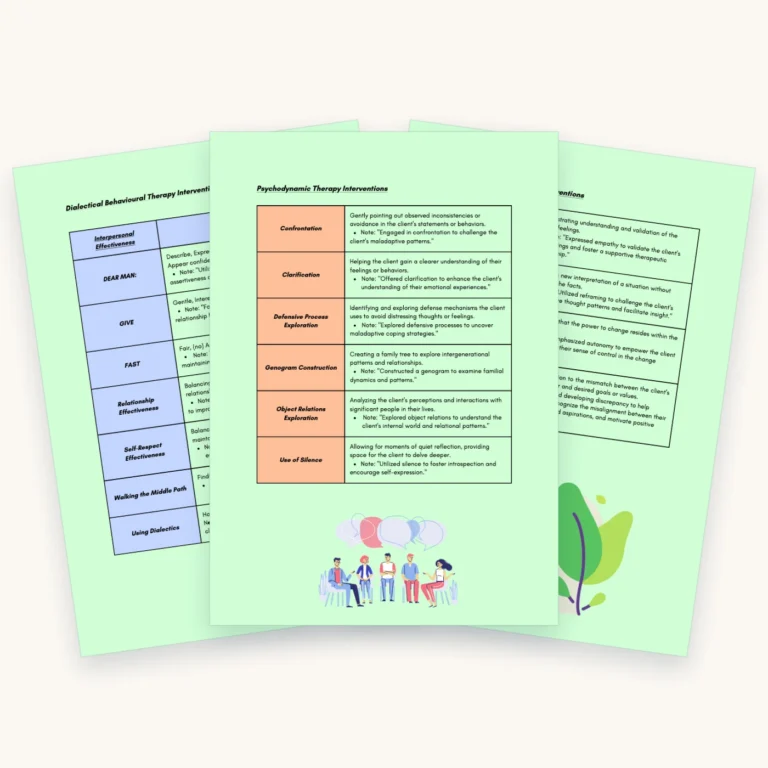
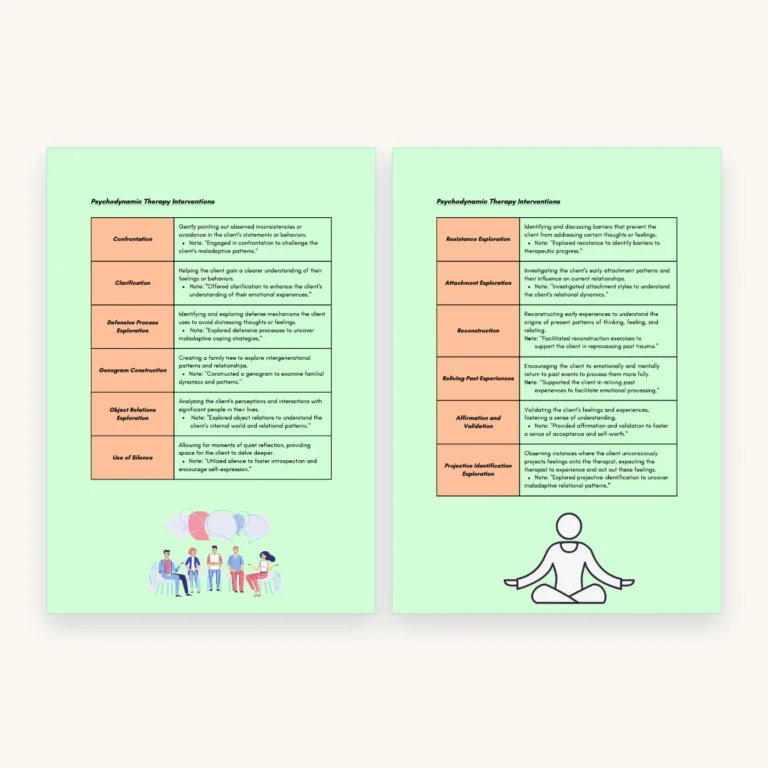
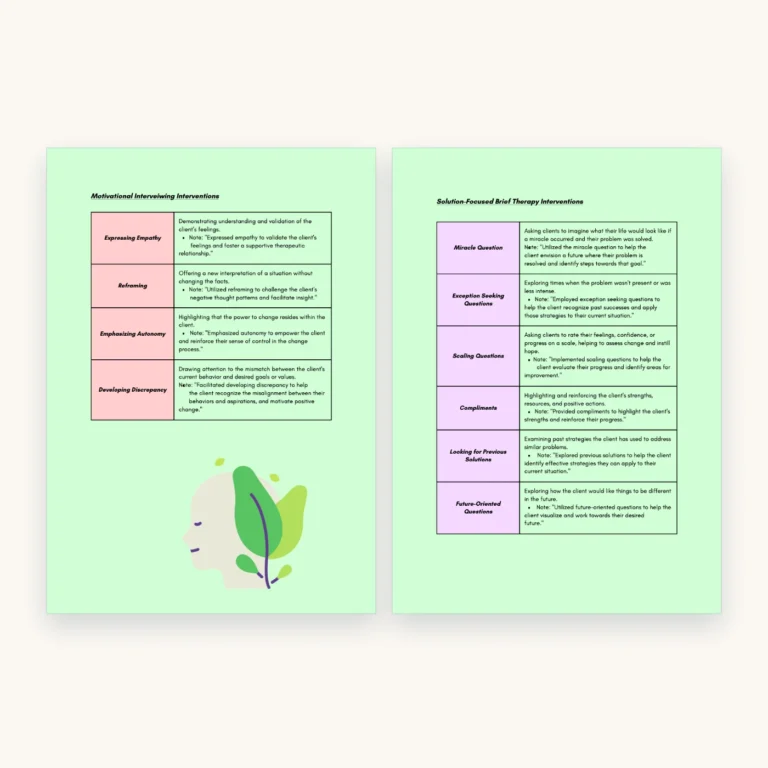
This 88-page guide pairs interventions from each major modality with a worked progress note, so you see how a finished entry reads and adapt it. The examples follow HIPAA conventions from the United States. UK and EU practitioners work under GDPR and the guidance of their own professional body, so treat every example as a model for structure and language rather than a template to copy.
Inside this guide
- Cognitive behavioural therapy interventions and note examples
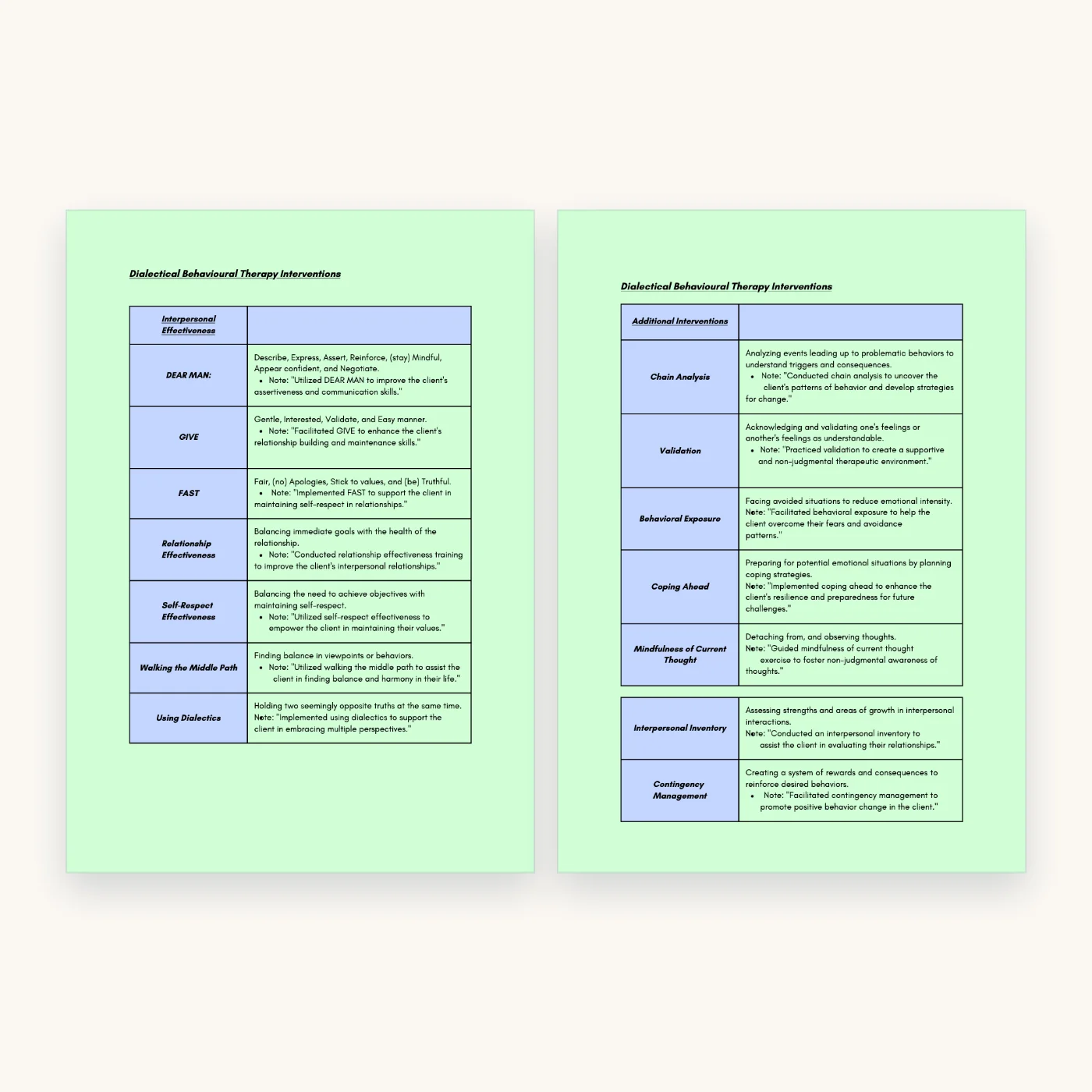
- Dialectical behaviour therapy
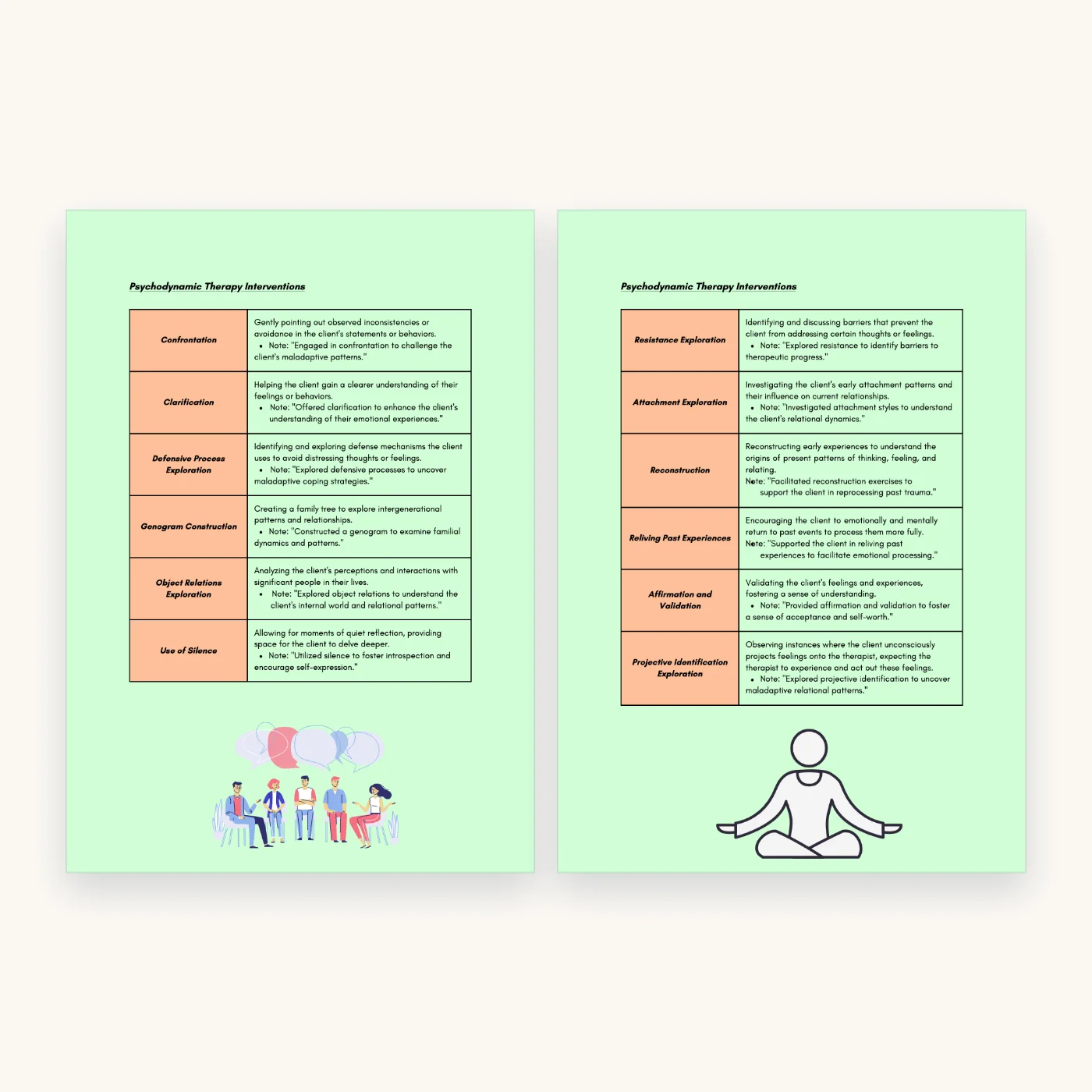
- Interpersonal therapy and psychodynamic therapy
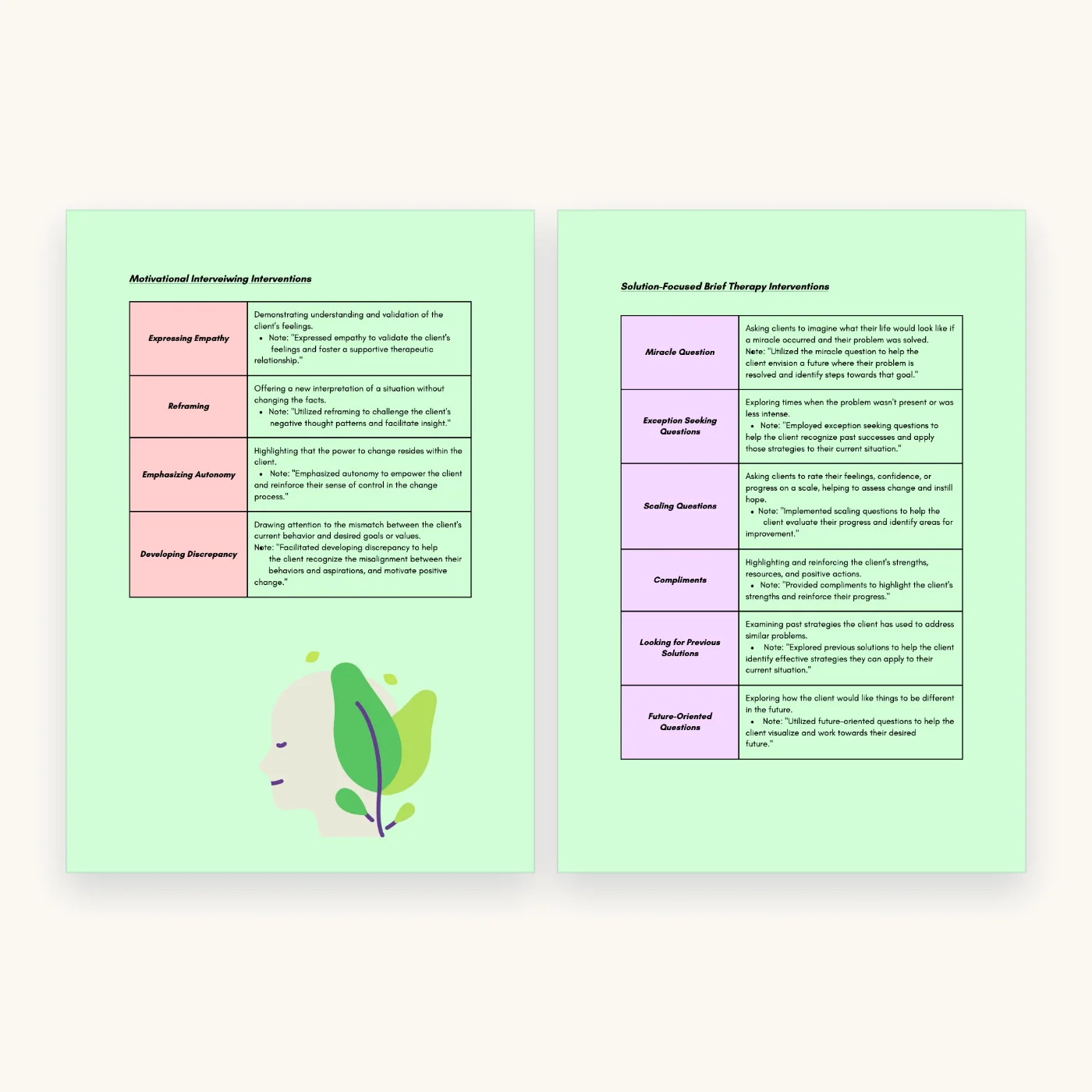
- Motivational interviewing
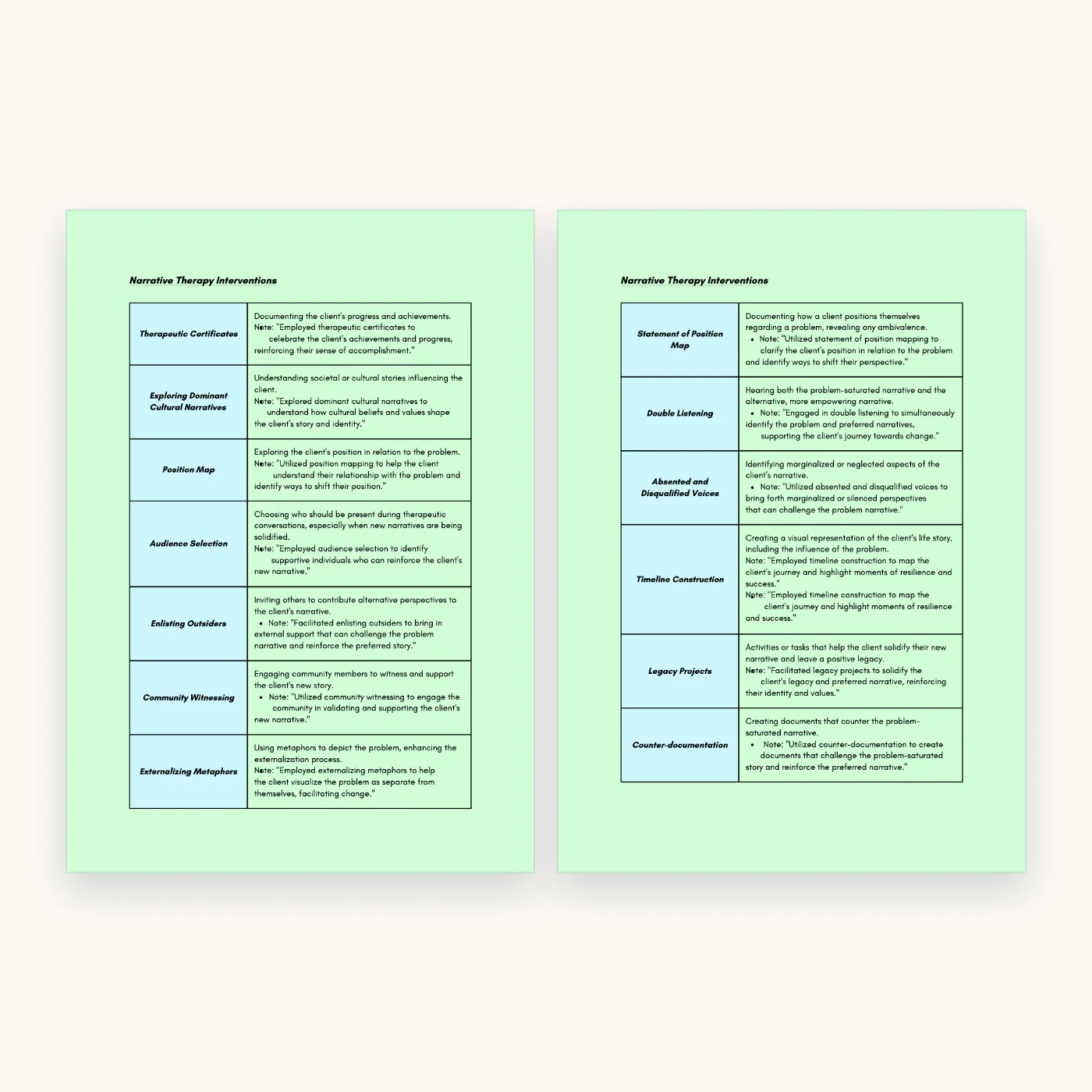
- Solution-focused brief therapy and narrative therapy
- Play therapy: sand tray, art, emotion cards, the worry box
- Creative, family and group therapy, including genograms
- Behavioural activation and systems-centred therapy
- Relaxation techniques and trauma-informed interventions
- Socratic questioning phrases and note examples
- Systemic family therapy intervention phrases
A therapeutic interventions list with the note already written
Your client spent the session rating their anxiety and testing one thought against the evidence. In the notes you write “discussed anxiety” because the formal wording escapes you at seven in the evening.
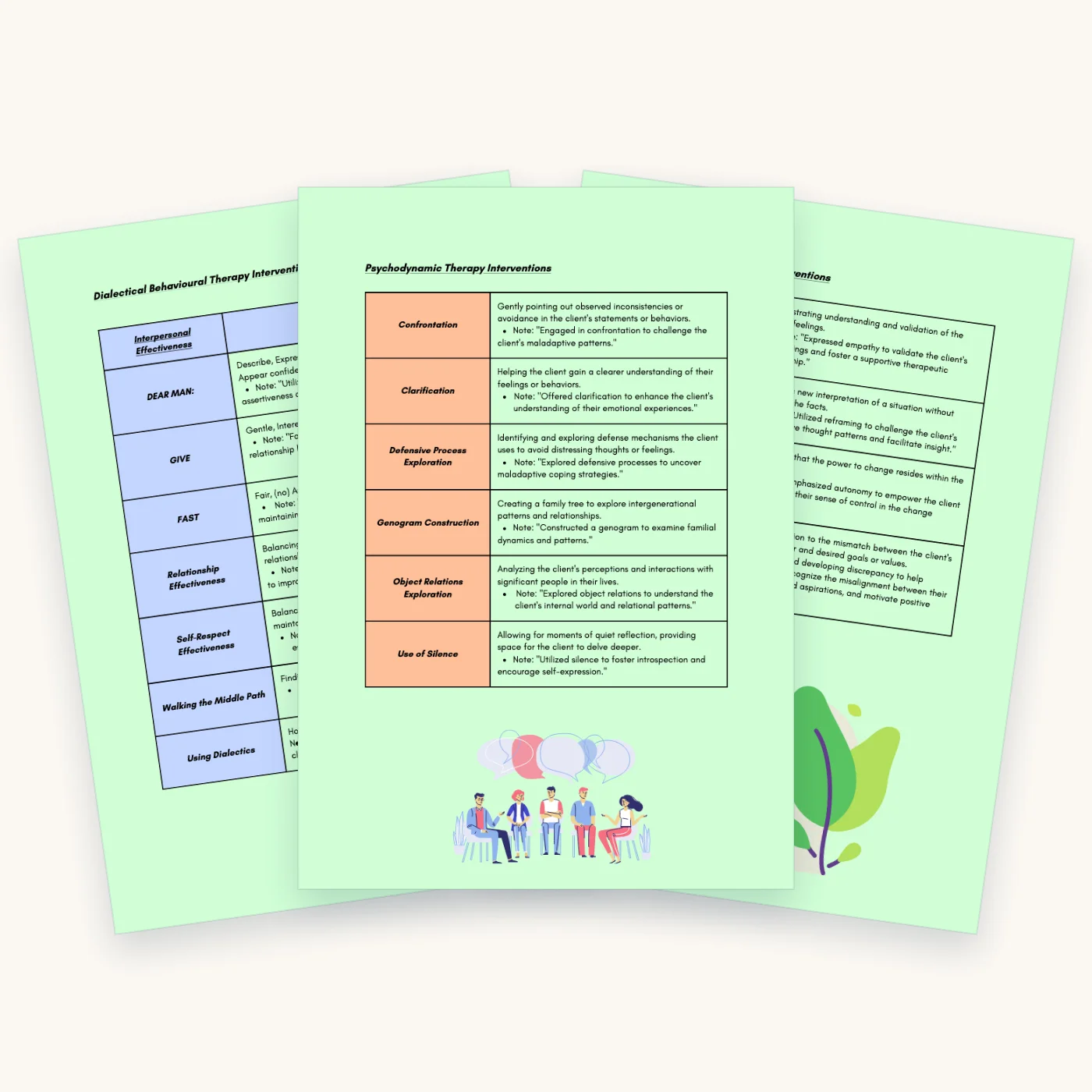
Each page of this guide names an intervention, describes it in a line and gives a sample note. Under cognitive behavioural therapy, for example, recording evidence against a negative belief sits next to a note showing how to word it. The same pattern runs through DBT skills such as distress tolerance and interpersonal effectiveness, motivational interviewing scaling questions, narrative externalising and family genograms.
Who uses this list of therapy interventions
- Counsellors in private practice writing notes between back-to-back clients
- Trainees on placement learning how each modality names its techniques
- Child therapists who need wording for sand tray work, emotion cards or the worry box
- Group facilitators recording icebreakers and relaxation work
How to use the progress note examples
Look up the modality you used, find the intervention and read its example note. Swap in your client’s words, the date and what changed in the session. Keep the structure and drop anything which did not happen. The examples follow US HIPAA conventions, so check them against GDPR and your professional body before they enter a UK or EU record.
For more on speed, read how to write therapy progress notes faster. If you need vocabulary rather than structure, the therapy words and phrases for progress notes cover it.
Questions about the therapy interventions list
What format is the therapy interventions list?
It is a PDF of 88 pages. Print it at home or fill it in on screen. It downloads straight after payment.
Which therapeutic approaches does it cover?
CBT, DBT, interpersonal, psychodynamic, motivational interviewing, solution-focused brief therapy, narrative, play, creative, family, group, behavioural activation, systems-centred therapy and relaxation techniques.
Are the progress note examples valid in the UK?
The examples follow US HIPAA conventions. UK practitioners work under GDPR and the guidance of their own professional body, so use the notes as a model for wording and structure.
Does it include Socratic questioning?
Yes. A section of Socratic questioning phrases comes with example notes, alongside trauma-informed interventions and systemic family therapy phrases.
PDF, 88 pages. Print or read on any device. Instant download after payment. One purchase covers your own practice.
These materials support your clinical judgement. They do not replace training, supervision or the record-keeping rules of your own professional body.


Reviews
There are no reviews yet.