

New: Now, Mapped. 60 hard everyday moments, one next step each. See inside
Sale!

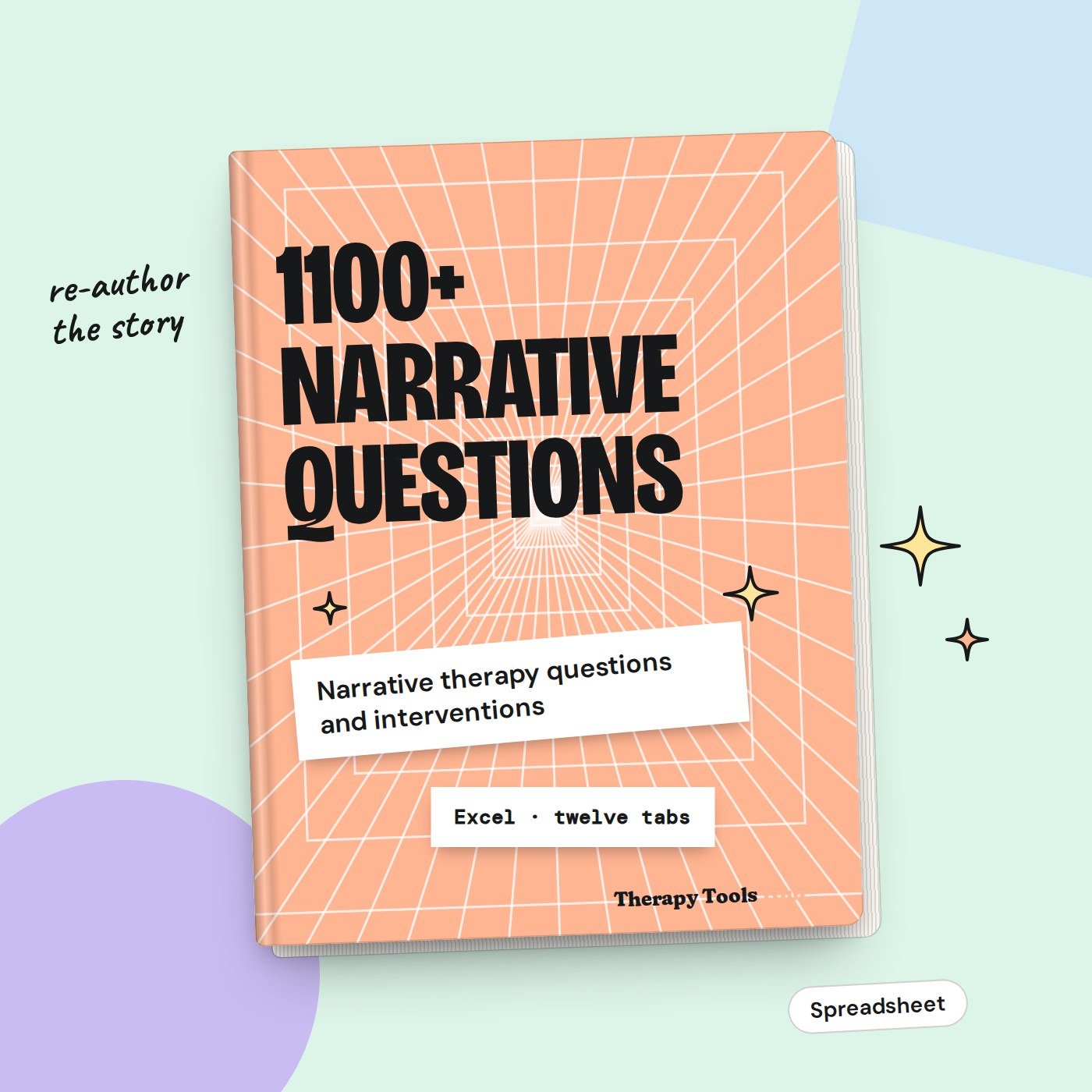
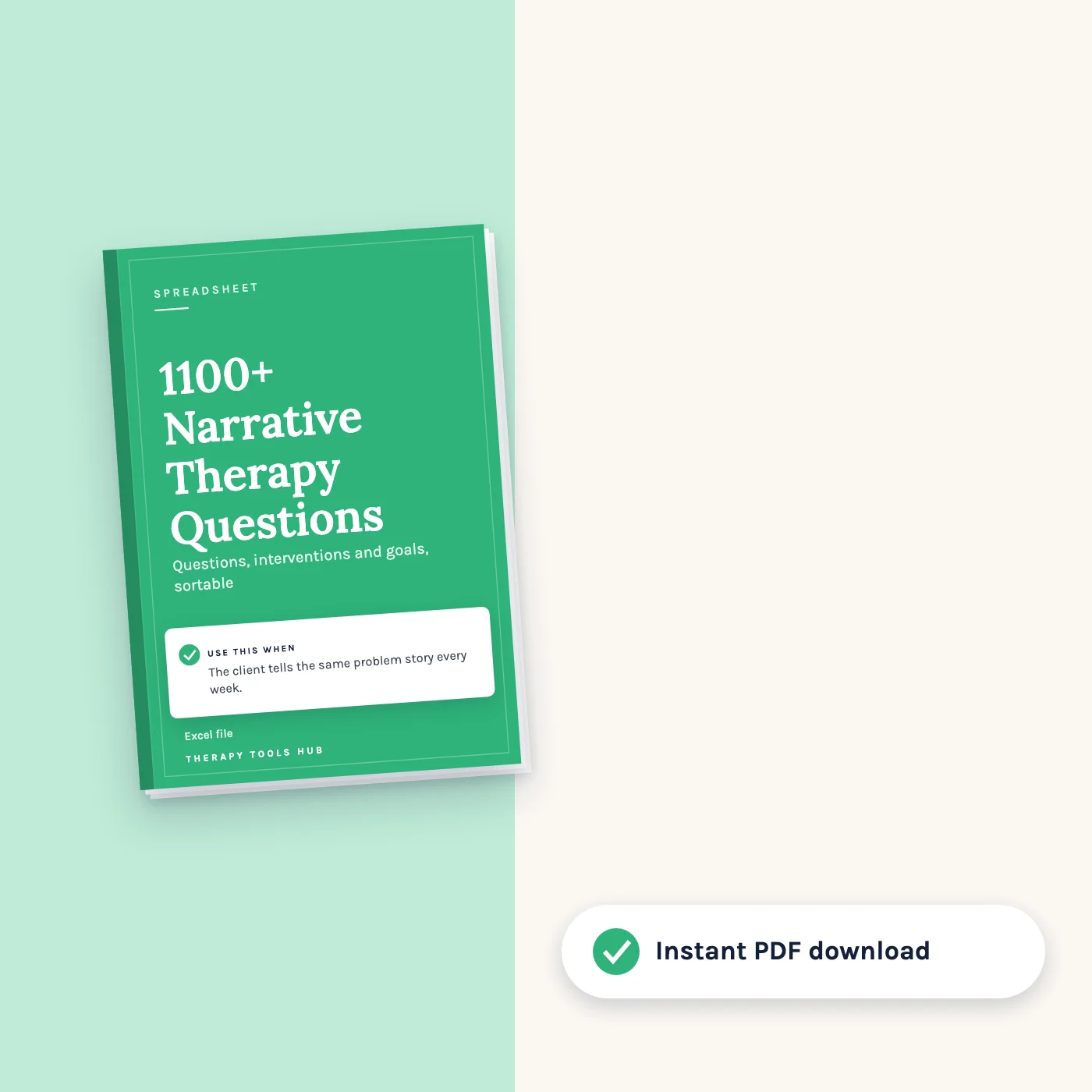
1100+ Narrative Therapy Questions and Interventions

The client tells the same problem story every week. More than 1,100 narrative therapy questions, interventions and goals, in one sortable spreadsheet, help you separate the person from the problem. For therapists, counsellors and psychology students.

Use this when

The client tells the same problem story every week.

Original price was: £18.99.Current price is: £9.99.

About this download

Filter by intervention before the client arrives

The client tells the same problem story every week, and you want a question which puts distance between the person and the problem.

This spreadsheet holds more than 1,100 narrative therapy questions, interventions and goals across twelve tabs. A session builder tab records the date, client and session number beside the questions you used. Filter a tab, copy three questions into your notes and go. Students use it to learn the language of externalising, unique outcomes and re-authoring.

Inside the spreadsheet

  • Session builder: questions discussed, date, client, session number, duration
  • Problem-separating questions
  • Unique outcome questions
  • Landscape of identity and landscape of action questions
  • Preferred story questions and future-oriented questions
  • Support-seeking questions and reflective questions
  • Advanced therapy questions
  • Goals and interventions tabs

Narrative therapy questions which separate the person from the problem

Your client says “I’m an anxious person” for the third week running. The phrase has become their identity, and every session starts from inside it.

Narrative therapy treats the problem as something outside the person. You might ask, “When did the anxiety first show up in your life?” or “What does the anxiety tell you about yourself?” Questions like these put distance between the client and the problem story. Unique outcome questions then look for times when the problem was absent or weaker. Preferred story questions help the client describe who they want to be instead.

Who the narrative therapy question bank suits

  • Counsellors and psychotherapists who want narrative therapy questions to ask clients in session
  • Students learning externalising, unique outcomes and re-authoring
  • Integrative practitioners adding narrative work to their existing approach
  • Supervisors preparing examples for supervisees

How to plan a session with the spreadsheet

Before the session, open the tab which matches where your client is. Early on, the problem-separating tab gives you externalising questions. Later, move to the unique outcome and preferred story tabs. Filter a tab, copy three questions into the session builder and add the date, client and session number. Afterwards, mark which questions worked and which goals and interventions you used.

For a broader set of open questions, the therapy questions for counsellors pair well with this file. The session planning template article shows how to structure the rest of the hour.

Questions about the narrative therapy questions spreadsheet

Is this a PDF?

No. It is an Excel spreadsheet (.xlsx) which opens in Excel, Numbers or Google Sheets. It downloads straight after payment.

What are some narrative therapy questions examples?

Externalising questions ask about the problem as separate from the person, for example “When did the worry first show up?” The spreadsheet holds more than 1,100 questions, interventions and goals across twelve tabs.

Is it suitable for use with clients?

It is written or reviewed by a BACP registered therapist for use in sessions and for self-help at home.

Does it help with session records?

Yes. The session builder tab records the questions discussed beside the date, client, session number and duration.

Excel spreadsheet (.xlsx). Opens in Excel, Numbers or Google Sheets. Instant download after payment. One purchase covers your own practice.

These materials support your clinical judgement. They do not replace training, supervision or the record-keeping rules of your own professional body.

Questions buyers ask

Who are these therapy questions for?

Counsellors, psychotherapists, psychologists, coaches and trainees. Couples also buy the 1002 questions to use at home.

What format do the question banks come in?

PDF files, plus one spreadsheet for the narrative therapy set. You download them straight after payment and keep them.

Am I allowed to use the questions with my clients?

Yes. One purchase covers your own practice, with as many clients as you like. The files are for your own use and not for resale.

How do I get the file after paying?

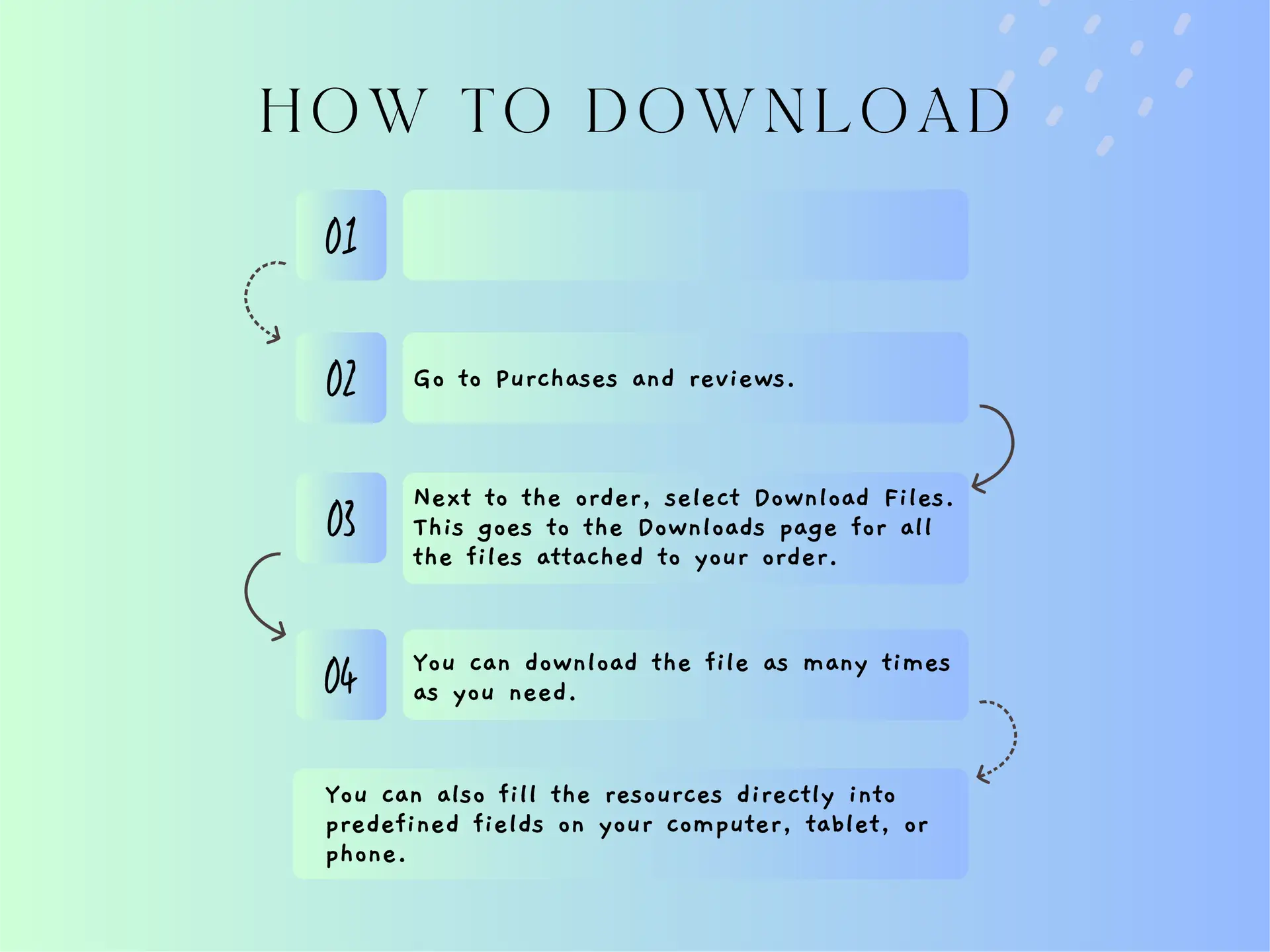
The download links appear on the order confirmation page and arrive by email once payment clears. No account is needed, and you keep the files.

When a worksheet is not enough

Some problems need another person in the room. Kita Tabachka, the BACP registered therapist behind this shop, works online with individuals and couples in the UK and abroad. The first consultation is free.

Description

Filter by intervention before the client arrives

The client tells the same problem story every week, and you want a question which puts distance between the person and the problem.

This spreadsheet holds more than 1,100 narrative therapy questions, interventions and goals across twelve tabs. A session builder tab records the date, client and session number beside the questions you used. Filter a tab, copy three questions into your notes and go. Students use it to learn the language of externalising, unique outcomes and re-authoring.

Inside the spreadsheet

  • Session builder: questions discussed, date, client, session number, duration
  • Problem-separating questions
  • Unique outcome questions
  • Landscape of identity and landscape of action questions
  • Preferred story questions and future-oriented questions
  • Support-seeking questions and reflective questions
  • Advanced therapy questions
  • Goals and interventions tabs

Narrative therapy questions which separate the person from the problem

Your client says “I’m an anxious person” for the third week running. The phrase has become their identity, and every session starts from inside it.

Narrative therapy treats the problem as something outside the person. You might ask, “When did the anxiety first show up in your life?” or “What does the anxiety tell you about yourself?” Questions like these put distance between the client and the problem story. Unique outcome questions then look for times when the problem was absent or weaker. Preferred story questions help the client describe who they want to be instead.

Who the narrative therapy question bank suits

  • Counsellors and psychotherapists who want narrative therapy questions to ask clients in session
  • Students learning externalising, unique outcomes and re-authoring
  • Integrative practitioners adding narrative work to their existing approach
  • Supervisors preparing examples for supervisees

How to plan a session with the spreadsheet

Before the session, open the tab which matches where your client is. Early on, the problem-separating tab gives you externalising questions. Later, move to the unique outcome and preferred story tabs. Filter a tab, copy three questions into the session builder and add the date, client and session number. Afterwards, mark which questions worked and which goals and interventions you used.

For a broader set of open questions, the therapy questions for counsellors pair well with this file. The session planning template article shows how to structure the rest of the hour.

Questions about the narrative therapy questions spreadsheet

Is this a PDF?

No. It is an Excel spreadsheet (.xlsx) which opens in Excel, Numbers or Google Sheets. It downloads straight after payment.

What are some narrative therapy questions examples?

Externalising questions ask about the problem as separate from the person, for example “When did the worry first show up?” The spreadsheet holds more than 1,100 questions, interventions and goals across twelve tabs.

Is it suitable for use with clients?

It is written or reviewed by a BACP registered therapist for use in sessions and for self-help at home.

Does it help with session records?

Yes. The session builder tab records the questions discussed beside the date, client, session number and duration.

Excel spreadsheet (.xlsx). Opens in Excel, Numbers or Google Sheets. Instant download after payment. One purchase covers your own practice.

These materials support your clinical judgement. They do not replace training, supervision or the record-keeping rules of your own professional body.
Reviews

There are no reviews yet.

Only logged in customers who have purchased this product may leave a review.

Kita Tabachka, BACP-registered therapistPrefer to talk it through?  Online therapy
1100+ Narrative Therapy Questions and Interventions Original price was: £18.99.Current price is: £9.99.Add to cart