Description
The next question, ready before the silence
The client has listed problems for forty minutes and the clock says ten minutes left. You want one question which turns the session towards what works.
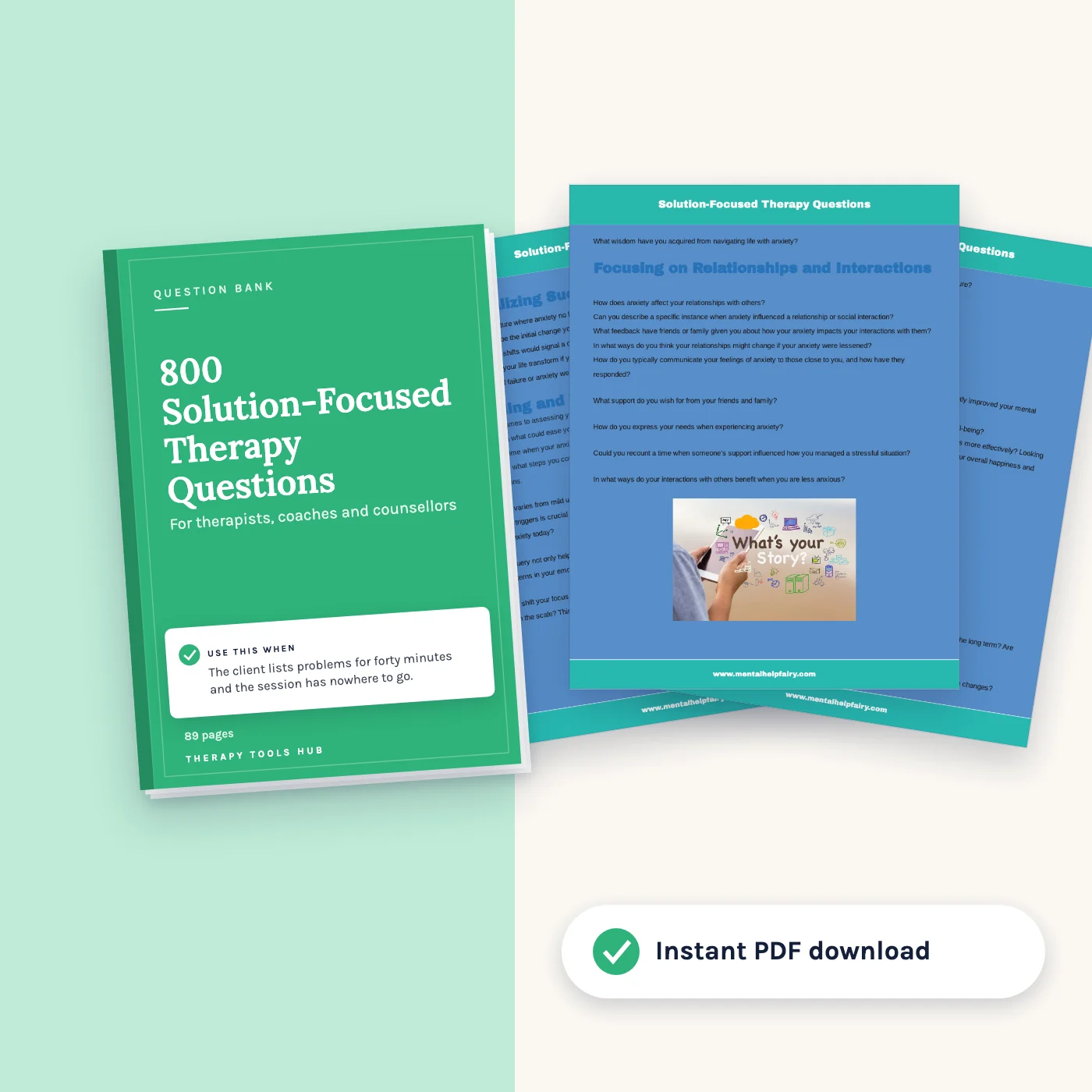
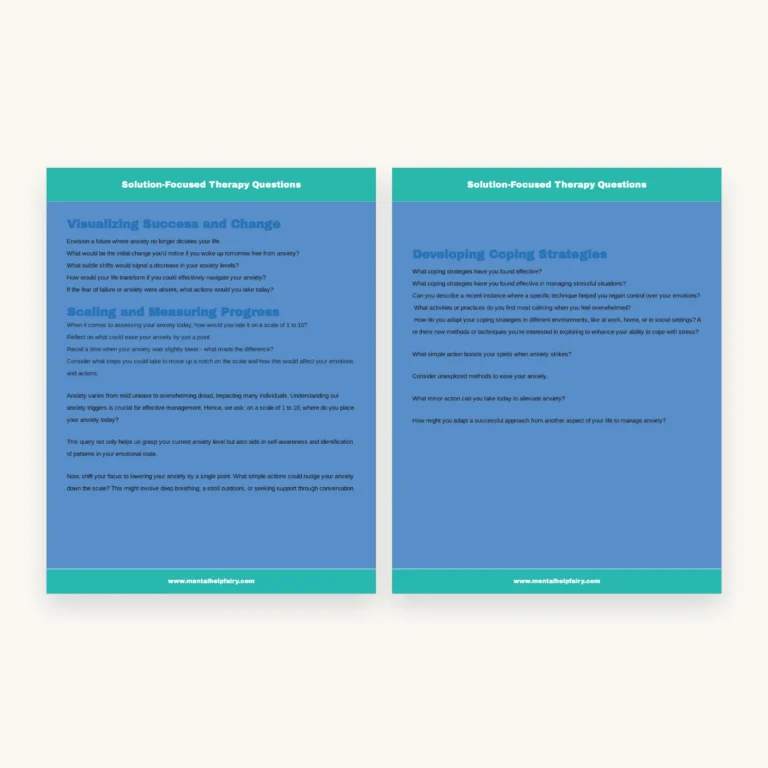
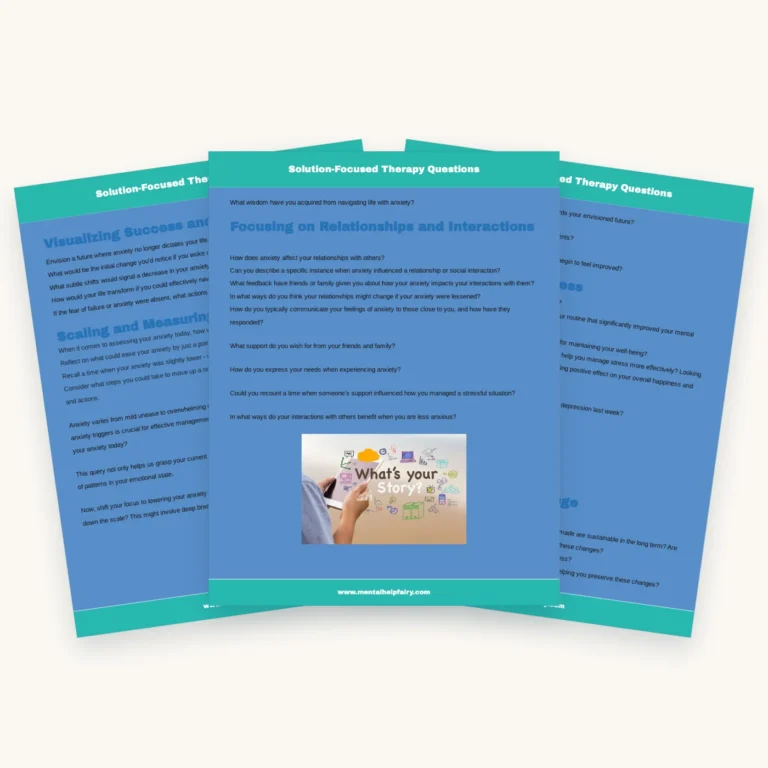
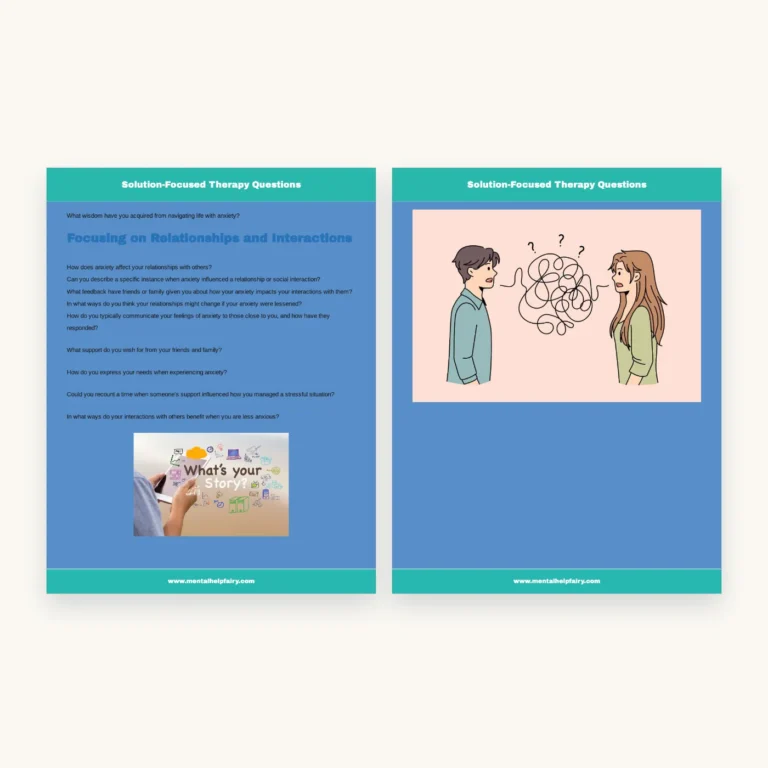
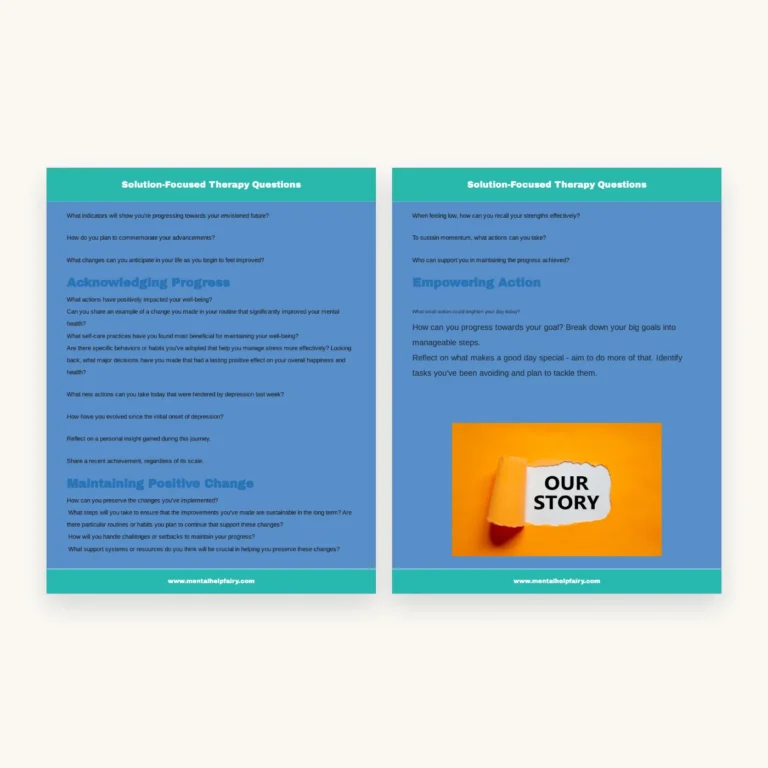
This bank holds 800 solution-focused therapy questions across 89 pages, grouped by what you are trying to do in the room. Open it before a session, mark three questions and write them at the top of your notes. A self-help section lets clients use the same questions between sessions.
Inside the question bank
- Examining exceptions and previous successes
- Assessing the environment and lifestyle
- Building on client strengths and resources
- Identifying support networks
- Visualising success and change
- Developing coping strategies
- Goal setting and taking action
- Scaling questions
- Looking at patterns and triggers
- Coping with setbacks
- Creating meaning and purpose
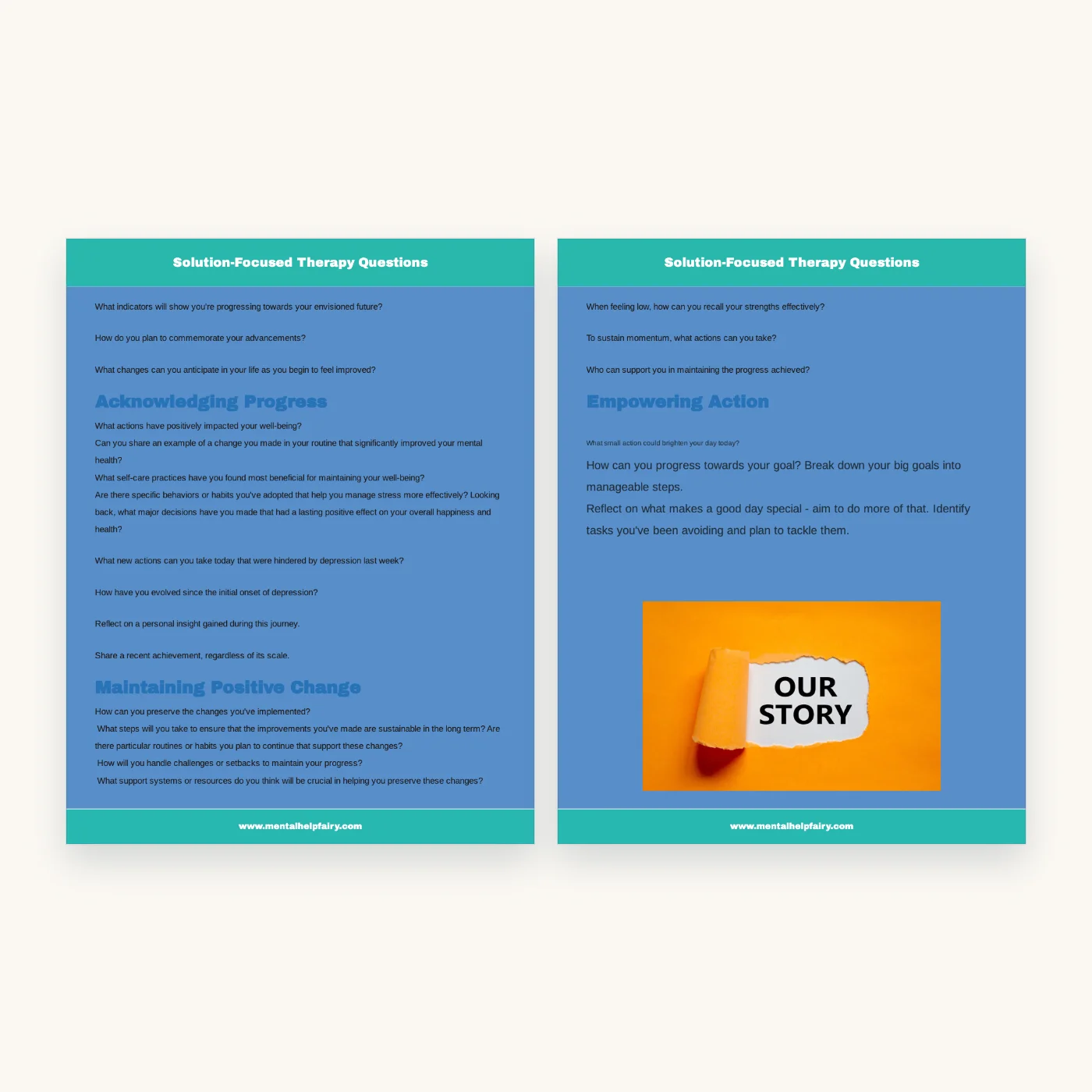
- Reflecting on progress and on the therapy process
Solution focused questions, ready for the room
A client tells you nothing has worked for months. You ask her to describe a day last week which felt a little easier, and she remembers sleeping well after a long walk. The session now has something to build on.
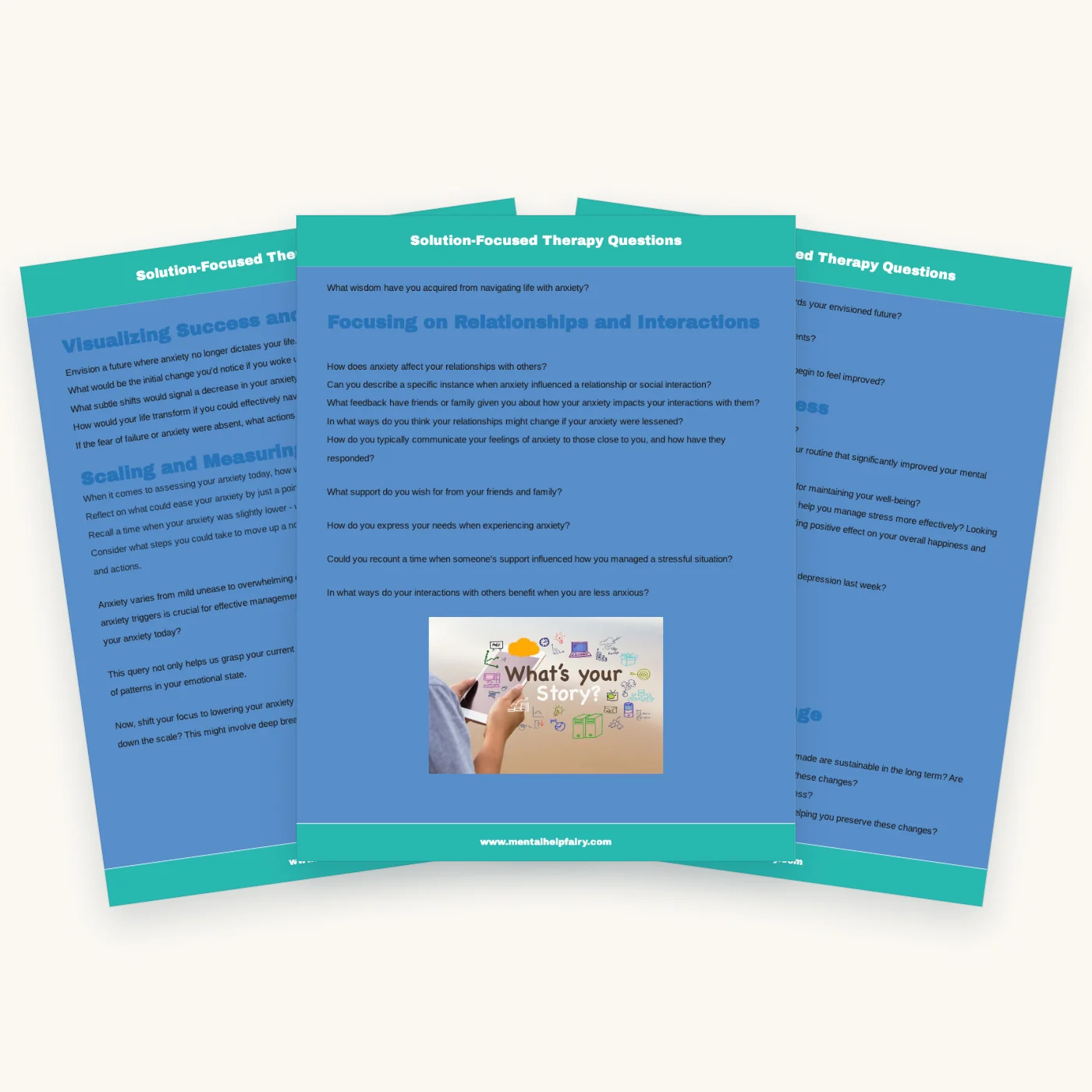
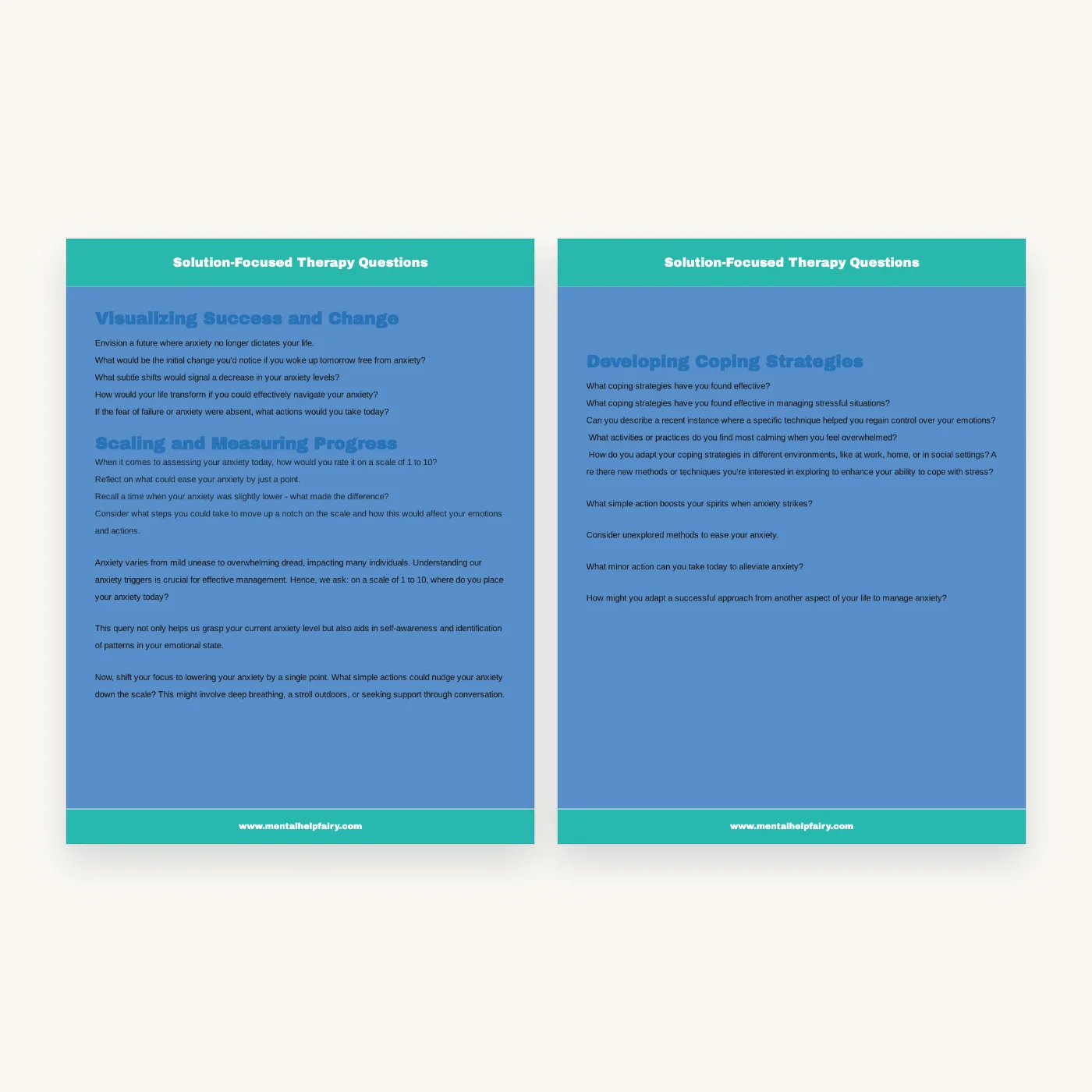
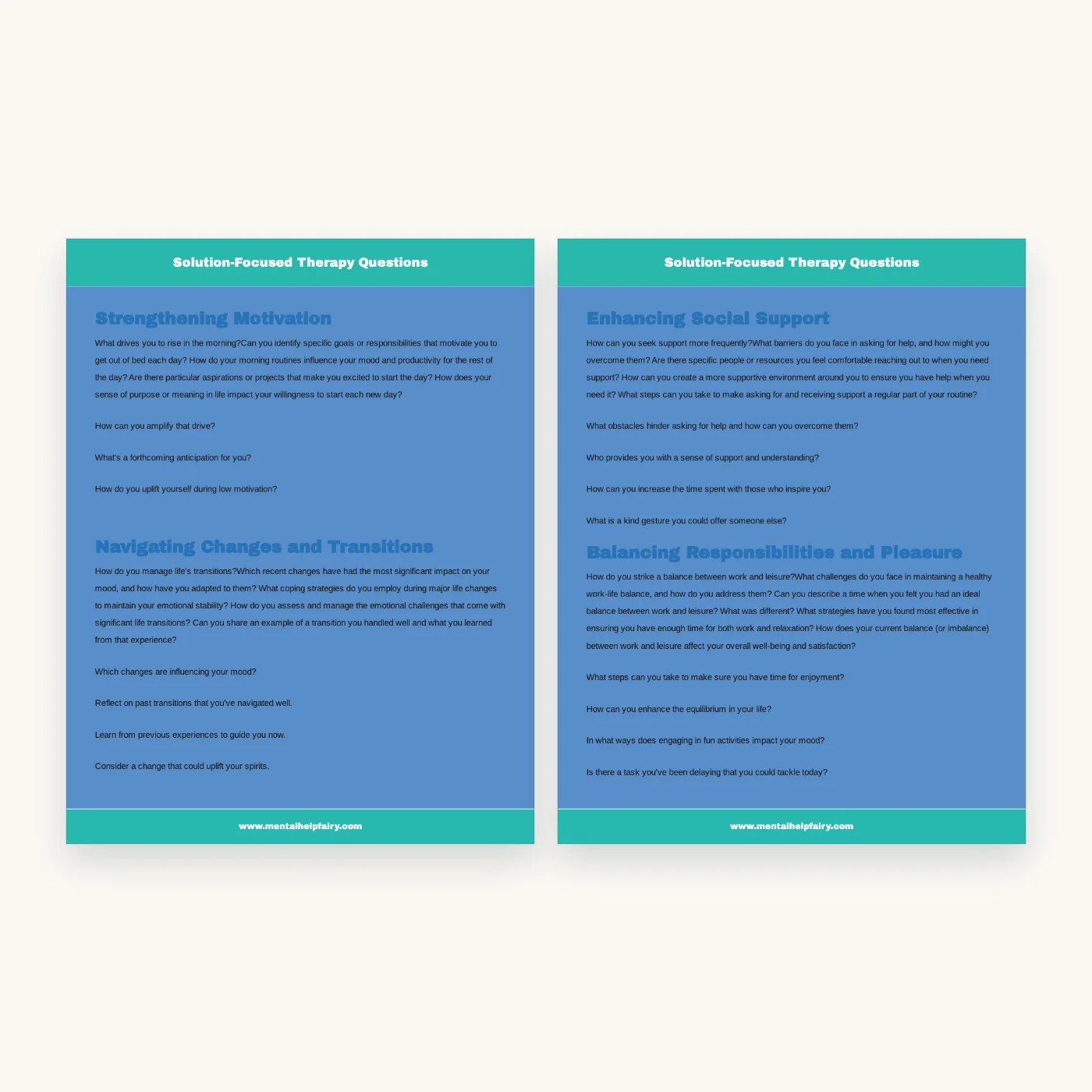
Solution-focused brief therapy looks for exceptions and small next steps instead of the full history of the problem. The PDF groups 800 questions by purpose, with sections for anxiety, depression, grief, anger and mood disorders. Scaling questions sit alongside exception and coping questions, so you move between them without searching.
Who these solution focused question examples suit
- Counsellors trained in SFBT who want fresh wording
- Trainees on placement who freeze when a client goes quiet
- Coaches running short, goal-based work
- Clients between sessions, using the self-help section to reflect on progress
Using the questions in a session
Before the client arrives, open the section which fits their presenting issue. For low mood, the depression pages start with exceptions (“Have you experienced moments of reduced depression?”) and move on to evaluating progress. Mark three questions and write them at the top of your notes.
Ask one scaling question at the start of the hour and the same one near the end, then compare the numbers with your client. When a client wants to explore the story behind the problem, pair the bank with narrative therapy questions. For worked questions in context, read solution-focused therapy questions examples.
Questions about the solution-focused question bank
What format is it?
A 89-page PDF. Print it at home or fill it in on screen. It downloads straight after payment.
Are there solution focused questions for anxiety and depression?
Yes. Separate sections cover anxiety, depression, grief, anger and mood disorders, each with its own exception, coping and progress questions.
What is an example of a scaling question?
“How safe do you feel today on a scale from 0 to 10?” Scaling questions appear in several sections, including grief, where the client rates their grief today.
Is it suitable for use with clients?
It is written or reviewed by a BACP registered therapist for use in sessions and for self-help at home.
PDF, 89 pages. Print or read on any device. Instant download after payment. One purchase covers your own practice.
These materials support your clinical judgement. They do not replace training, supervision or the record-keeping rules of your own professional body.


Reviews
There are no reviews yet.