Description
For the weeks after everyone else moved on
The funeral is over, the cards have stopped, and you are expected at work on Monday as if nothing happened. The waves still come without warning.
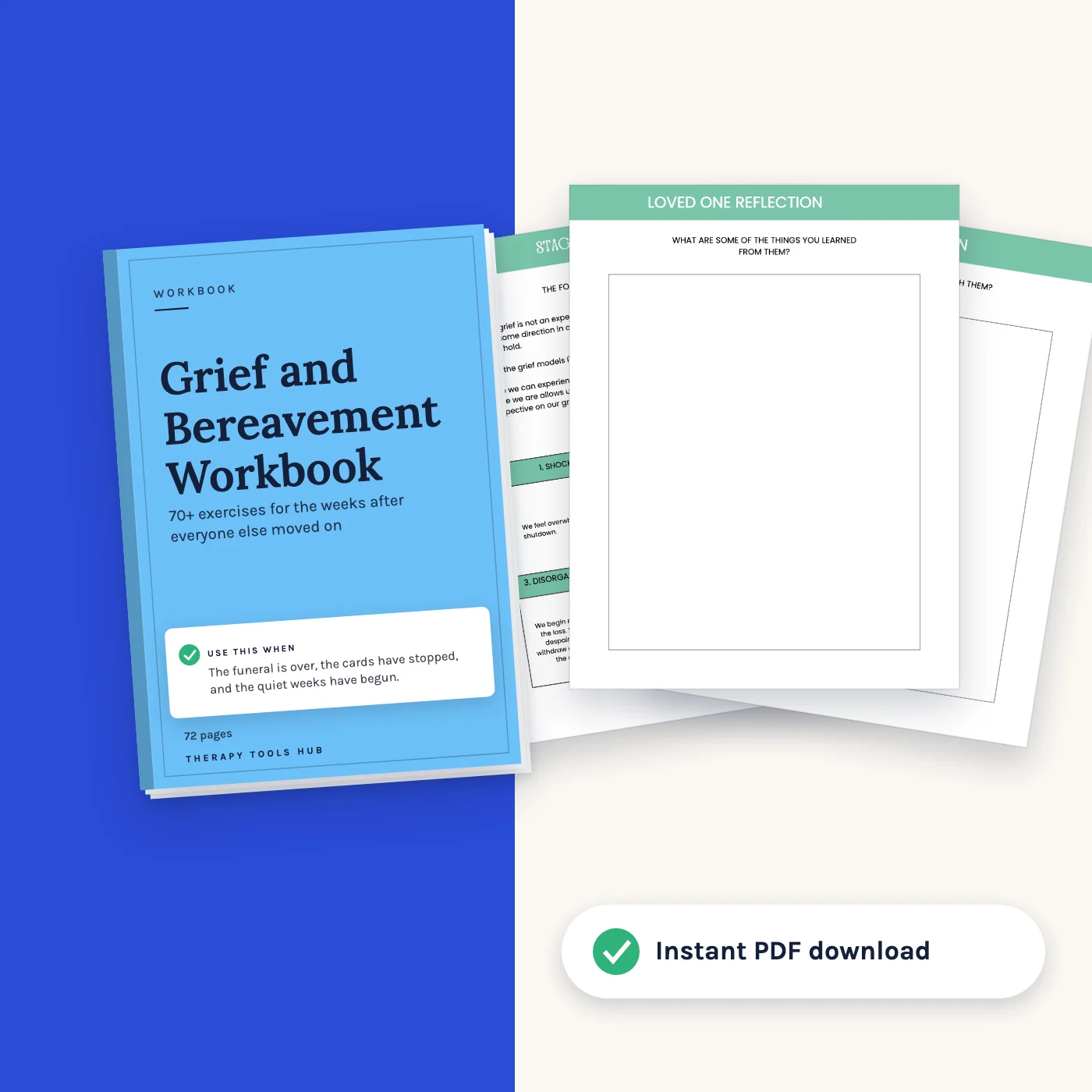
This 72-page workbook gives grief somewhere to go. It opens with how grief shows up in thoughts, body and behaviour, then moves through reflections on the person you lost, a letter to them, and loss rituals you plan step by step. Later pages help you carry the loss into a changed life, with exercises on meaning, values and what matters now.
Inside this workbook
- Grief symptoms in thoughts, body and behaviour
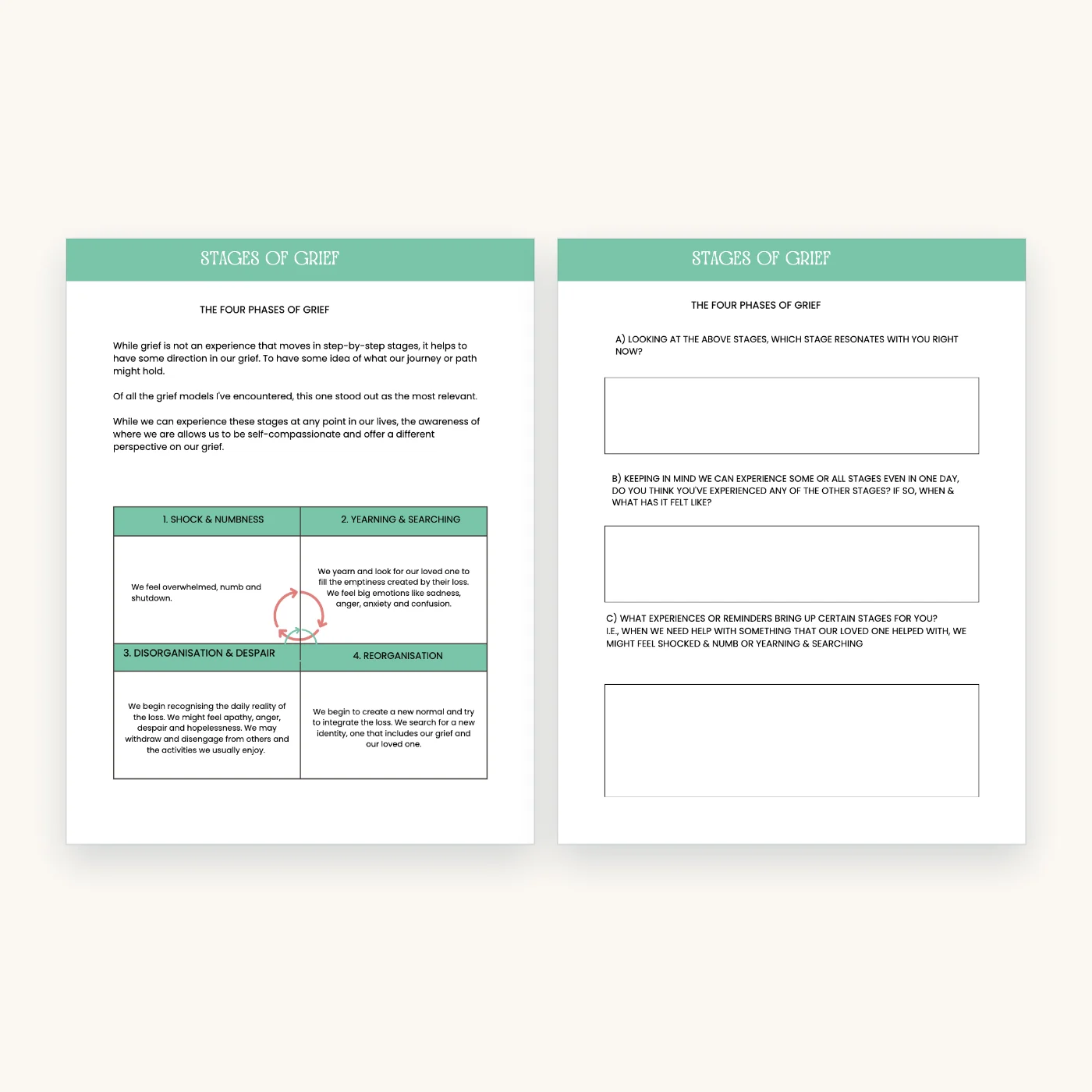
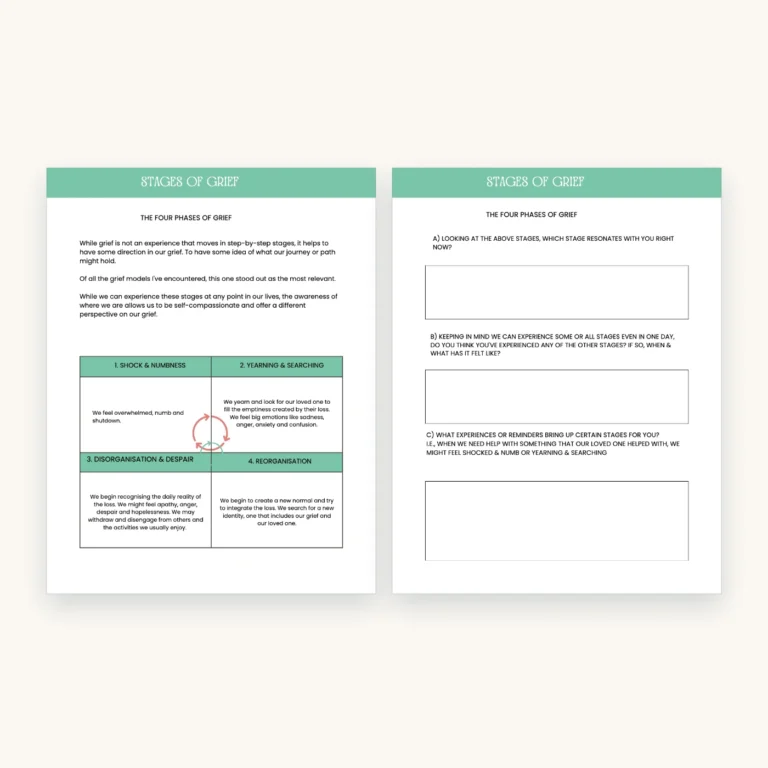
- The four phases of grief
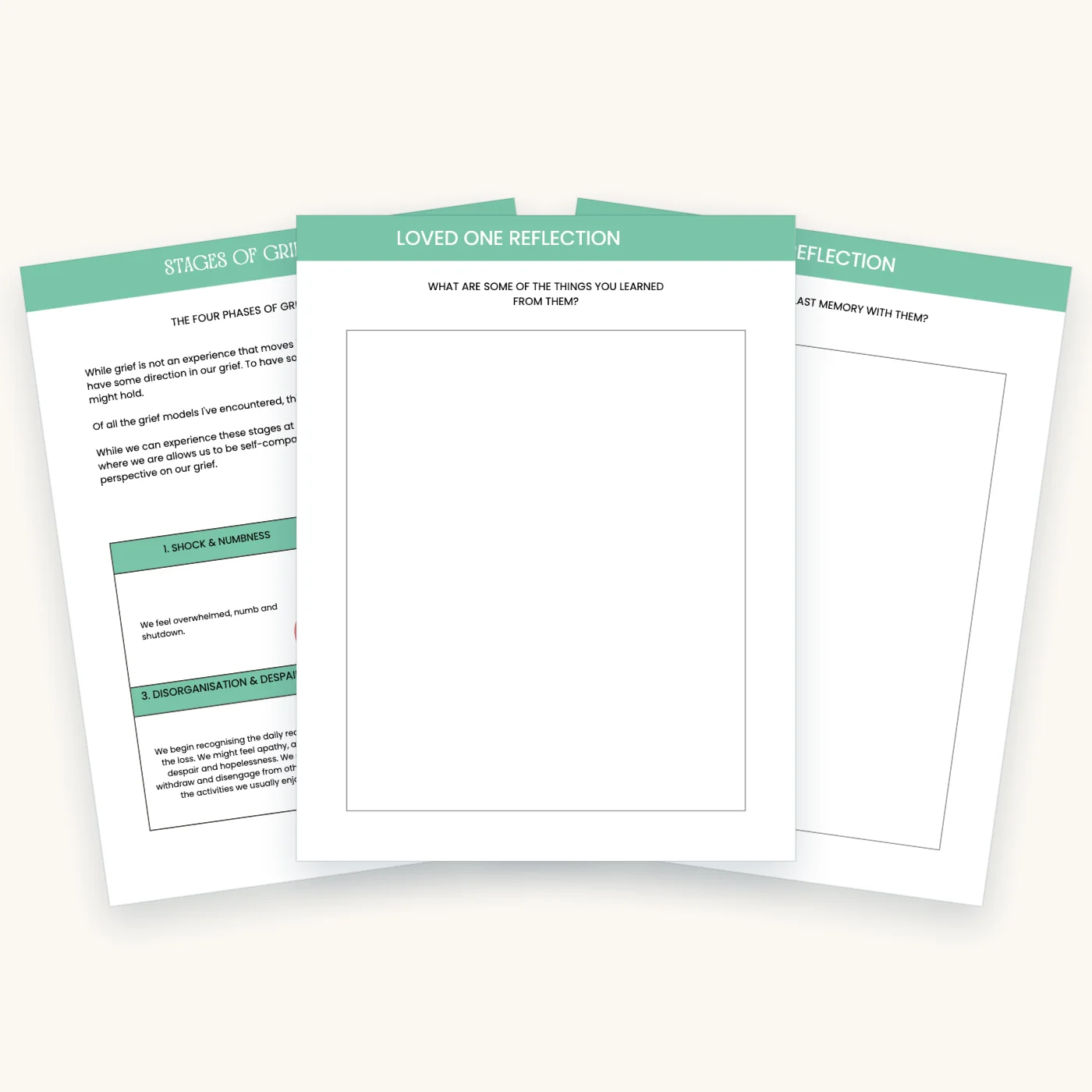
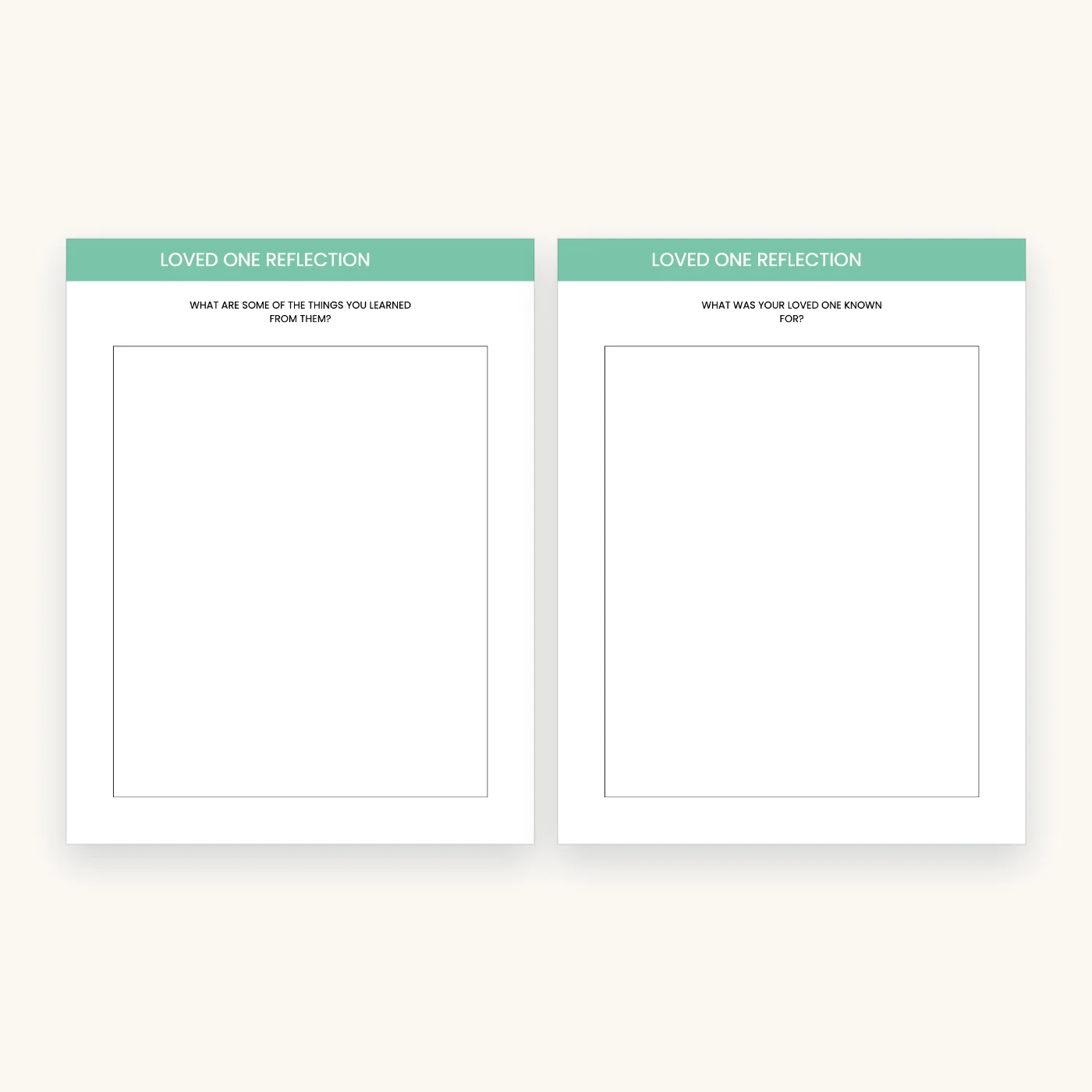
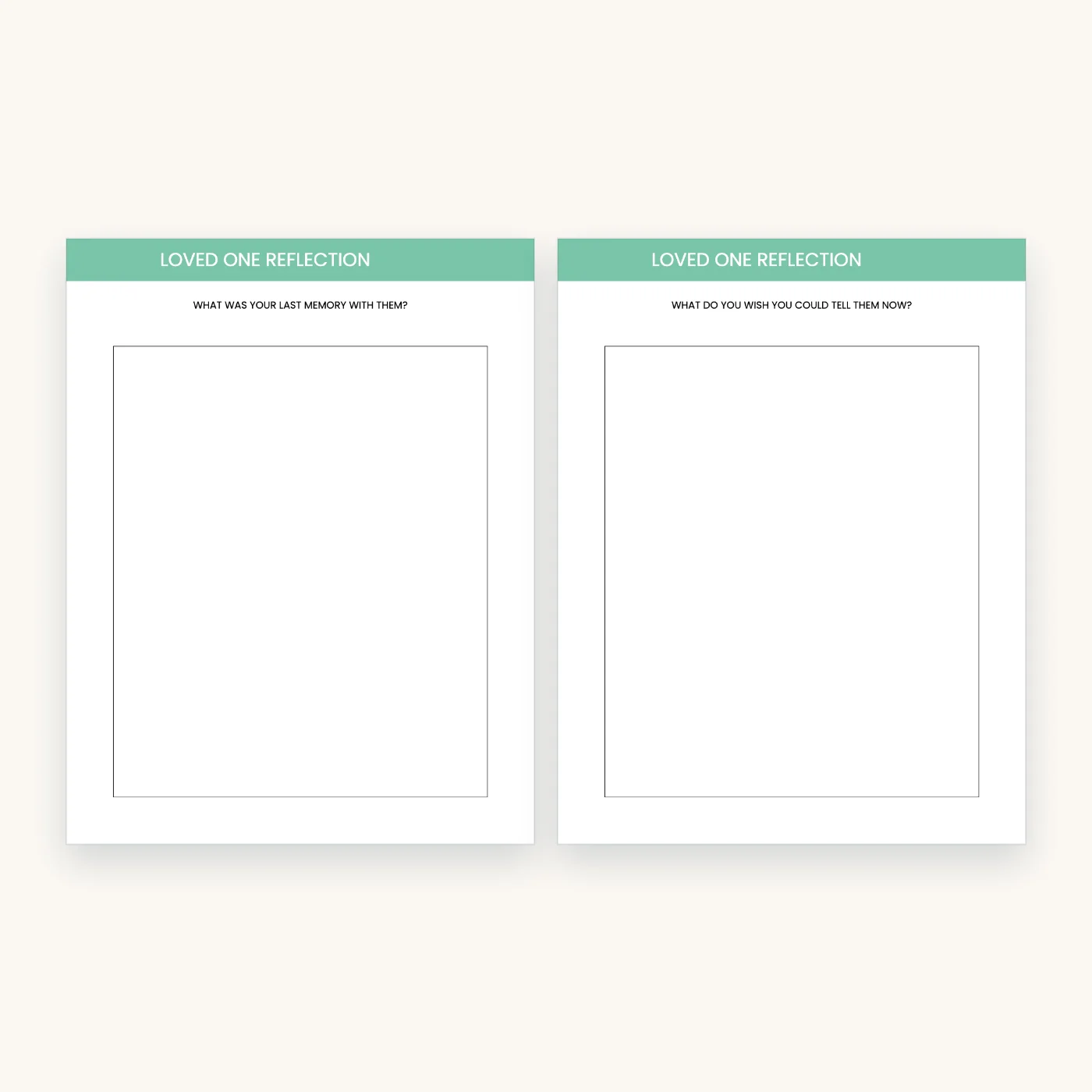
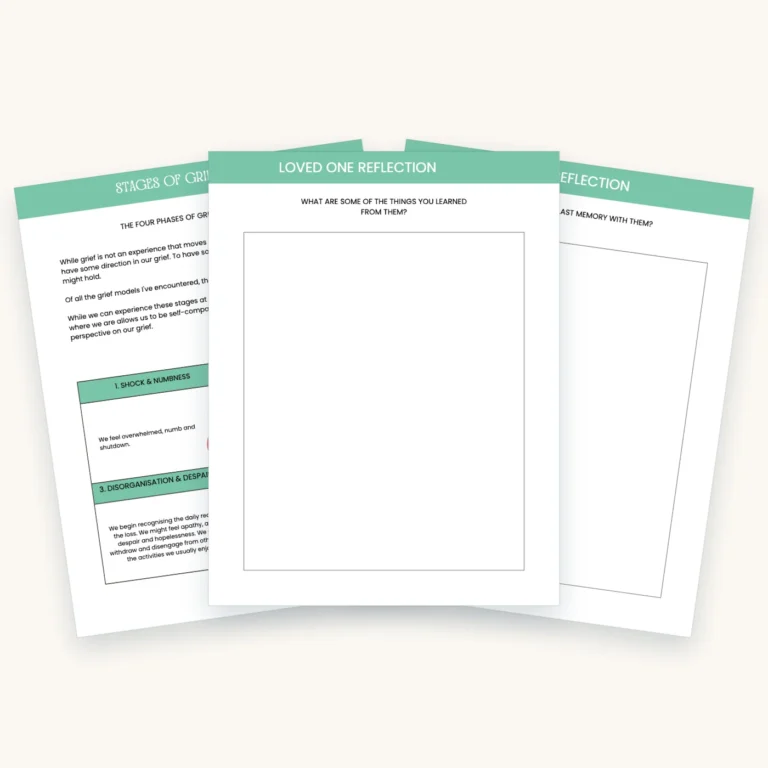
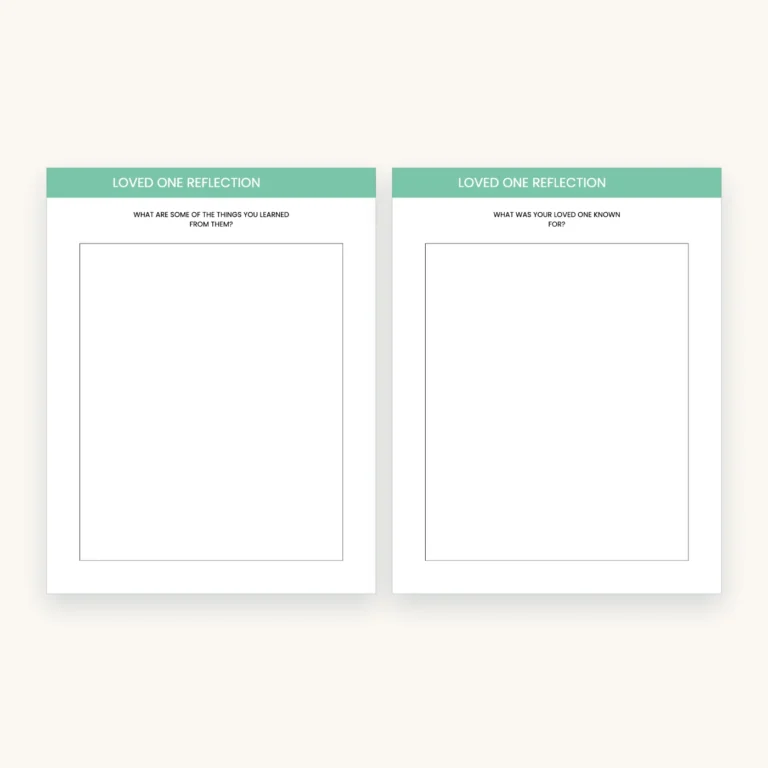
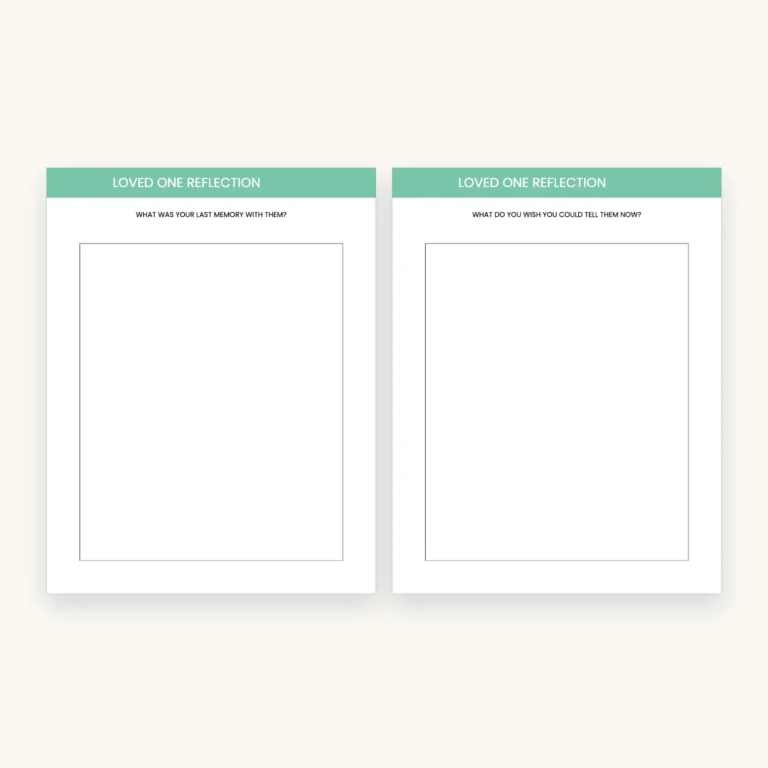
- Loved one reflections: fondest memory, what they were known for, what you wish you had said
- Reconnection meditation
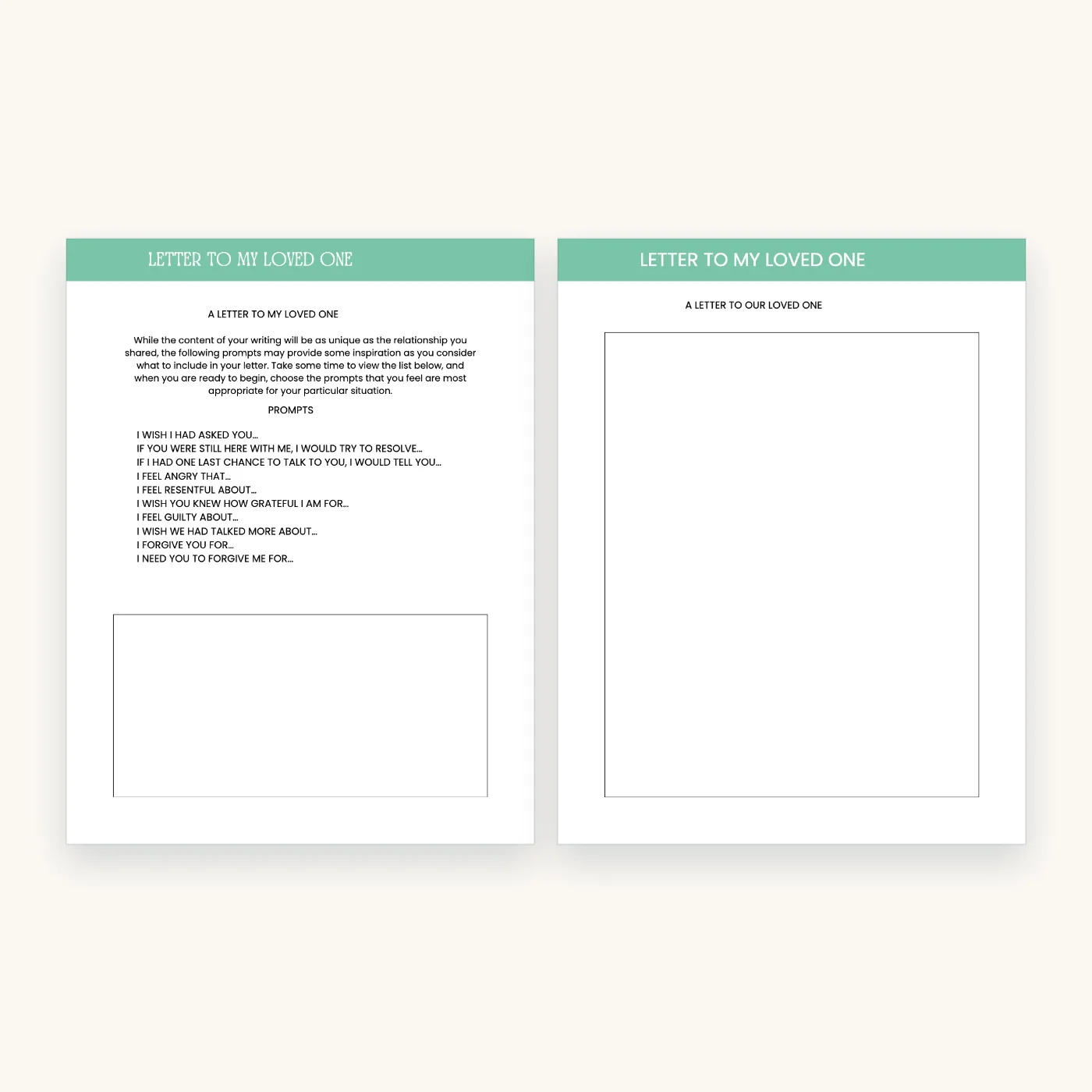
- A letter to my loved one
- Loss rituals, planned page by page
- Grief reflection: the circumstances, part of my story is
- Self-soothing techniques
- Integrating loss and finding meaning in life again
- Changes in perspective, values, hopes and how you live
- Values we hold close
What a grief workbook for adults gives you
Three months after your father died, you reach for the phone to tell him about your day. The grief arrives again, as sharp as in the first week.
Grief returns at unexpected moments for months and years after a death. The workbook explains the four phases of grief and asks which one describes you today. It treats symptoms in your thoughts, body and behaviour as normal responses to loss. Writing gives the feelings a place outside your head, which matters once friends have stopped asking.
Who these grief worksheets for adults suit
- Adults in the first year after a bereavement
- People who feel guilty about what they did not say
- Anyone planning a private ritual for an anniversary
- Bereavement counsellors looking for structured homework
How to work through it
Begin with the grief symptoms pages and circle what you recognise. Then spend time on the loved one reflections, such as your fondest memory, what they were known for and your last memory together. Write the letter to your loved one when you feel ready. The second letter option gives sentence starters such as “I wish I had asked you” if a blank page feels too much.
Plan a loss ritual with the step-by-step pages, deciding who to involve and where to hold it. Later, the integrating loss and finding meaning pages help you list what has changed in your values, hopes and daily life. For the weeks when support drops away, read coping with grief after the funeral.
Questions about the grief workbook
What format is it?
A 72-page PDF. Print it at home or fill it in on screen. It downloads straight after payment.
When should I start a grief workbook?
Start when you want somewhere to put your thoughts. Some people begin in the first weeks, others after a year. Go at your own pace and skip pages which feel too raw.
Does it include a letter to my loved one?
Yes. Write a free letter, or use the second option with prompts such as “I wish I had asked you” and “I feel guilty about”.
Is it suitable for use with clients?
It is written or reviewed by a BACP registered therapist for use in sessions and for self-help at home.
PDF, 72 pages. Print at home or fill in on screen. Instant download after payment.
This workbook is an educational resource. It does not replace therapy, medical care or crisis support. If you feel unsafe, contact your GP, NHS 111 or your local emergency services.


Reviews
There are no reviews yet.