Description
Learn your nervous system, then work with it
You are safe now and your body still does not believe it. The heart races in a quiet room, sleep comes late, and a raised voice on the television sends you back years.
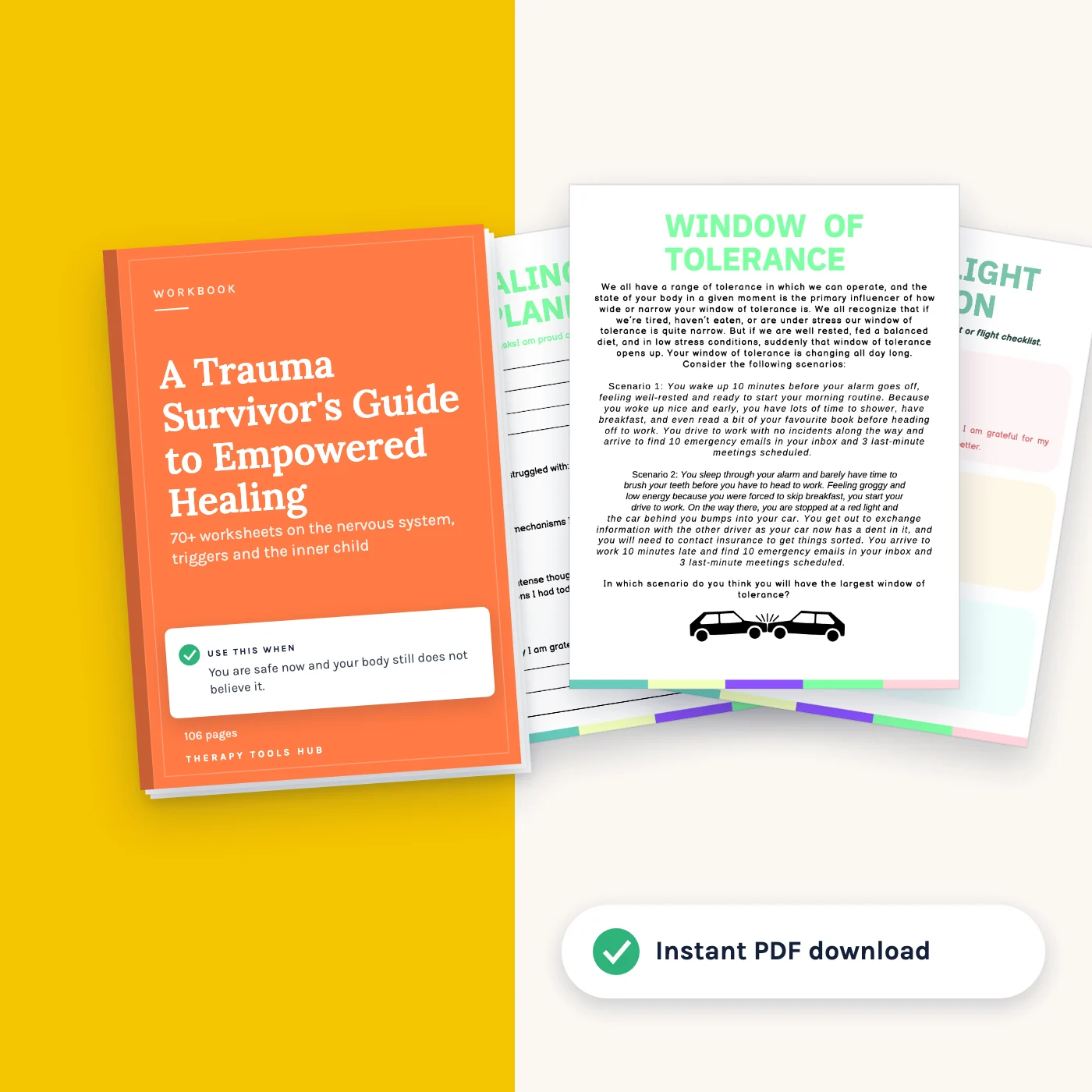
This 106-page workbook from Mental Help Fairy teaches self-regulation from the ground up. It starts with what trauma is and how fight, flight and freeze work, then helps you find your own window of tolerance and the triggers which push you out of it. The second half builds a response plan, a safety plan and a set of tools, before turning to the inner child, core wounds, attachment and boundaries.
Inside this workbook
- What is trauma, examples of trauma, core values of healing
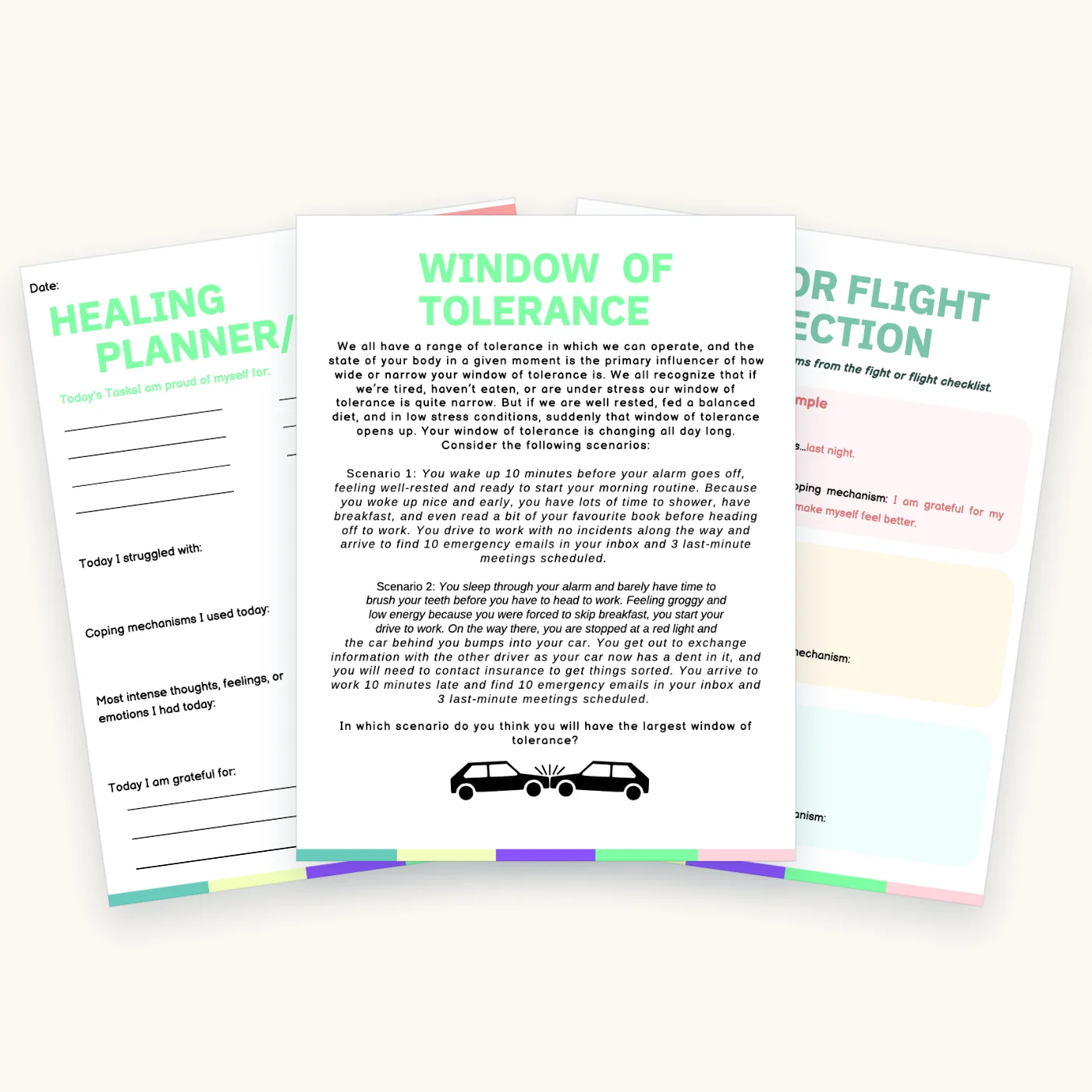
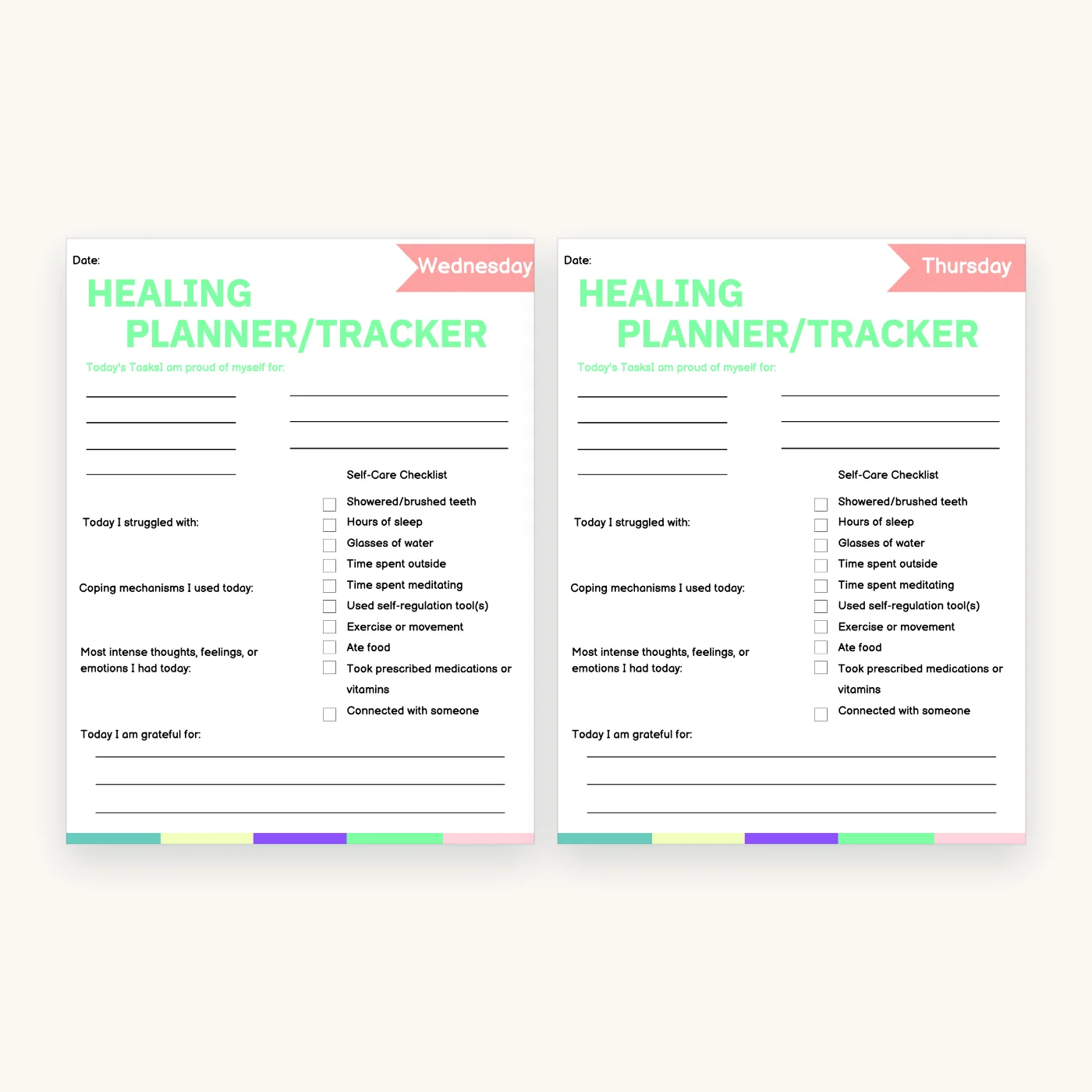
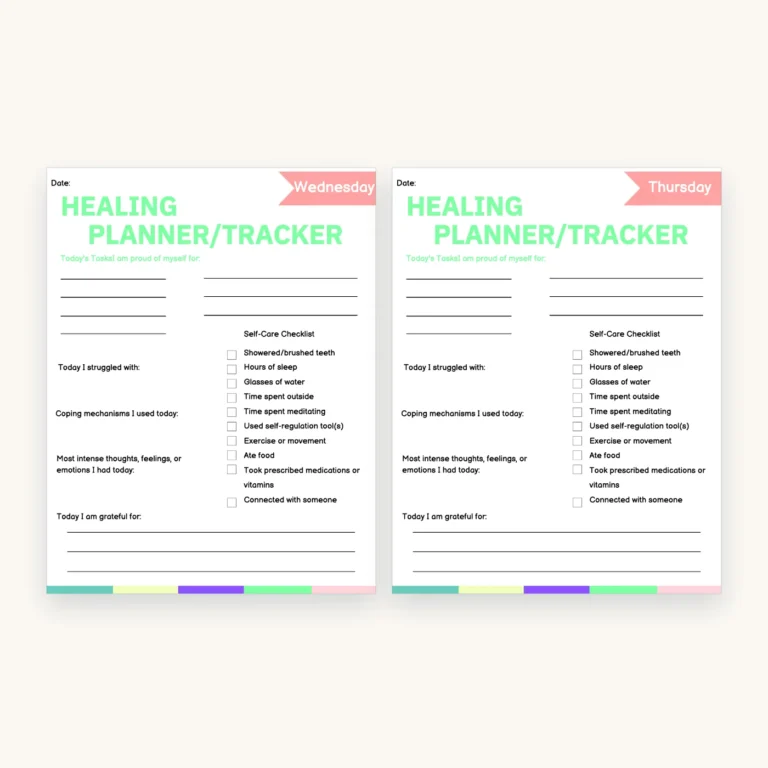
- Healing planner and my healing goals
- The nervous system: fight or flight, freeze, the ladder of dysregulation
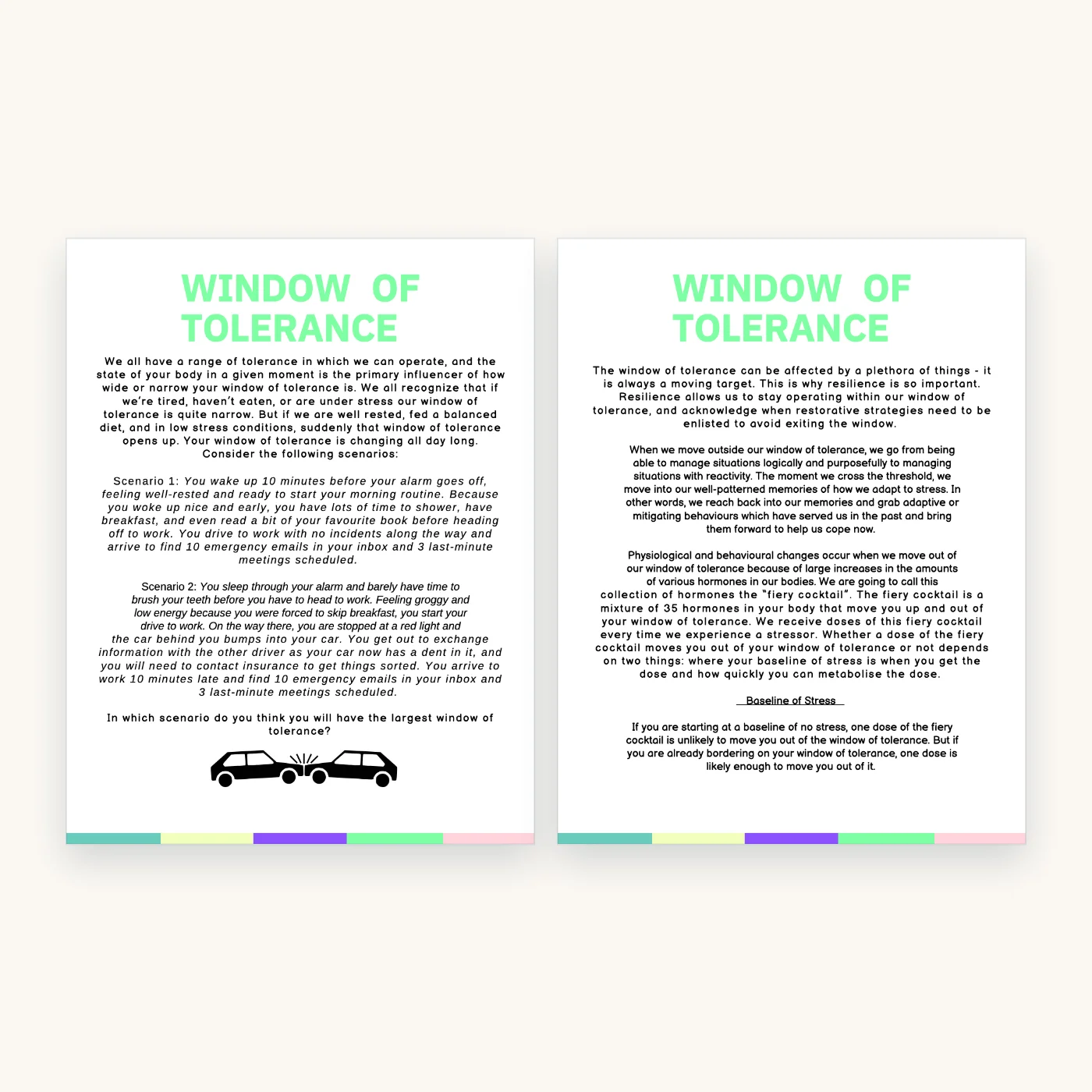
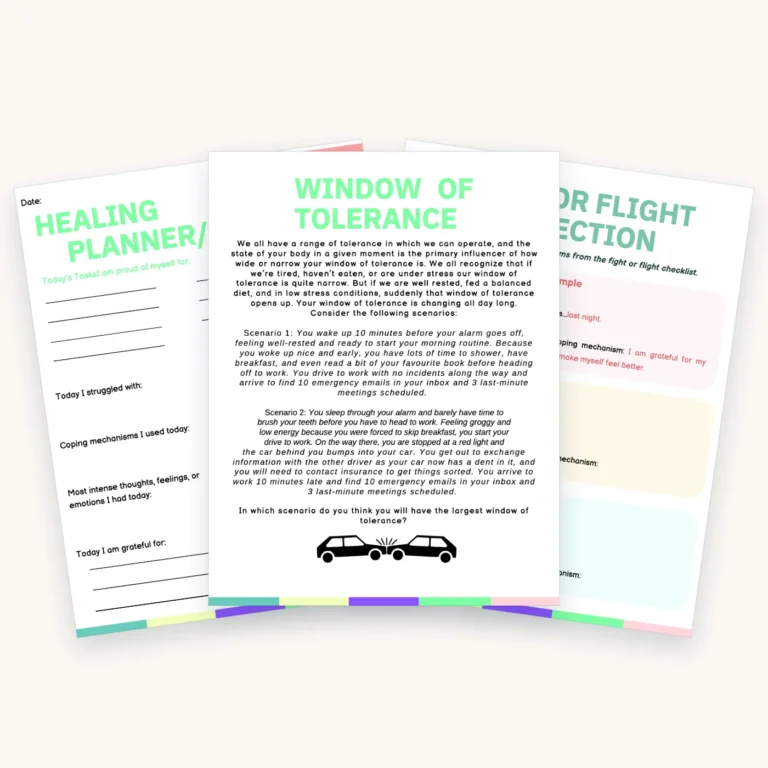
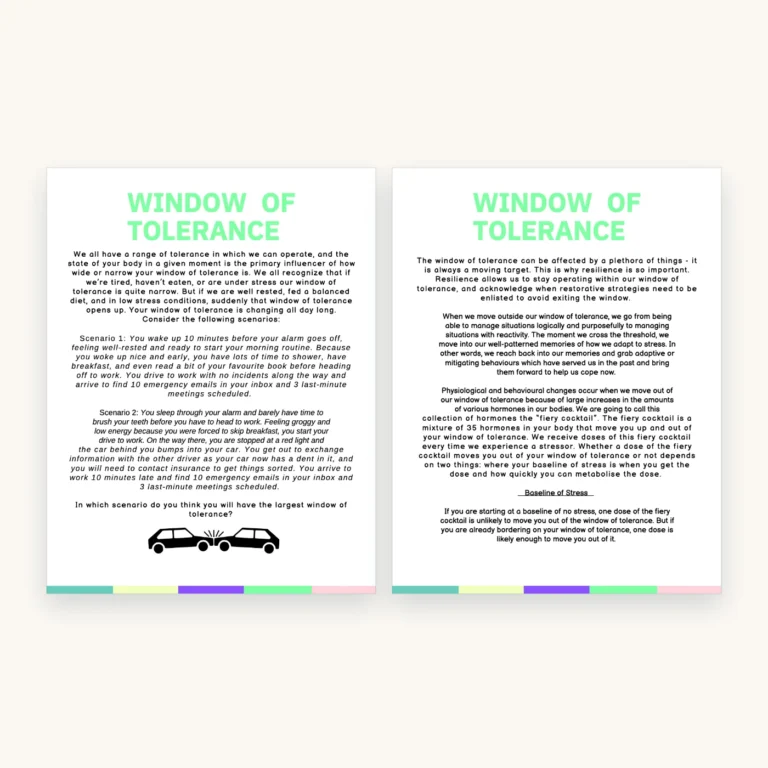
- Window of tolerance and what shrinks or expands it
- Noticing signs of dysregulation and safety, head to toe
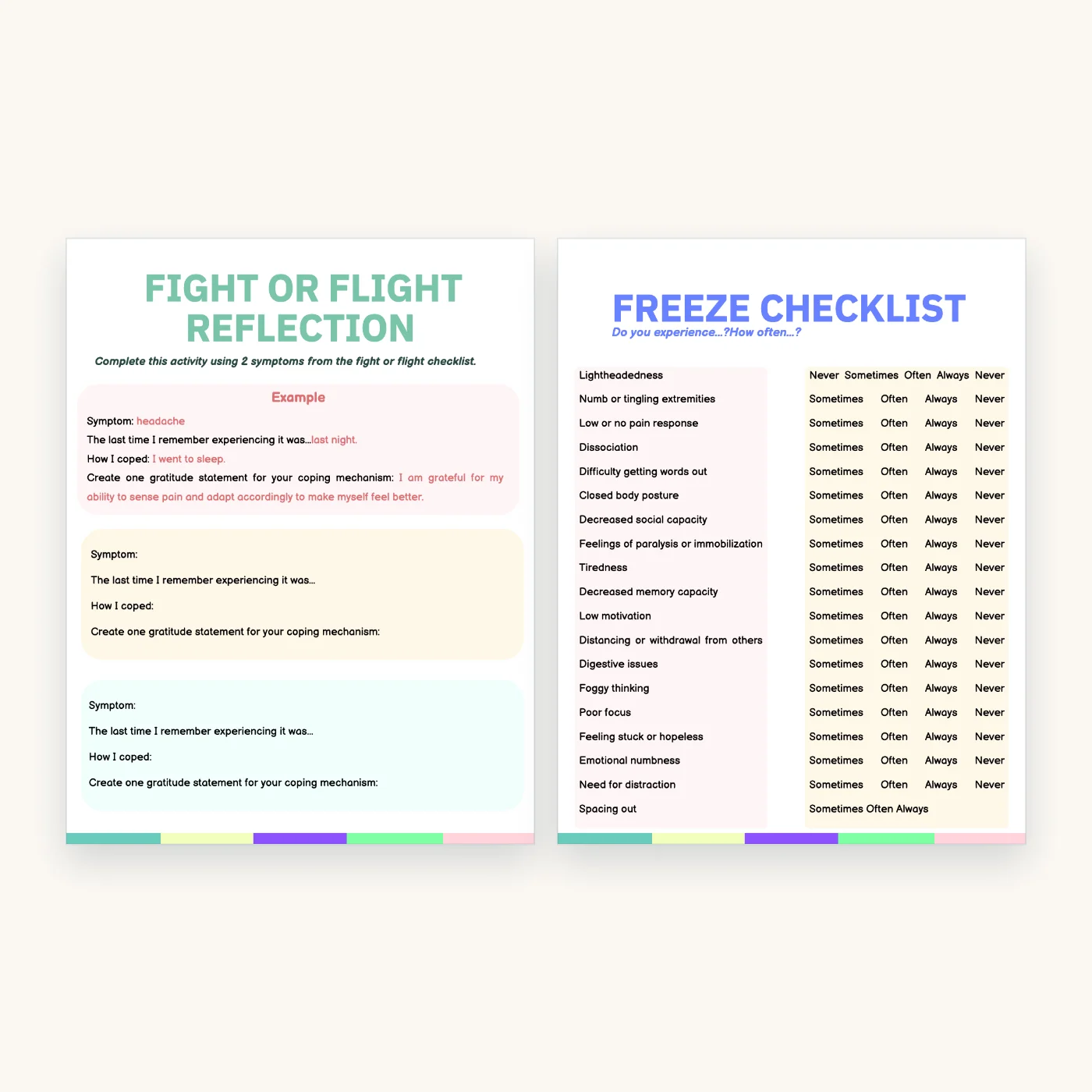
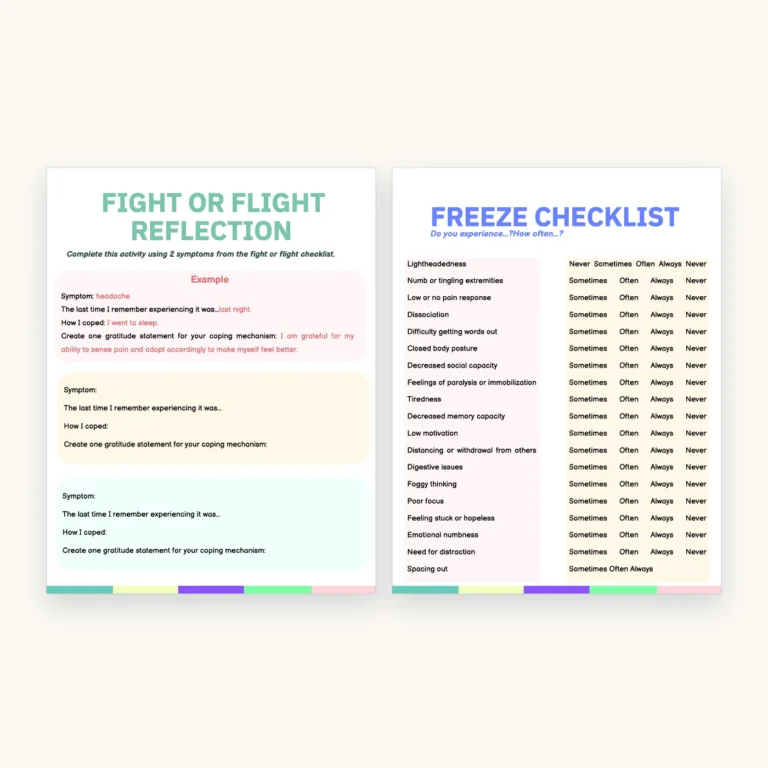
- Checklists and reflections for fight or flight, freeze and safety
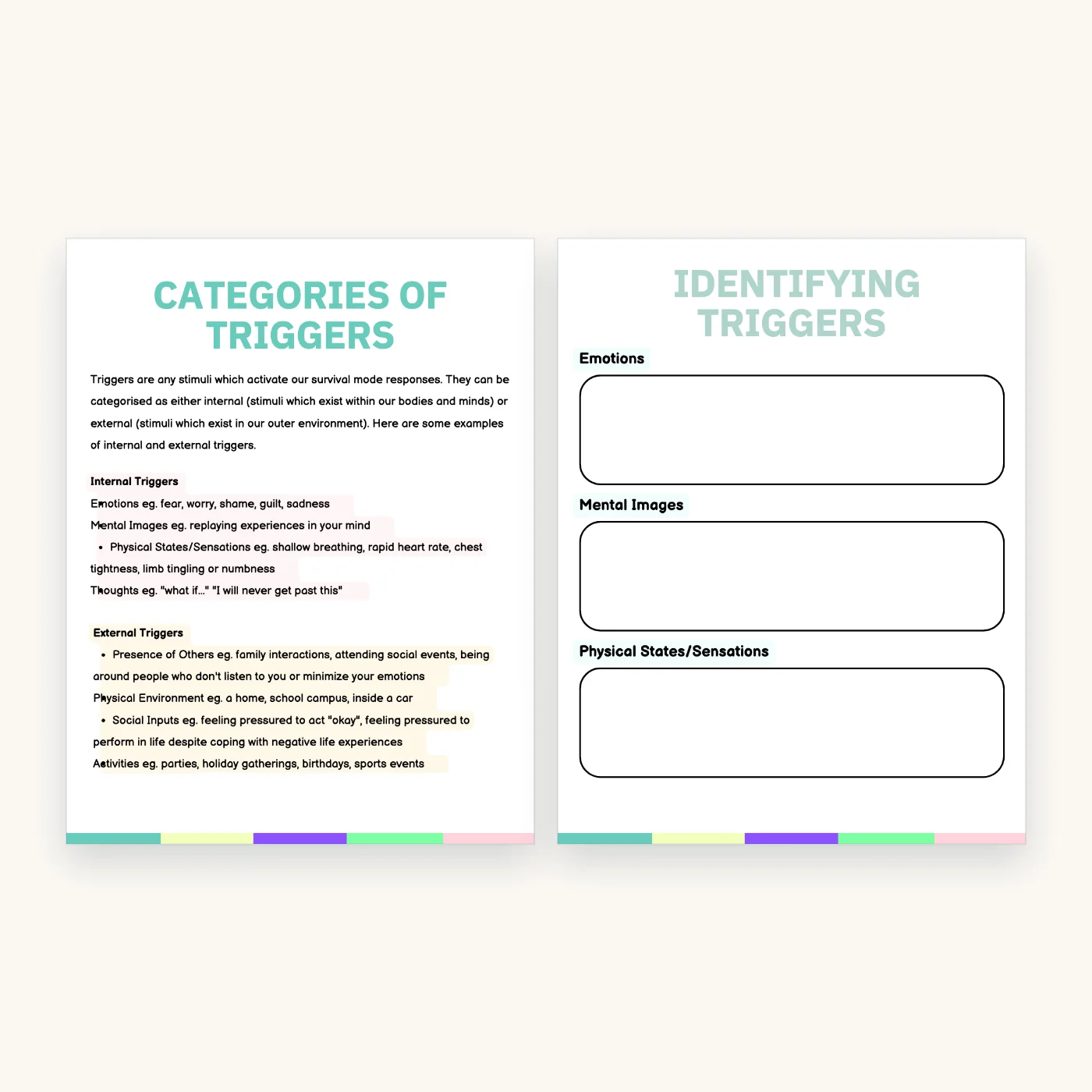
- Triggers: categories, diary, scale, and communicating them
- Tools for transformation: breathing, vagus nerve, body-based, co-regulation and mental exercises
- Reacting versus responding, my response plan, my safety plan, trigger tracker
- Inner child work, caregivers, core wounds, a letter to your inner child
- Attachment styles, relationship values, boundaries, fears and breaking patterns of behaviour
A trauma workbook for adults built on the nervous system
Your partner shouts at the football on television and you freeze on the sofa, unable to speak. Afterwards you feel foolish. The workbook explains the reaction. Your nervous system read a raised voice as danger and chose freeze before you had time to think.
Each section builds on the last. You learn how fight, flight and freeze work, then map your window of tolerance, the range in which you cope with stress and still think clearly. Checklists help you notice signs of dysregulation and signs of safety from head to toe.
Who these trauma worksheets for adults suit
- Women rebuilding after an abusive relationship
- Survivors whose life is safe now while the body still reacts
- People with attachment wounds which show up in every close relationship
- Therapists who want psychoeducation pages to share in session
Moving through the workbook
Fill in the healing planner for the first week and set two or three healing goals. Then work through the nervous system chapters in order, completing the fight or flight, freeze and safety checklists. Keep the trigger diary for at least two weeks before you write your response plan, so the plan reflects real events.
The tools for transformation section gives you practices to try, including sailboat breathing, a body scan and the 5-4-3-2-1 exercise. Keep the ones which work in your safety plan. Later chapters turn to the inner child, caregivers and attachment styles. For more on attachment patterns, the attachment workbook goes into detail, and the nervous system regulation guide adds daily calming exercises.
Questions about the trauma survivor’s workbook
What format is it?
A 106-page PDF. Print it at home or fill it in on screen. It downloads straight after payment.
What is the window of tolerance?
The window of tolerance is the range in which you handle stress and still think clearly. The workbook helps you name what pushes you out of it, and who.
Does this trauma workbook suit women?
Yes. The exercises apply to anyone. The pages on boundaries, attachment and relationship values suit women recovering from controlling or abusive relationships.
Is it suitable for use with clients?
It is written or reviewed by a BACP registered therapist for use in sessions and for self-help at home.
PDF, 106 pages. Print at home or fill in on screen. Instant download after payment.
This workbook is an educational resource. It does not replace therapy, medical care or crisis support. If you feel unsafe, contact your GP, NHS 111 or your local emergency services.


Reviews
There are no reviews yet.