Description
Pages for the days the past comes back
A door slams and your body reacts as if the danger is back. You avoid the street, the song, the date, and your life gets smaller each year.
This workbook explains what trauma does in plain language, then gives you 65 pages of structured exercises and trackers. Work on one trigger at a time, record what happened and what your body did, and build a set of coping cards you keep in your pocket. Planner and tracking pages hold the medical side: appointments, medication, therapy goals.
Inside this workbook
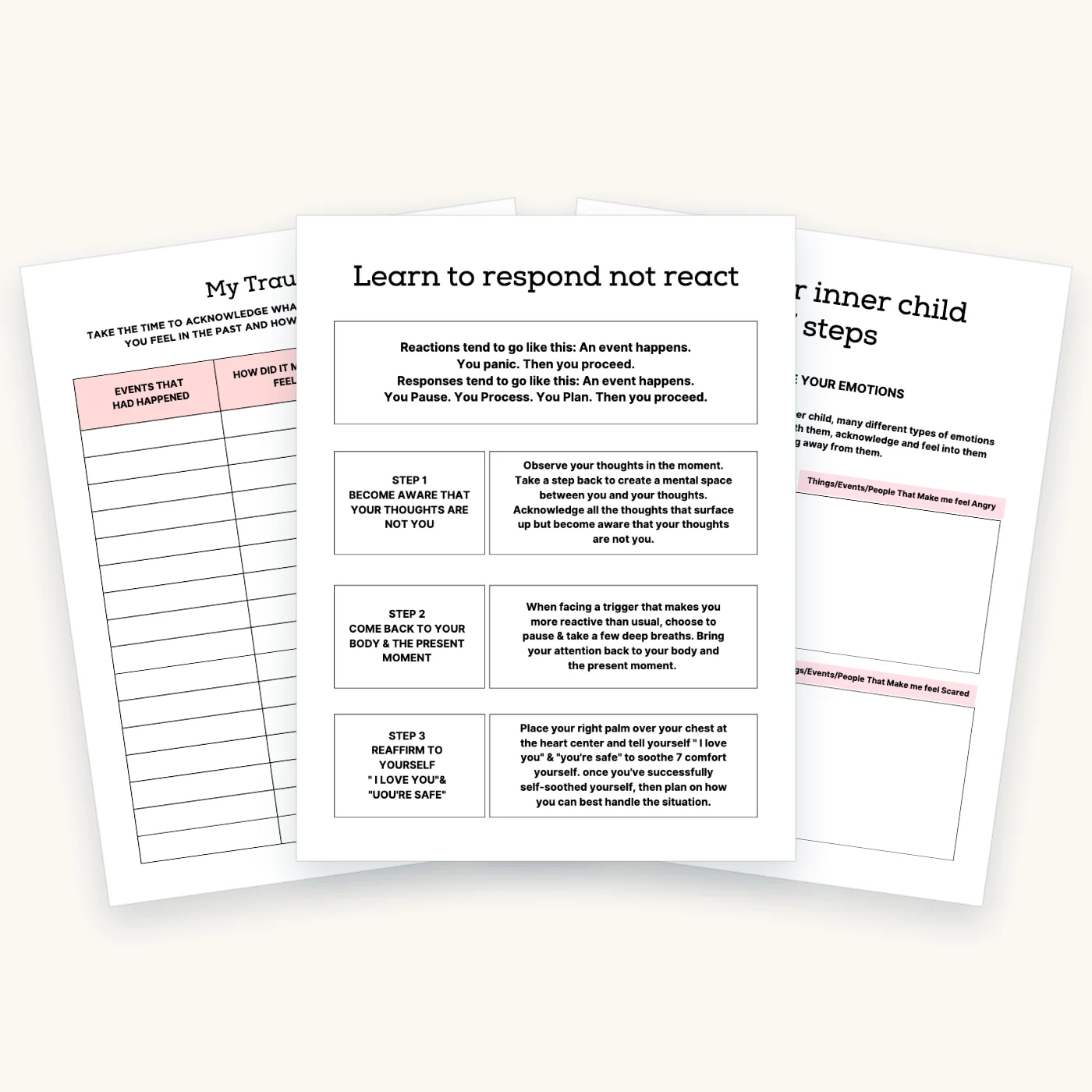
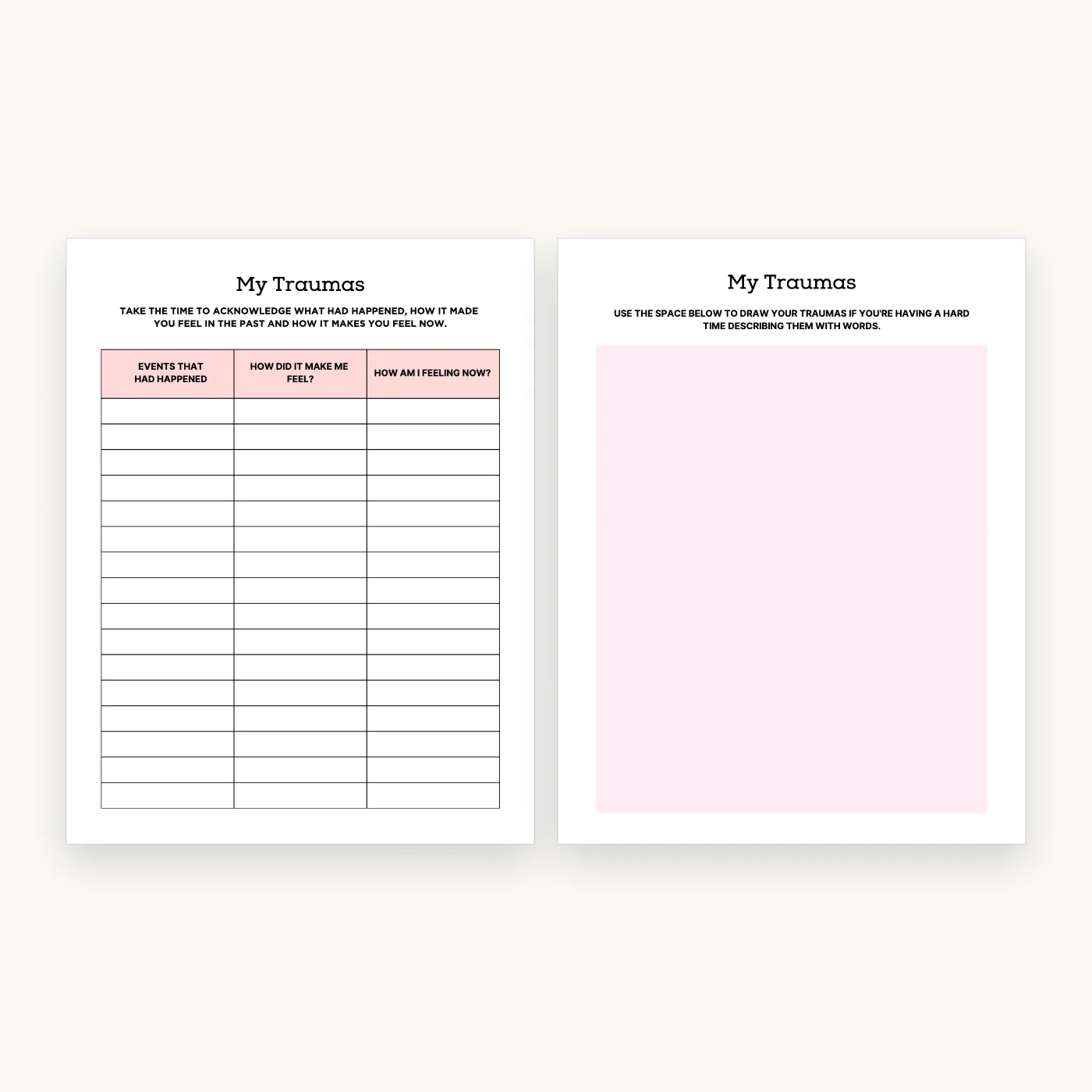
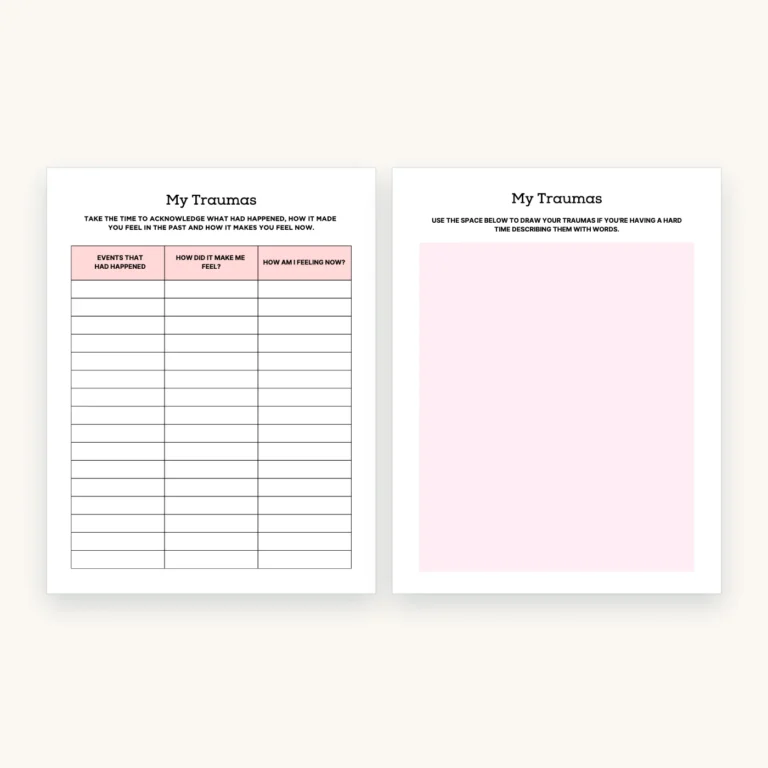
- My traumas: describe and acknowledge what happened
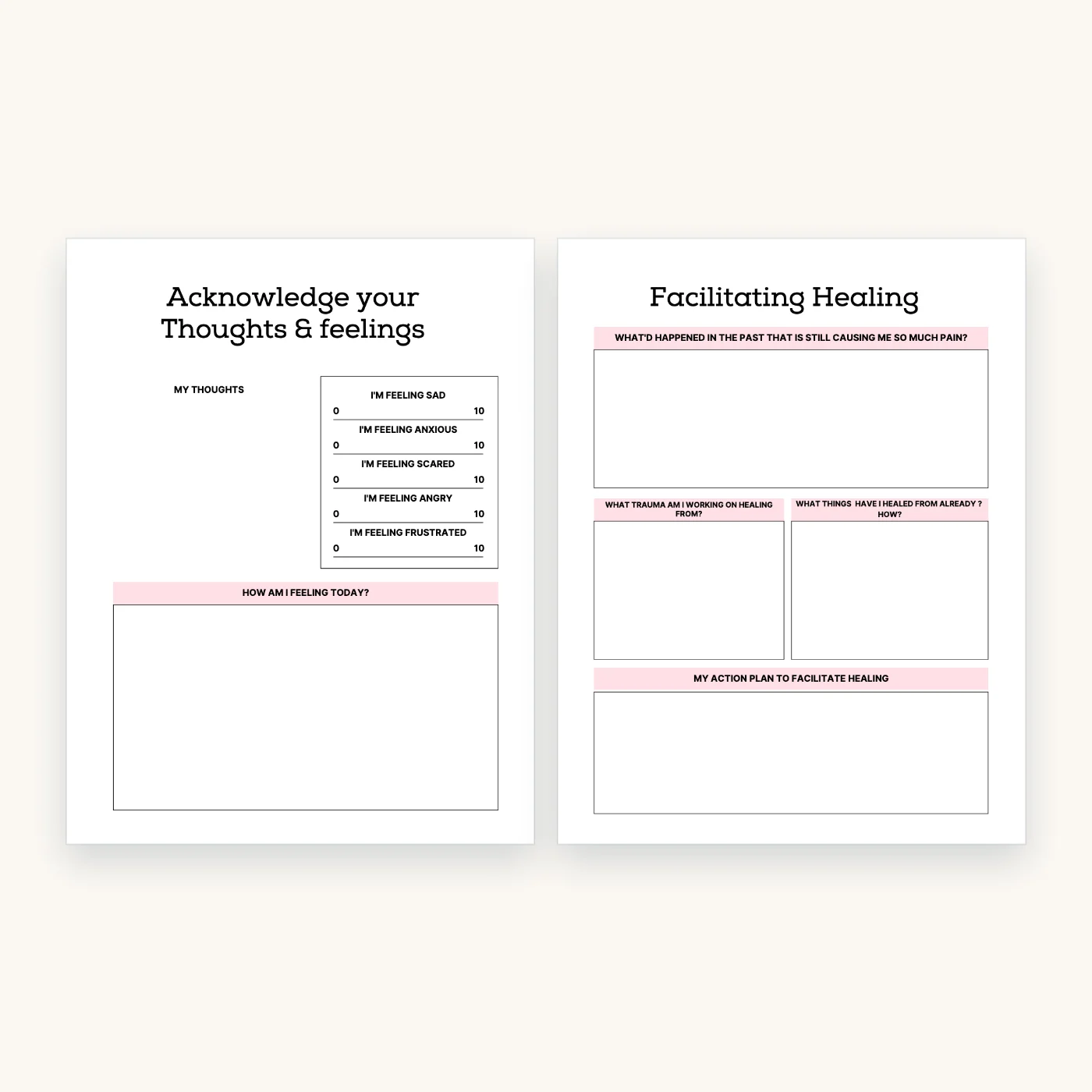
- Working on your triggers, trigger processing and where you hold them in the body
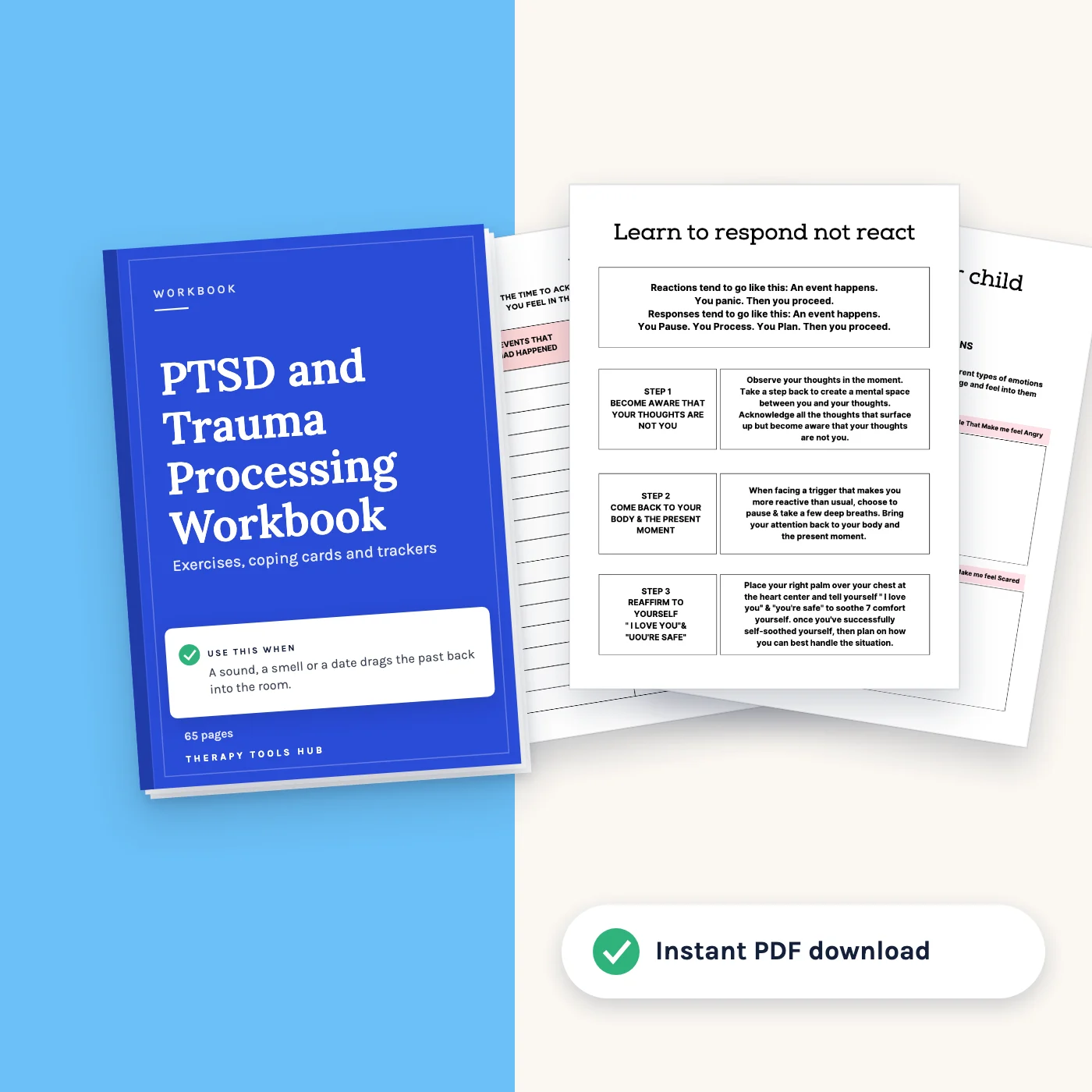
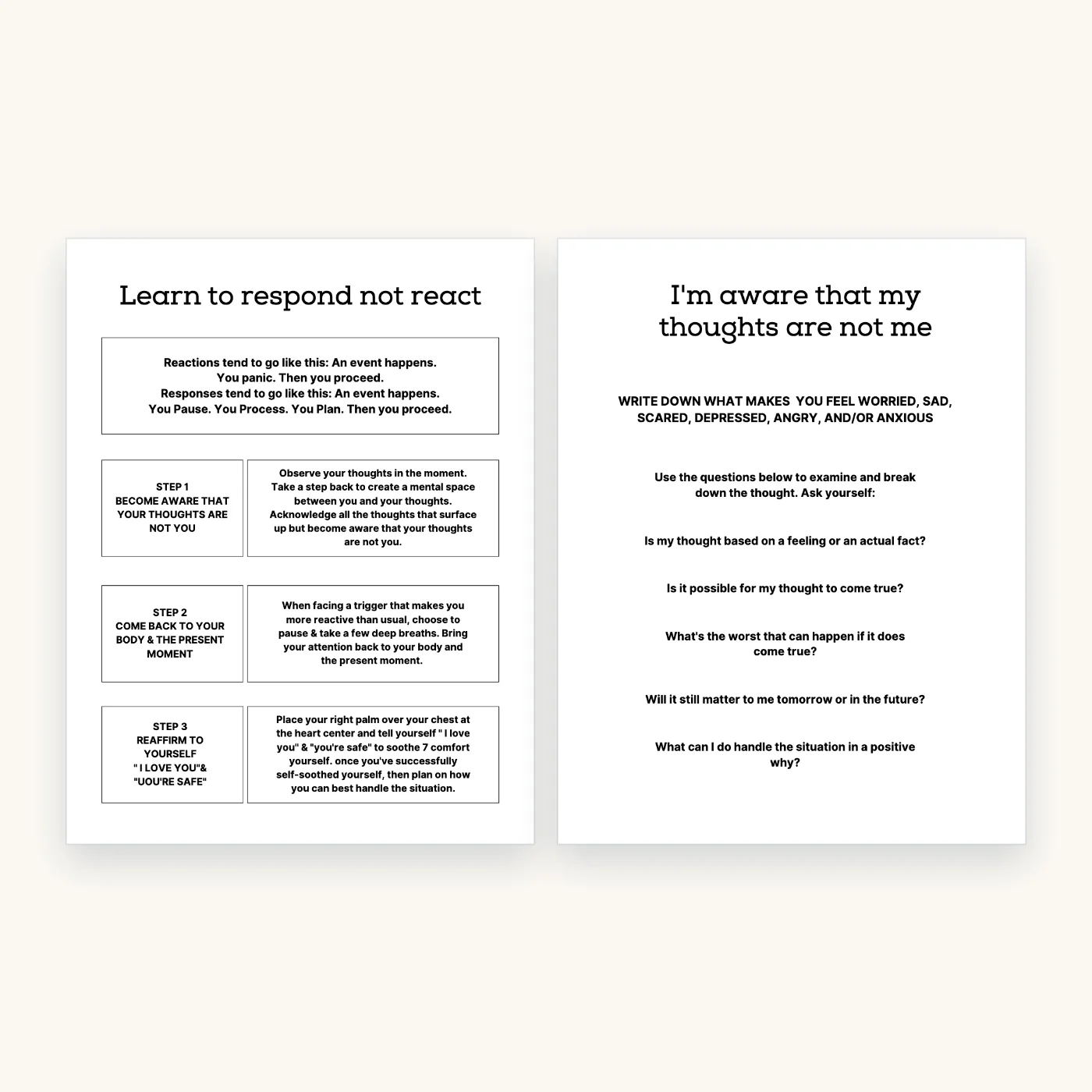
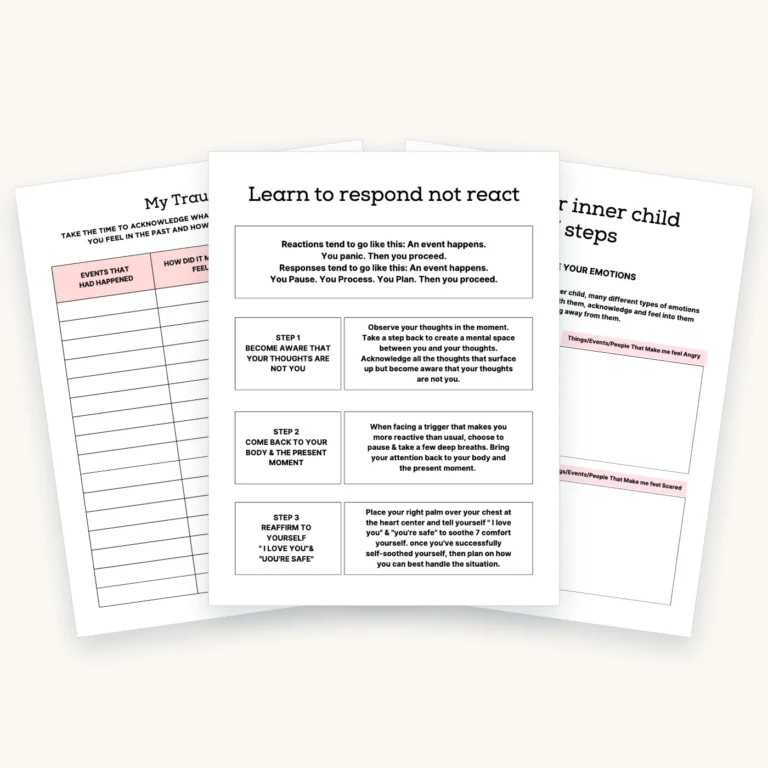
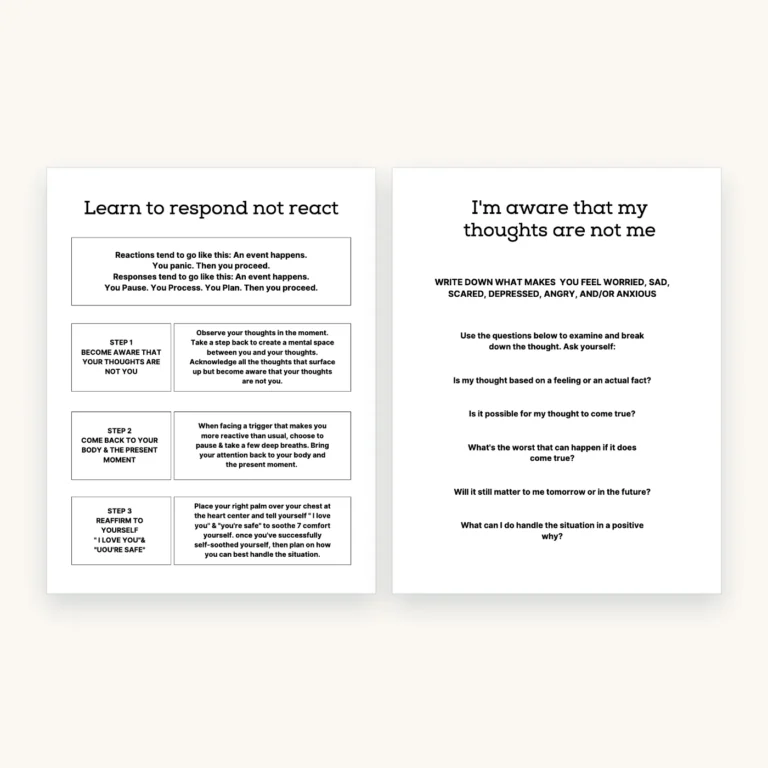
- Working on patterns: respond, do not react
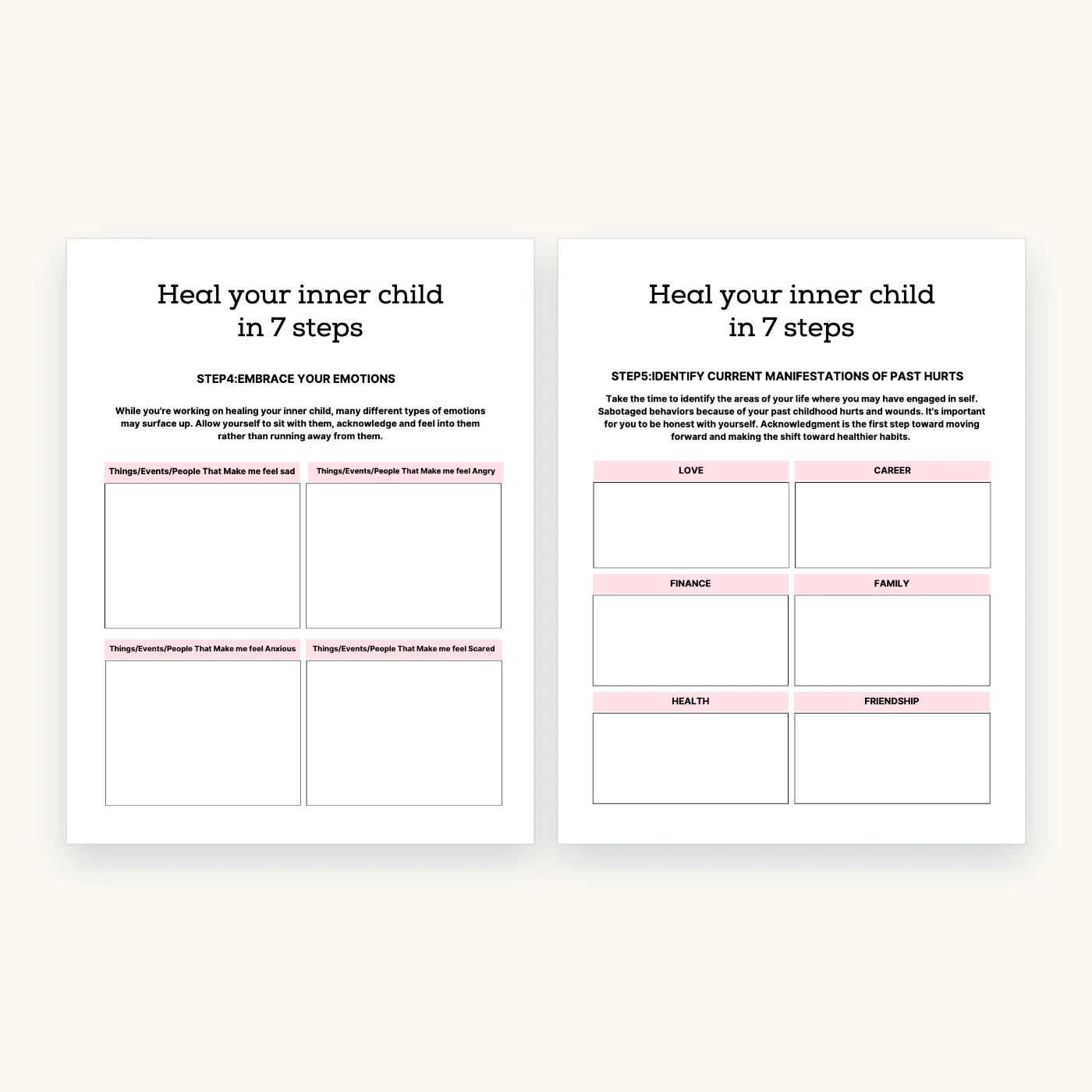
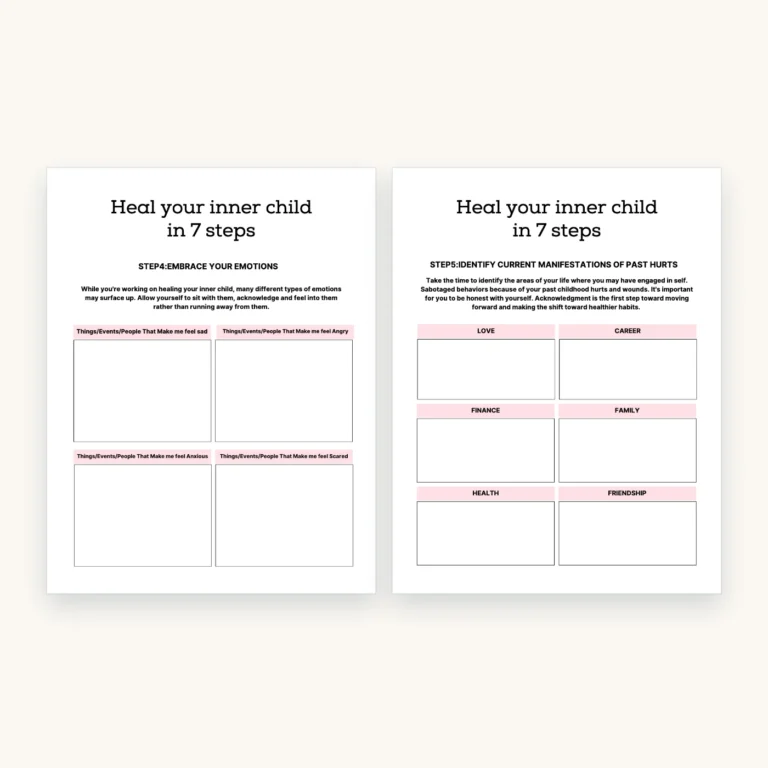
- Heal your inner child in seven steps
- Self-blame, self-acceptance, self-compassion and self-worth
- Processing nightmares
- Trigger coping cards and worry coping cards
- Coping with grief and loss, anger and fear
- Anxiety, anger and mood trackers
- Decatastrophising worksheet, heart breathing and the balloon exercise
- Medication, doctor and therapy trackers, pre-therapy prep
- Weekly self-care, monthly reflection and goal planning, vision board
What a PTSD workbook for adults helps you do
You smell smoke from a neighbour’s garden and your hands start to shake before you know why. Post-traumatic stress keeps the body on alert long after the danger has passed. Triggers arrive through smells, sounds, dates and places.
This workbook gives those reactions a structure. The trigger processing pages ask what happened, how your mind and body responded, and where you held the tension. Over a few weeks the entries show patterns, and patterns give you and your therapist something concrete to work on.
Who these trauma processing worksheets suit
- Adults living with PTSD or complex trauma alongside therapy
- People on a waiting list who want a structured way to record triggers before their first appointment
- Anyone woken by recurring nightmares
- Counsellors who want printable trackers for clients
Working through the pages
Start with My Traumas. Describe or draw what happened at a pace you control, and stop if you feel overwhelmed. Next, fill in a trigger processing page each time a reaction catches you off guard. The respond, not react page breaks an event into thought, feeling and action, so you see where to pause.
Once your triggers are mapped, move to the seven steps for healing your inner child and the pages on self-blame and self-compassion. Fill in the pre-therapy prep sheet before each appointment to note recurring triggering events. For body-based calming, the nervous system regulation guide pairs well with this workbook, and the trauma worksheets bundle adds further exercises.
Questions about the PTSD workbook
What format is it?
A 65-page PDF. Print it at home or fill it in on screen. It downloads straight after payment.
Is this PTSD workbook printable?
Yes. Print the whole workbook or only the trackers and coping cards you use each week.
Should I use a trauma workbook without a therapist?
The trackers, planners and coping cards suit self-help. Writing about the trauma itself brings up strong feelings, so work on those pages with a therapist where possible. If you feel unsafe, contact your GP, NHS 111 or your local emergency services.
Is it suitable for use with clients?
It is written or reviewed by a BACP registered therapist for use in sessions and for self-help at home.
PDF, 65 pages. Print at home or fill in on screen. Instant download after payment.
This workbook is an educational resource. It does not replace therapy, medical care or crisis support. If you feel unsafe, contact your GP, NHS 111 or your local emergency services.


Reviews
There are no reviews yet.