
The last casserole dish went back to its owner on Tuesday. The cards have stopped. Your manager asked, kindly, whether Monday works. Everyone else has returned to their lives, and you are standing in the kitchen at four in the afternoon holding a mug you have not drunk from, because the person you would have told about your day is the person who died.
- The first fortnight after a death runs on tasks. Weeks three to twelve have none, and for most people they are harder.
- Grief moves in waves, not stages. A good day is part of the pattern, not a betrayal.
- Four things help in the quiet weeks: a fixed time for grief, saying the name, one changed ritual, and one honest person.
Coping with grief after the funeral is a different task from getting through the funeral. The first fortnight is full: the registrar, the flowers, the order of service, the relatives who need a bed. The tasks carry you. Weeks three to twelve have no tasks. They are quieter, and for most people they are harder.

The waves are the pattern, not a setback
Grief does not move in stages you complete. It moves in waves. A card in a drawer, a song in a supermarket, the second Sunday with no phone call, and you are back at the start for an hour. Then the wave passes and you make dinner.
Stroebe and Schut described this in 1999 as a dual process: you swing between facing the loss and facing the life which continues, the admin, the job, the children’s school run. Both sides are grieving. The swing is what a healthy grief looks like from the inside, even when it feels like failing at it.
Things people say about grief
Tap each one. Most of them arrive in a sympathy card, and most of them are wrong.
There are five stages, and you go through them in order.
The stages came from a study of dying patients, not of the bereaved.
Kübler-Ross described what people facing their own death went through. Later research on the bereaved found waves and oscillation, not a staircase. Nobody fails grief by skipping bargaining.
Time heals.
Time passes. What you do inside it does the healing.
The people who move through grief with fewer complications are the ones who give it a place: a notebook, a walk, a name said out loud. Waiting for the calendar to fix it is the slow road.
A good day means you are over it.
A good day is the restoration side of the swing.
Stroebe and Schut expected days spent on the job, the children, the laugh at the television. The person is not less loved on those days. Write the good day down, so the next wave has something to stand beside.
Crying for months means something is wrong.
Months of tears is grief doing its work.
The exception is when crying stops you eating, sleeping or leaving the house for weeks at a time, or brings thoughts of not wanting to be here. Then it is time for your GP, this week.
The quiet-week kit
Four things which help between week three and week twelve. Tap each one.
Give the grief a fixed time
Give the grief a fixed time
Twenty minutes, the same chair, a notebook. Write to the person or about them. When the time ends, close the notebook and do one ordinary thing. Grief with a container is easier to carry than grief which arrives at the school gate.
Say the name
Say the name
Friends stop saying it within a month because they fear upsetting you. Say it first, at dinner, in a text, in the middle of a story. They will follow.
Keep one ritual, change its form
Keep one ritual, change its form
The Sunday phone call becomes a Sunday walk to the same bench. The Friday fish and chips stays on Friday. A ritual holds the relationship in the week without pretending nothing has changed.
Tell one person the truth
Tell one person the truth
Not everyone. One. 'Tuesday was fine and Wednesday I sat in the car outside Tesco for forty minutes' gives a friend something to do with their concern.
What today looks like
Crying is the body doing its work, and it stops on its own when it has finished. Sit somewhere you will not be interrupted, put a hand on your chest, and let it run. Afterwards, drink water and eat something small. If the crying has stopped you eating or sleeping for more than a fortnight, call your GP this week.
Numbness is grief too. The nervous system turns the volume down when the loss is too large to hear at full strength. Do not force feeling. Do one thing the person would have noticed: their music, their walk, their recipe. The feeling arrives when the body decides it is safe to let it.
Anger at the doctor, the driver, the relative who did not visit, the person for dying. All of it is grief with somewhere to go. Write the angry letter in full and do not send it. Then walk for thirty minutes at a pace which makes you breathe hard. Anger needs the body, not the inbox.
A good day is not a betrayal. The dual process model expects days on the restoration side: the job, the children, the laugh at something on television. The person is not less loved on those days. Note the good day in the notebook, so the next wave has something to stand next to.
When to get more help
Grief which stops you eating, sleeping or leaving the house for weeks, or brings thoughts of not wanting to be here, needs more than a notebook. In the UK, your GP, Cruse Bereavement Support on 0808 808 1677, and Samaritans on 116 123 are all open to you.
Downloads for this
A fictional example
Six weeks after her father’s funeral, Leah’s phone went quiet. The casseroles stopped, the cards stopped, and a colleague asked whether she was feeling better now. She was not. She started asking one person a week for company on a Sunday afternoon, and stopped waiting to be asked.
Where this stops
Grief on its own is not an illness and does not need treating. If you cannot eat, sleep or work for weeks, if you feel you would rather not be here, or if the loss involved trauma, speak to your GP or a bereavement service. A worksheet keeps company with grief. It does not replace care.
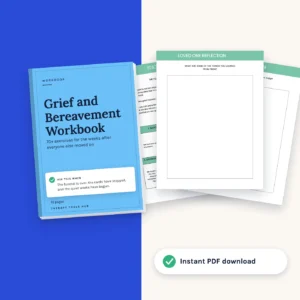
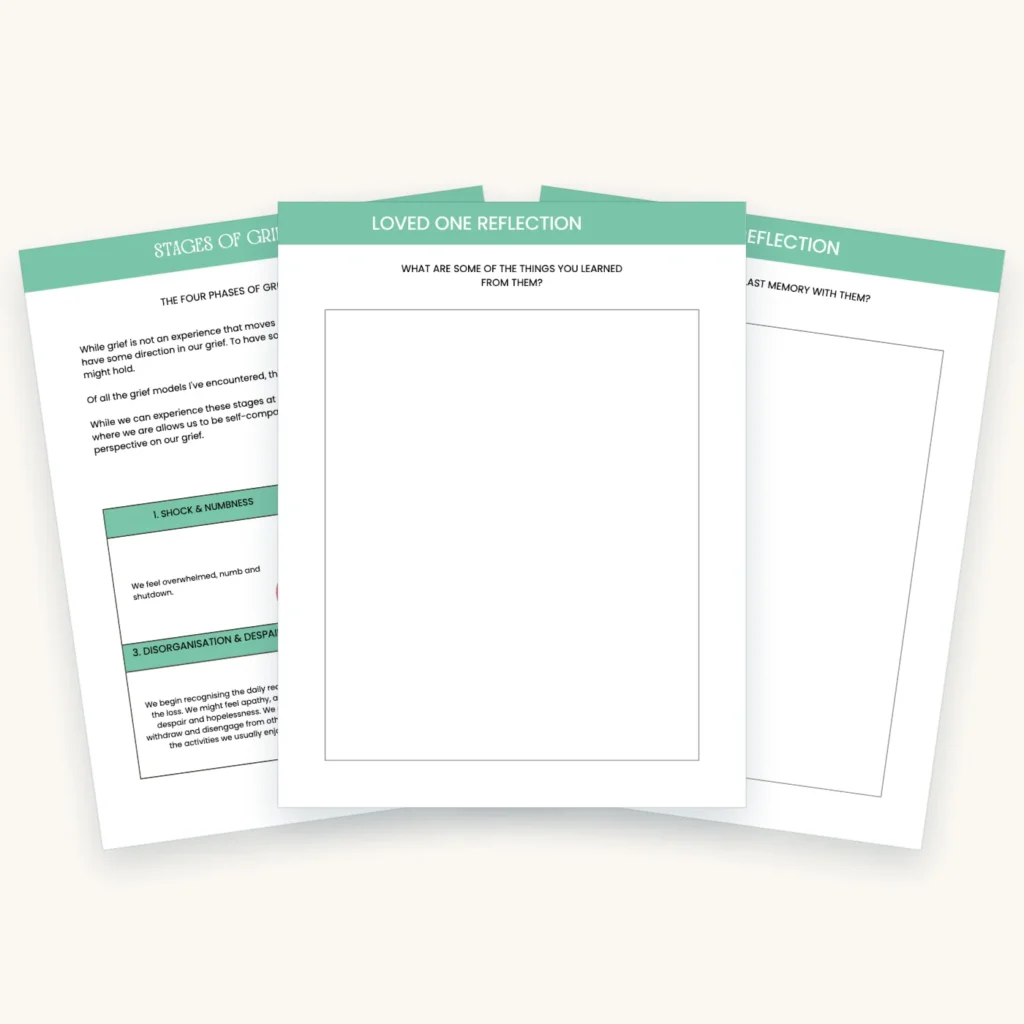
Grief and Bereavement Workbook: 70+ Exercises and Worksheets
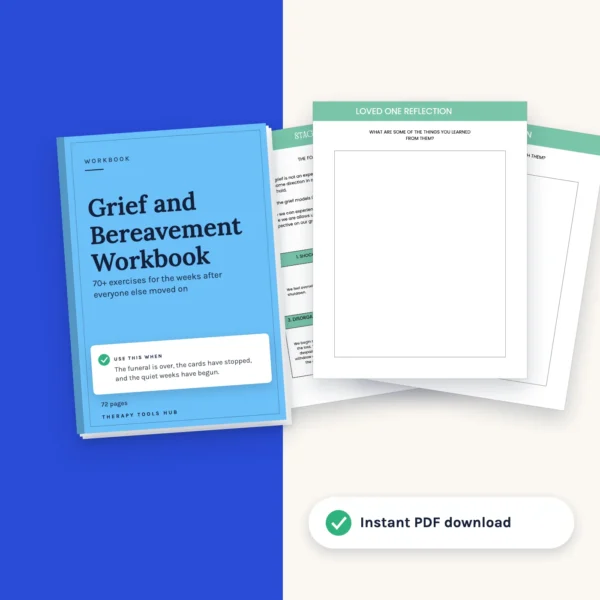
The workbook for this
Grief and Bereavement Workbook: 70+ Exercises and Worksheets
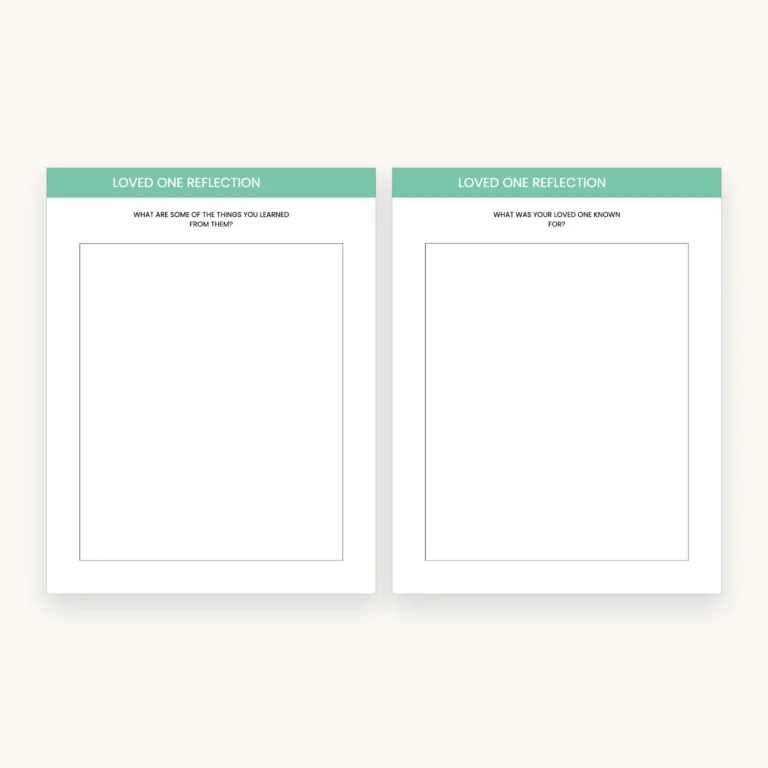
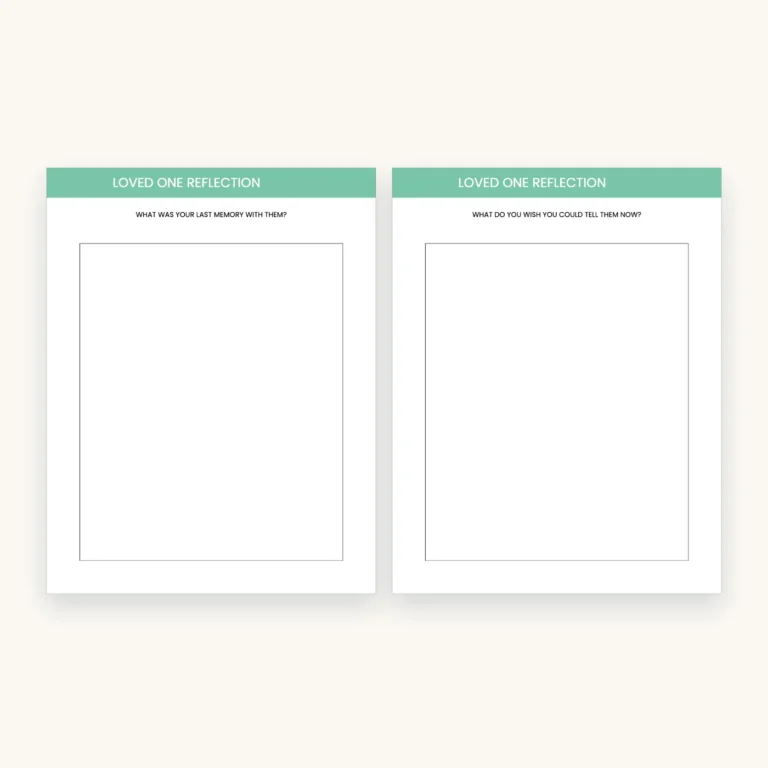
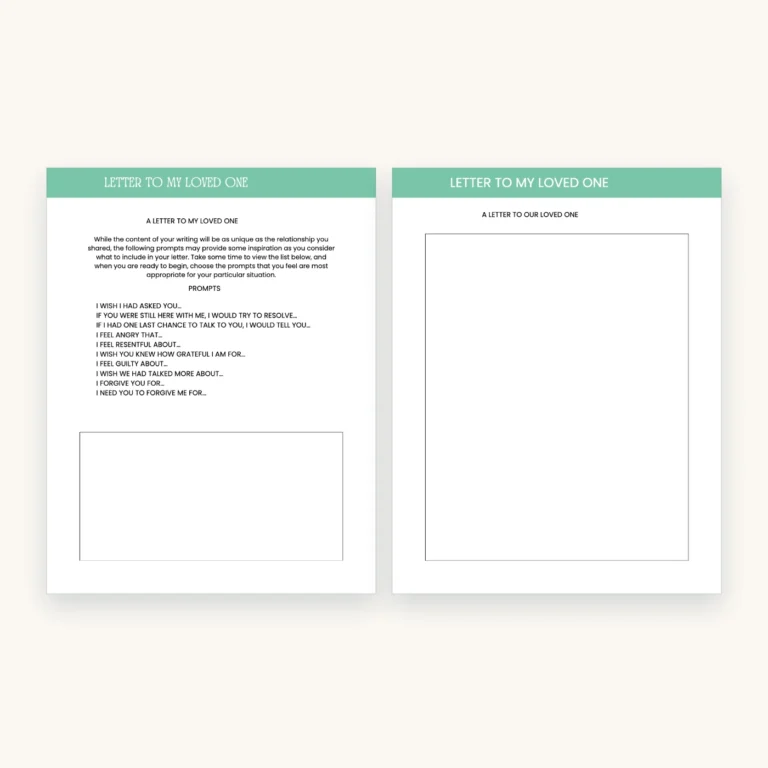
More than 70 exercises: reflections on the person you lost, a letter to them, loss rituals planned step by step, and the changes in what matters now.
Questions people ask
How long does grief last after a funeral?
There is no fixed length. Most people find the first fortnight is carried by tasks and the following months are quieter and harder. Waves of grief continue for a year or more and often return around anniversaries. Grief which prevents eating, sleeping or leaving the house for weeks needs medical support.
Why do I feel worse weeks after the funeral than during it?
The funeral period is full of practical tasks and other people, which hold you up. Once the tasks end and others return to their routines, the loss has room to arrive. Feeling worse in weeks three to twelve is common and is not a sign of going backwards.
Is it normal to feel nothing after a death?
Yes. Numbness is a protective response in which the nervous system lowers the volume on a loss too large to take in at once. Feeling returns when the body judges it safe. Doing one thing the person would have noticed, their music or their walk, often lets it back in gently.
When should I see a doctor about grief?
See your GP when grief stops you eating, sleeping or leaving the house for weeks at a time, when you cannot function at work or care for children, or when you have thoughts of not wanting to be here. In the UK, Cruse Bereavement Support (0808 808 1677) and Samaritans (116 123) are also available.
- Stroebe, M. and Schut, H. (1999). The dual process model of coping with bereavement: rationale and description. Death Studies, 23(3), 197 to 224. doi.org/10.1080/074811899201046
- Cruse Bereavement Support. cruse.org.uk
This article is educational and does not replace bereavement counselling or medical care. More on loss: trauma, PTSD and grief workbooks.