Description
The task starts when the first step is small enough
The deadline is tomorrow and the document is still called Untitled. You are not lazy. The part of the brain which starts tasks needs a different set of instructions.
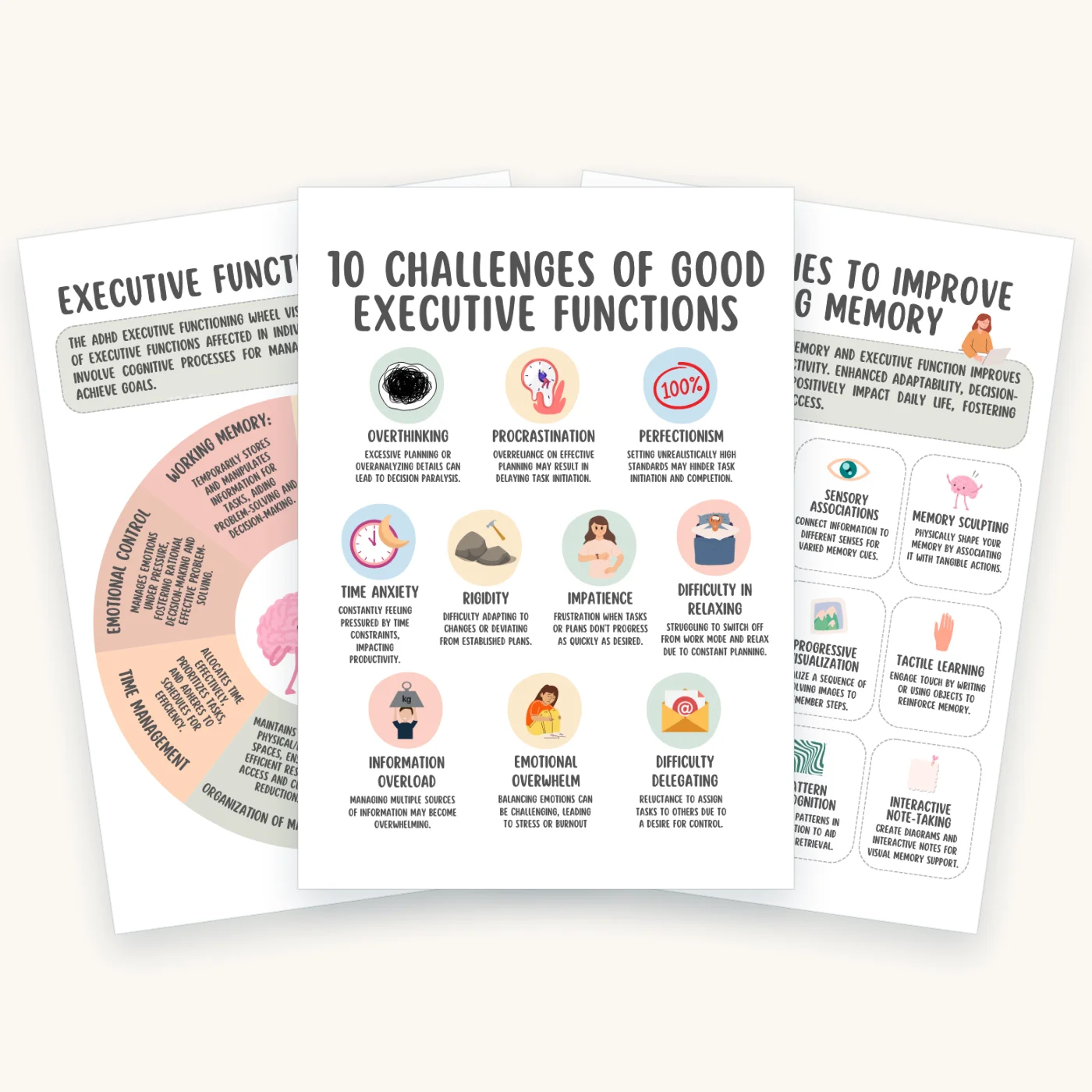
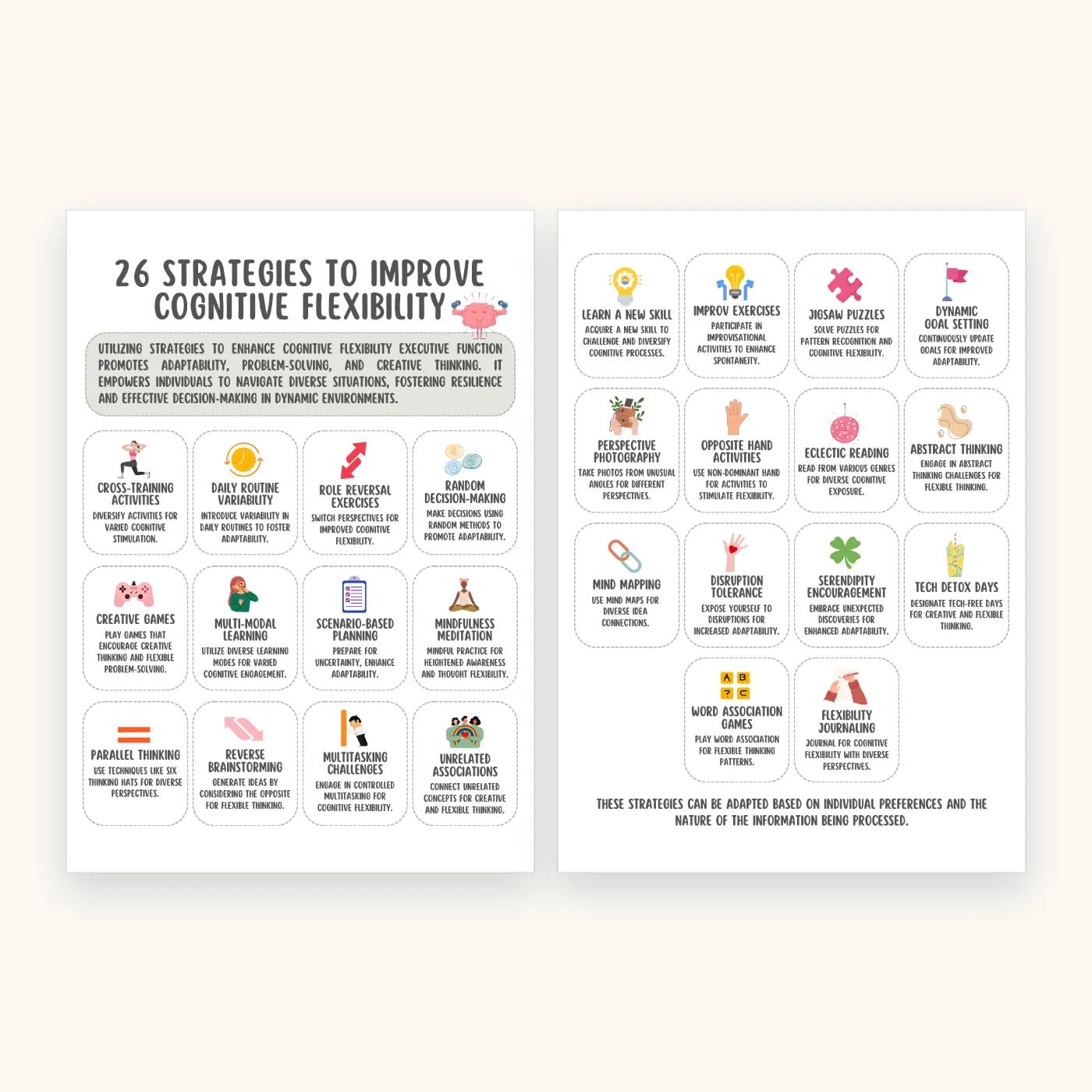
This 21-page guide explains executive functioning in plain language, then gives you 210 strategies across its eight components, starting with working memory. Pick one strategy, put it on the fridge, run it for a week. Teachers and therapists use the pages with teens and adults.
Inside this guide
- What is executive functioning
- The eight key components, starting with working memory
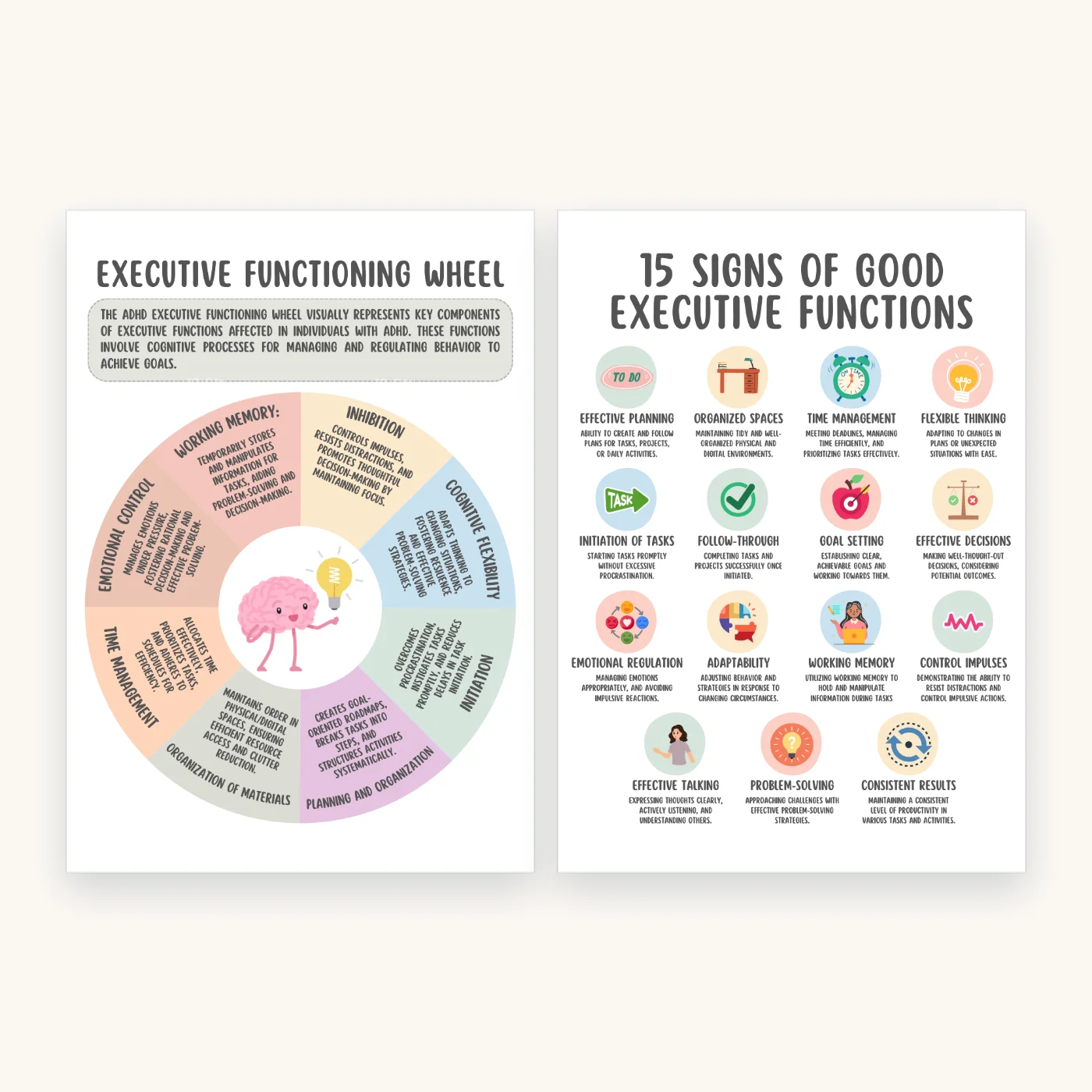
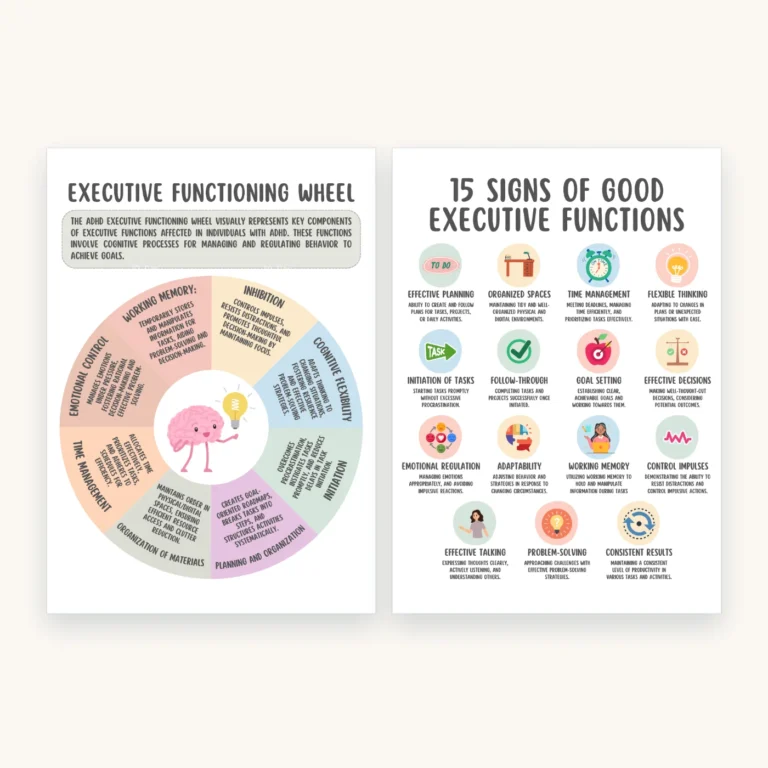
- The executive functioning wheel
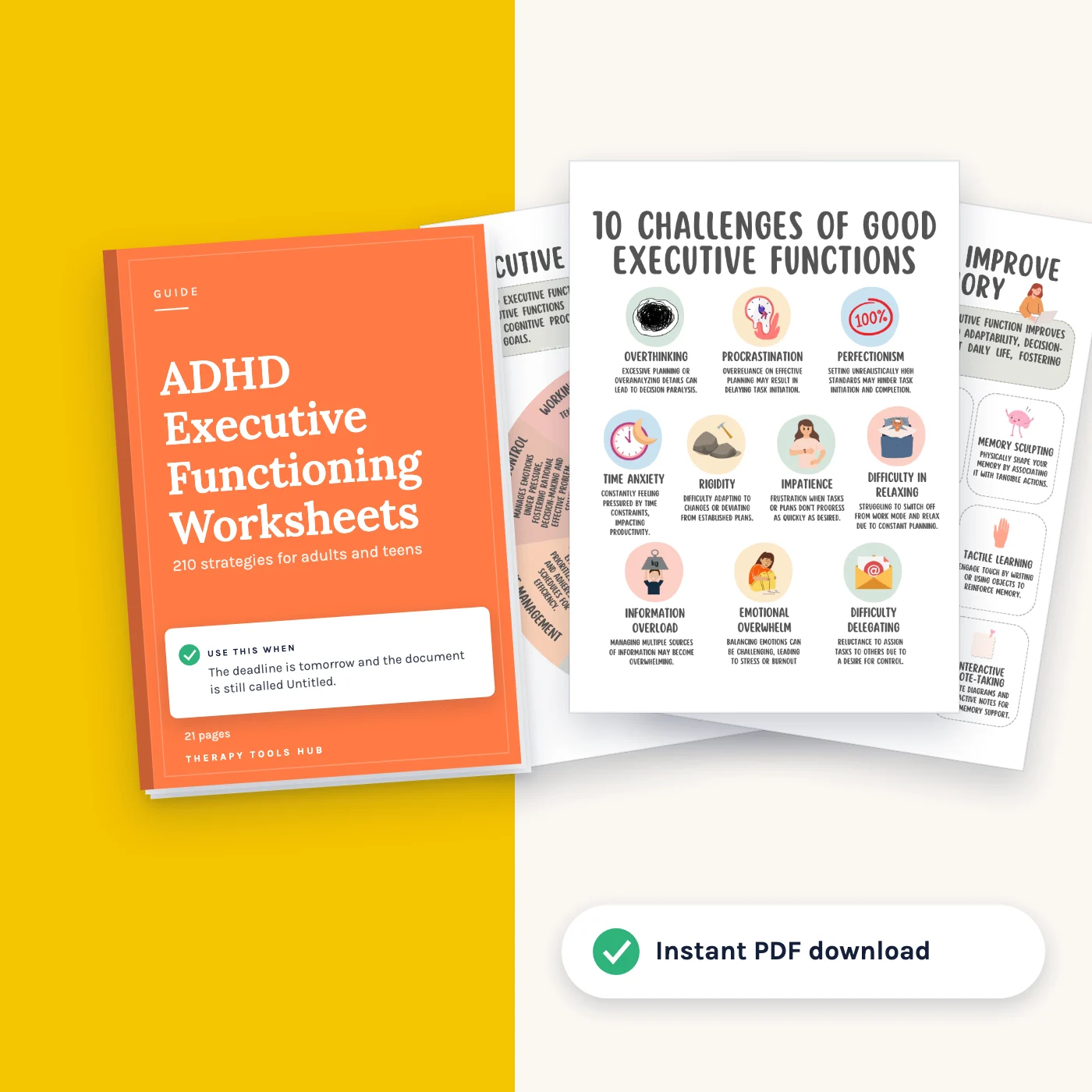
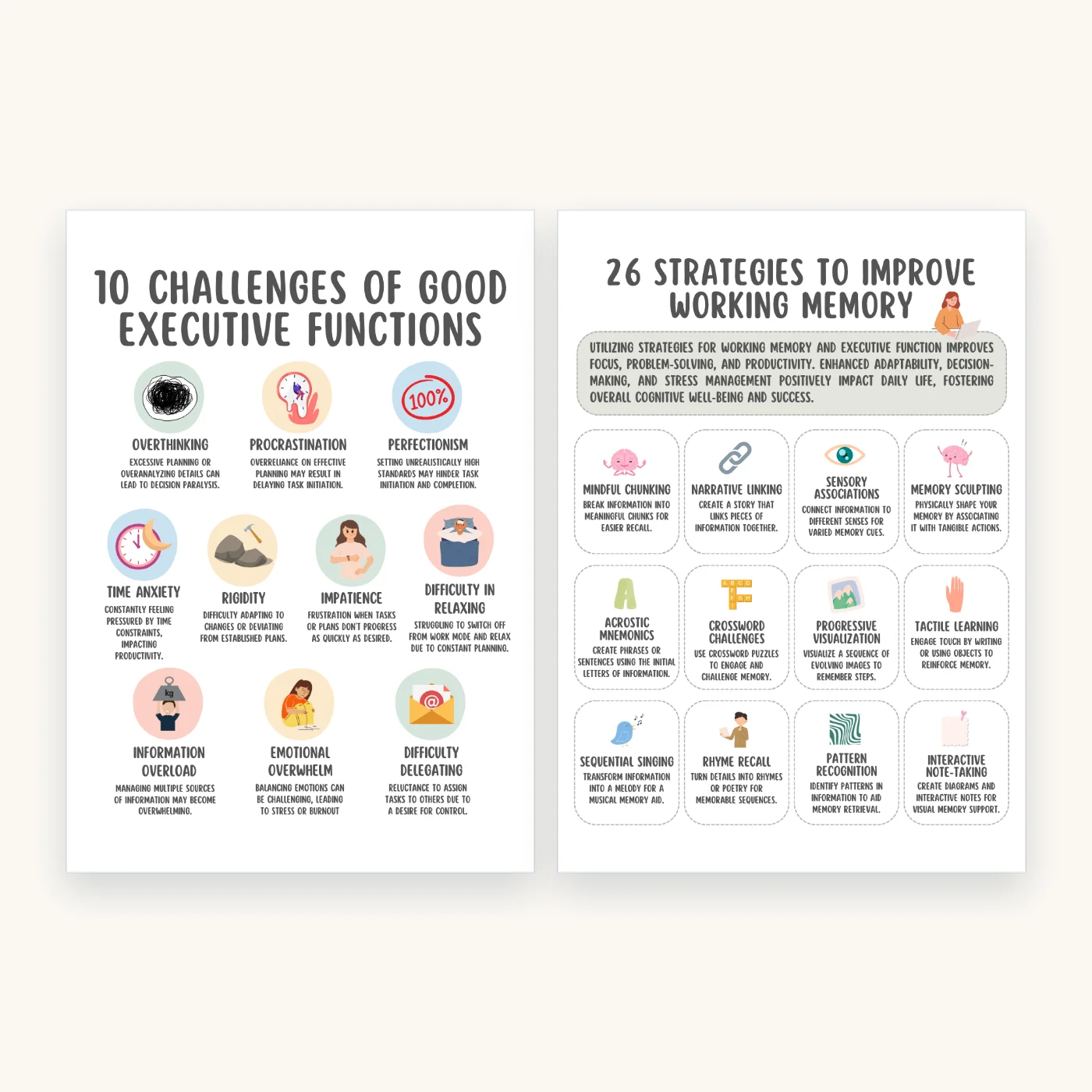
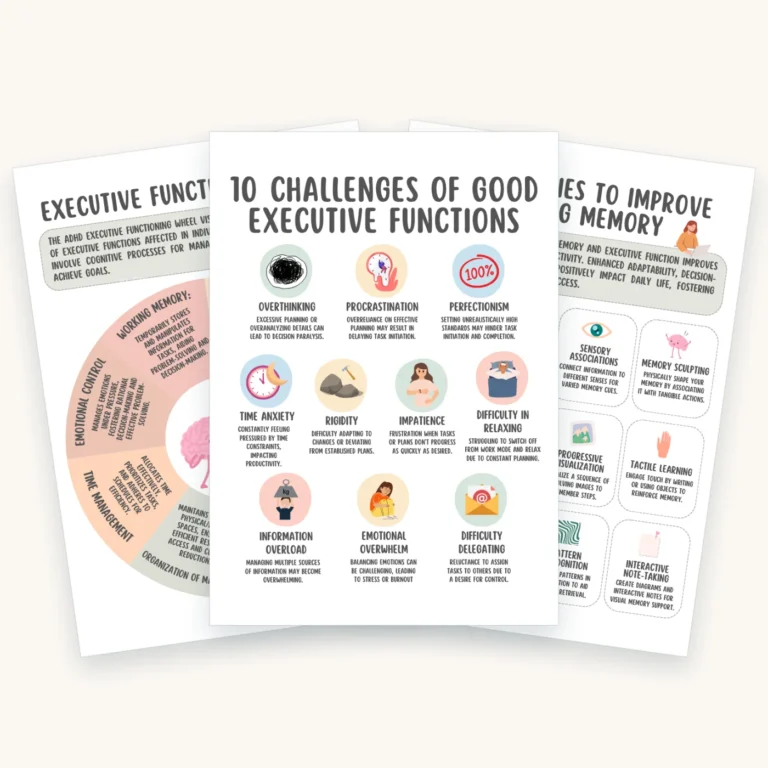
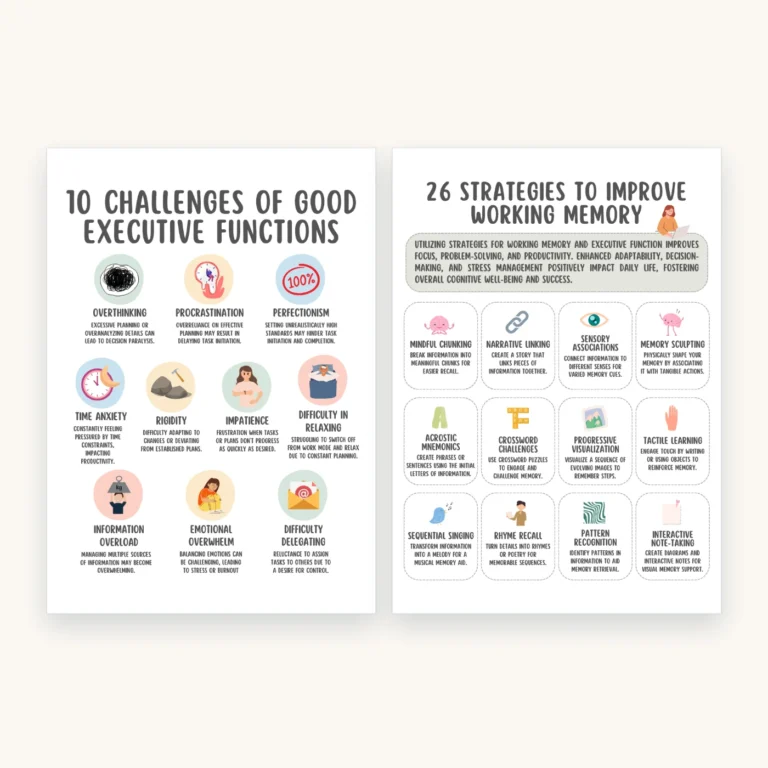
- 15 signs of good executive functioning and 10 common challenges
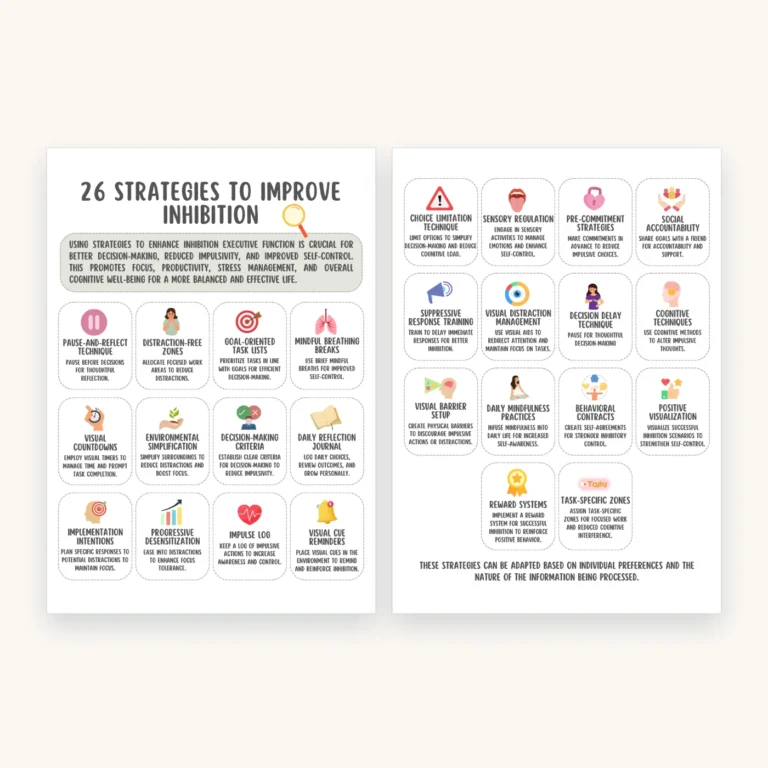
- 26 strategies to improve working memory
- Memory journeys, colour-coded keys and association
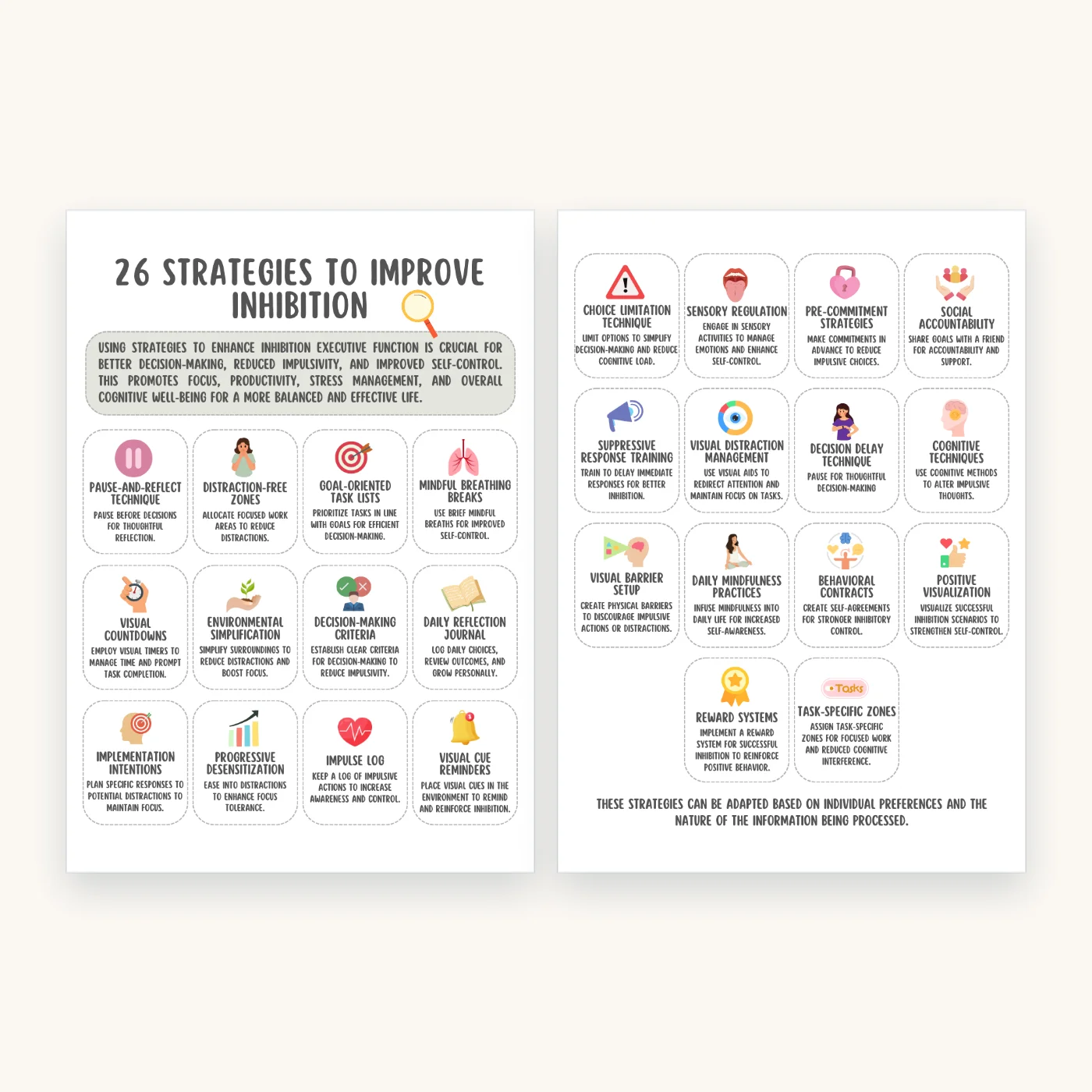
- Choice limitation, sensory regulation and pre-commitment
- Breaking inertia, mindful breathing and motivational tasks
- Kanban boards, colour coding, archive systems and a portable file box
- Weekly planning, limiting email checks and time tracking
- Social support, mindful listening and guided imagery
Executive functioning worksheets for adults with ADHD
You open the laptop to send one invoice. Forty minutes later you have answered six emails and reorganised a folder, and the invoice is still unsent. Executive functions are the brain skills which start a task and keep it in mind until it is done. With ADHD, one or more of them runs unevenly, and willpower does little to fix it.
The guide breaks the problem into eight parts, including working memory, inhibition, initiation and emotional control. Each part comes with 26 strategies. You choose the area where your day goes wrong most often and test one strategy at a time.
Executive functioning worksheets for teens and adults: who they suit
- Adults with ADHD, diagnosed or waiting for an assessment
- Teenagers who lose track of coursework before exams
- Teachers and SENCOs supporting students with planning
- Therapists and coaches who want a printed strategy list for sessions
How to work through the 210 strategies
Start with the executive functioning wheel and the 15 signs of good executive functioning. Tick the signs you recognise, then read the 10 common challenges, such as procrastination and perfectionism. The gap between the two lists shows you where to begin.
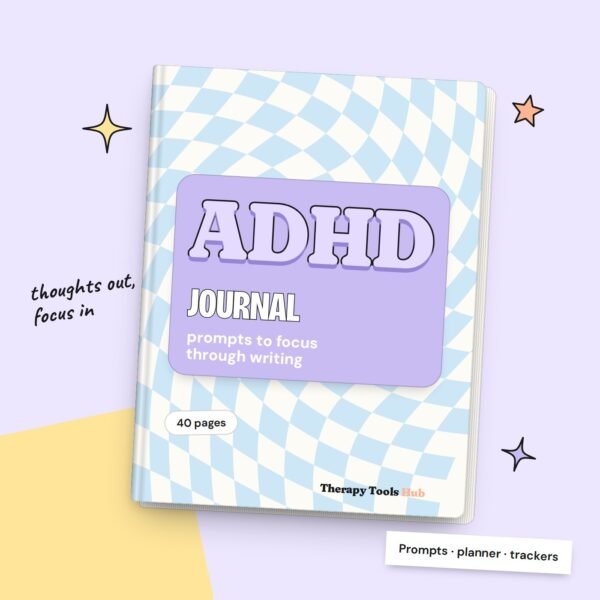
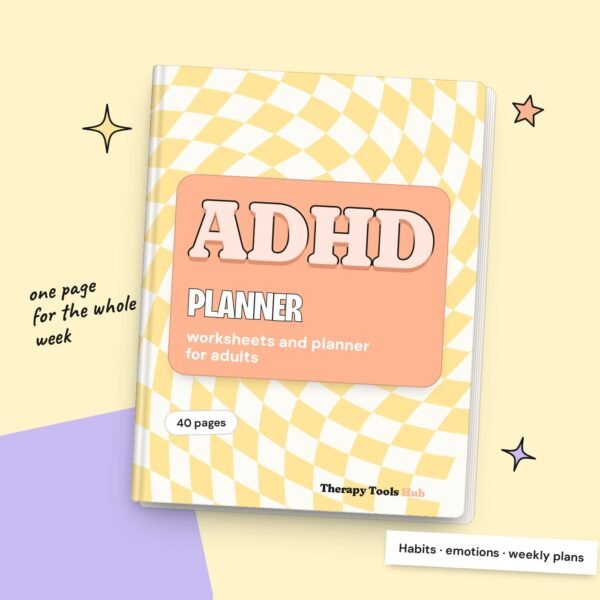
Turn to the strategy page for one component. If time management is the problem, try weekly planning or limiting email checks for seven days. If papers go missing, set up a portable file box. Write the strategy on a card, stick it somewhere you look every day and review it at the end of the week. For more adult-focused ideas, read ADHD executive functioning strategies for adults, or pair this guide with the ADHD worksheets and planner.
Questions about the executive functioning worksheets
What are the eight executive functions?
The guide covers working memory, inhibition, cognitive flexibility, initiation, planning and organising, organisation of materials, time management and emotional control. Each one has its own set of 26 strategies.
Are these worksheets suitable for teens?
Yes. The language is plain, and teachers and therapists use the pages with teenagers as well as adults.
What format is it?
A 21-page A4 PDF. Print it at home or fill it in on screen. It downloads straight after payment.
Are the worksheets suitable for use with clients?
Yes. They are written or reviewed by a BACP registered therapist for use in sessions and for self-help at home.
PDF, 21 pages, A4. Print or fill in on screen. Instant download after payment.
This workbook is an educational resource. It does not replace therapy, medical care or crisis support. If you feel unsafe, contact your GP, NHS 111 or your local emergency services.


Reviews
There are no reviews yet.