Description
Structure for the week, without a lecture on focus
The plan looked perfect on Sunday night and was gone by Tuesday lunchtime. Another planner, another abandoned week.
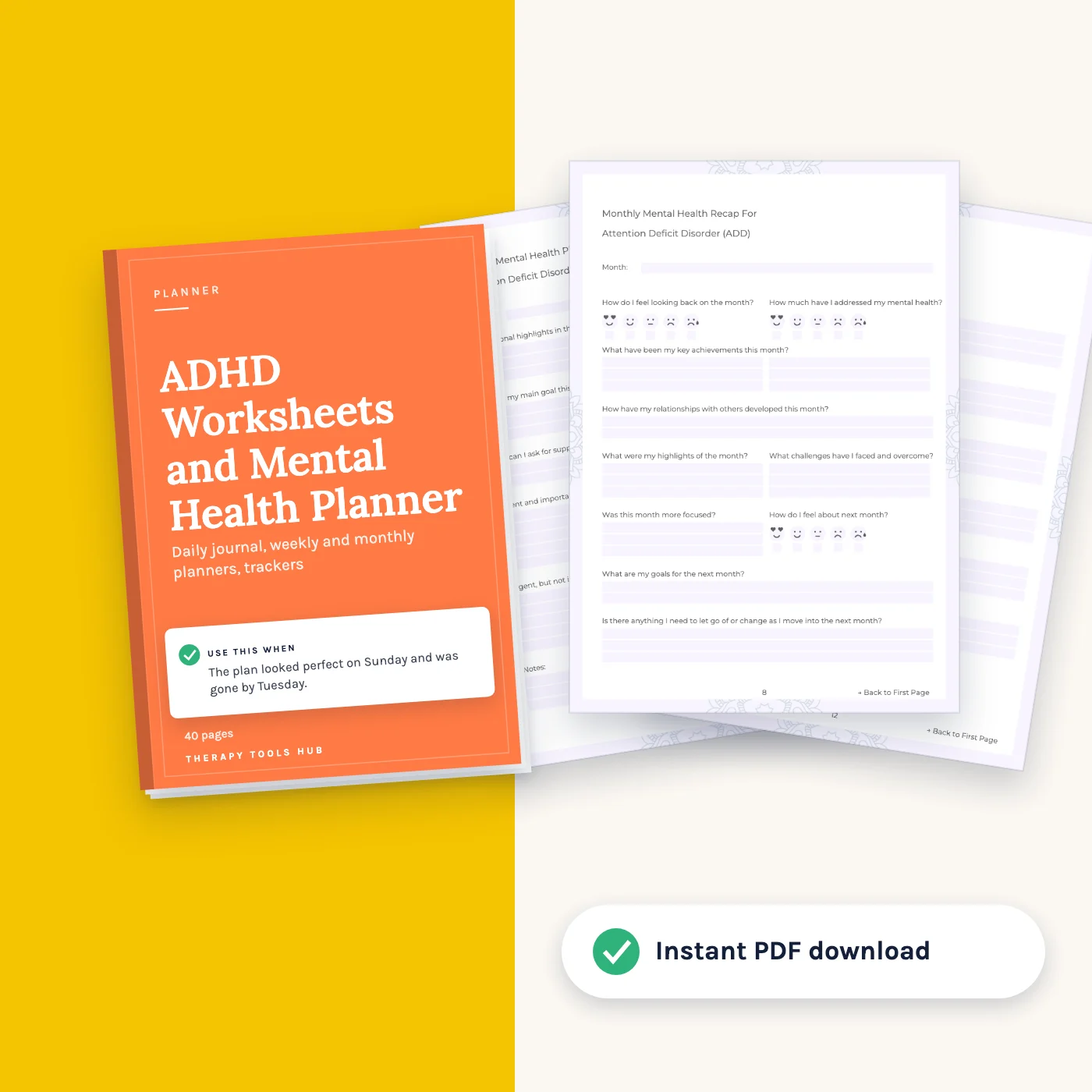
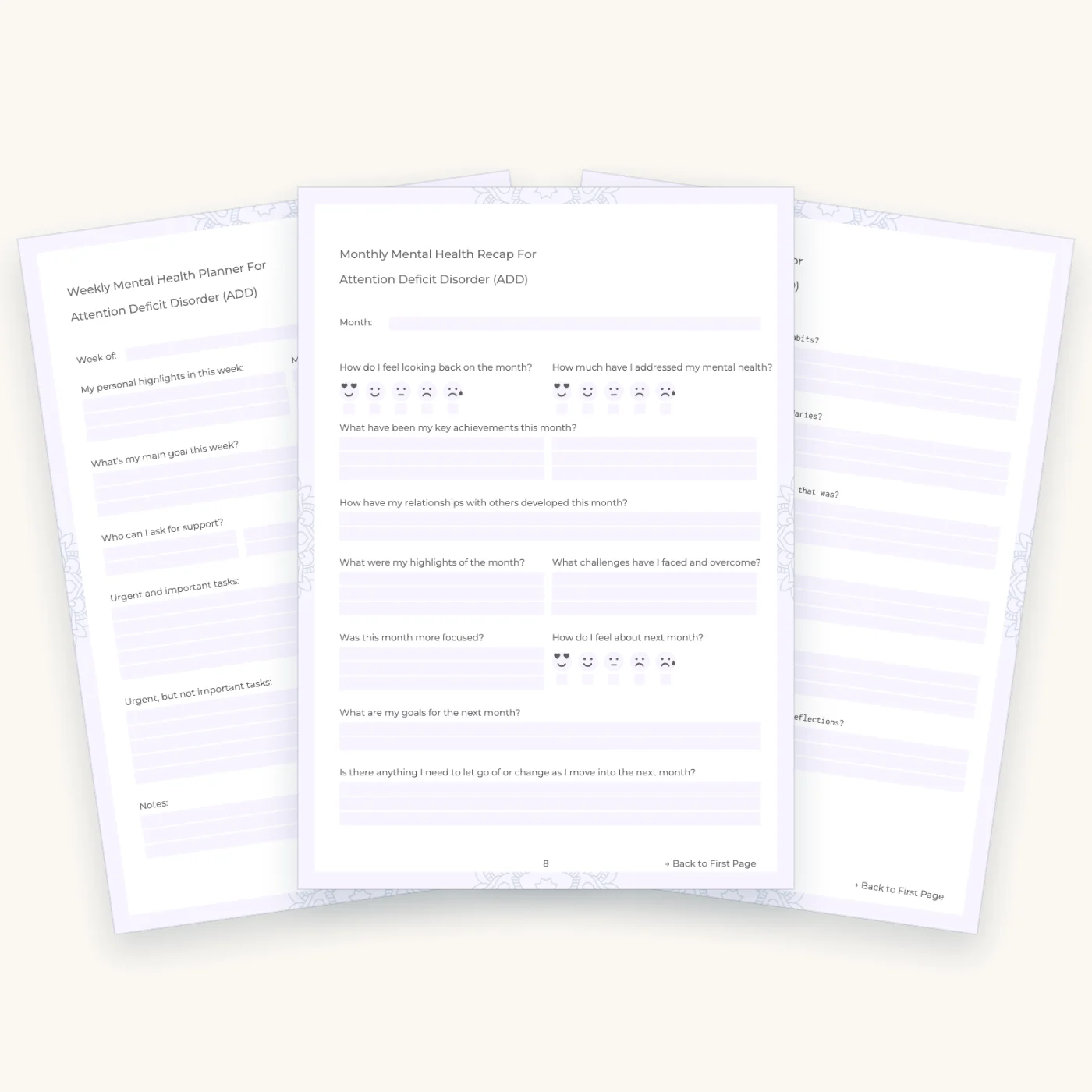
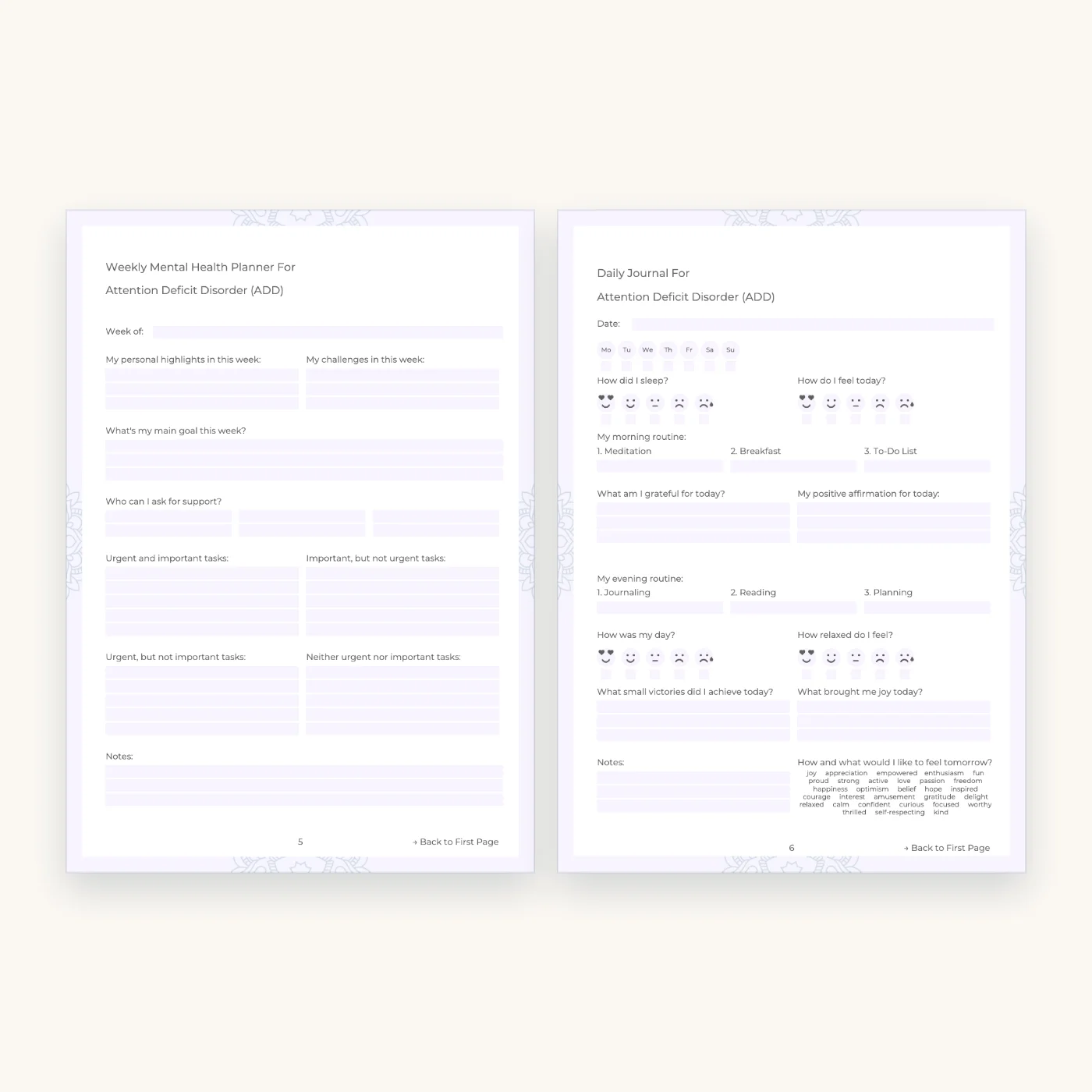
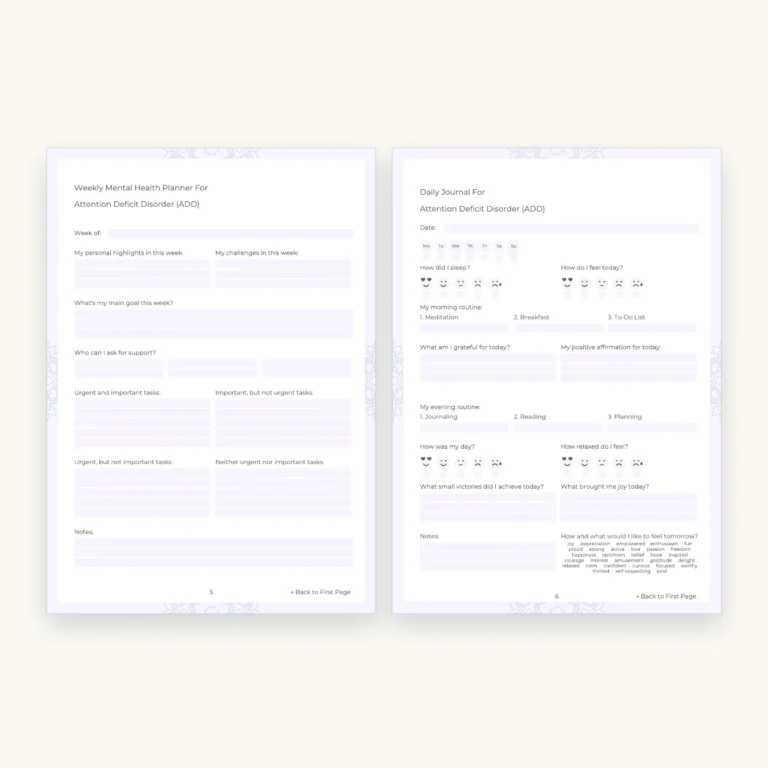
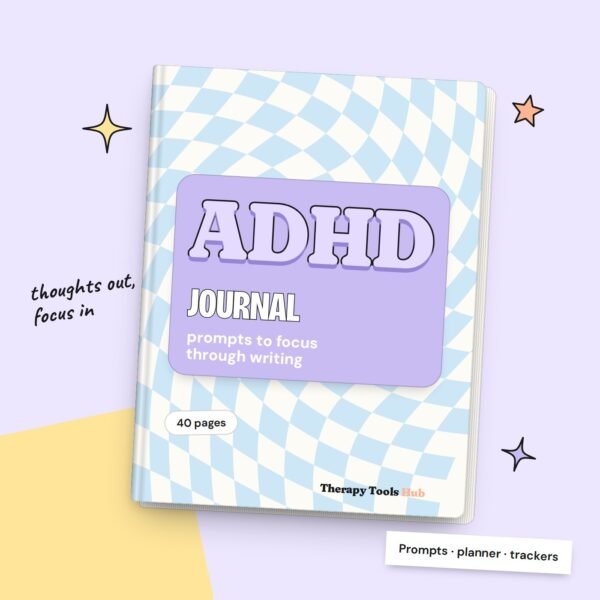
These 40 pages give you a daily journal, weekly and monthly planners, and habit and emotion trackers, each on its own page. The exercises are short and sit next to the planner, so a mindfulness practice or a thought record takes one page, not a chapter. Use the daily journal for a fortnight before adding anything else.
Inside this planner
- Yearly reflection and goals
- Weekly mental health planner and daily journal
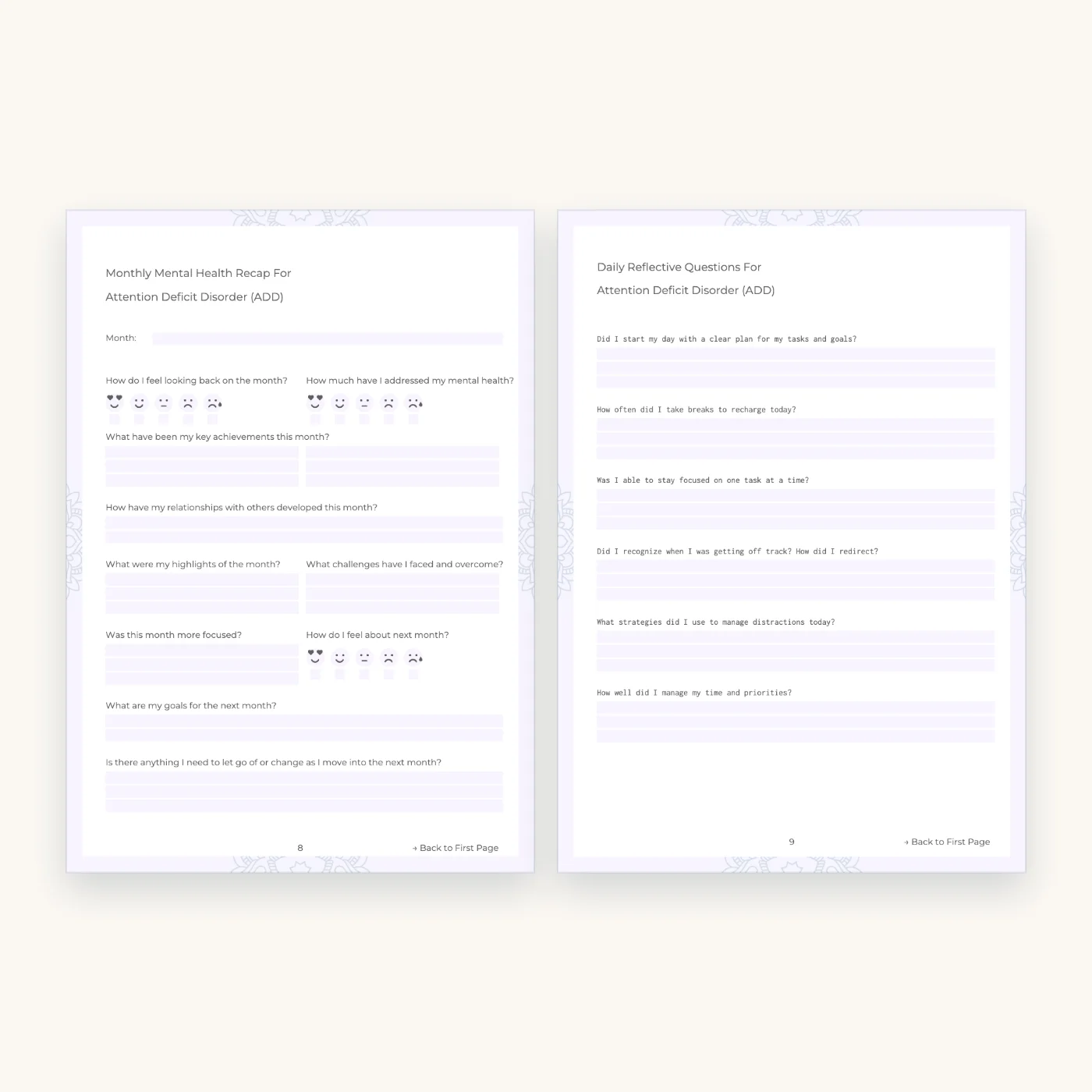
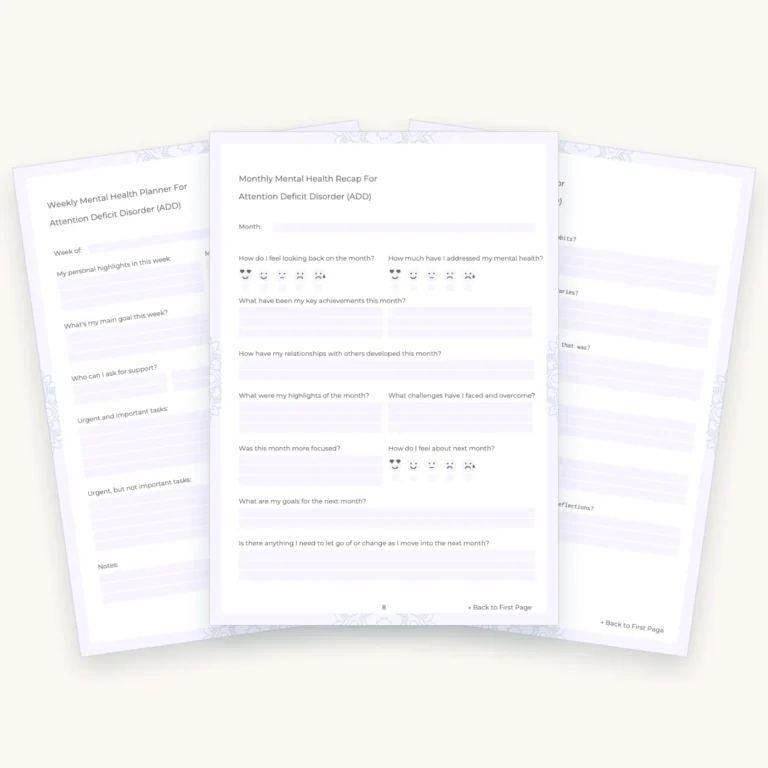
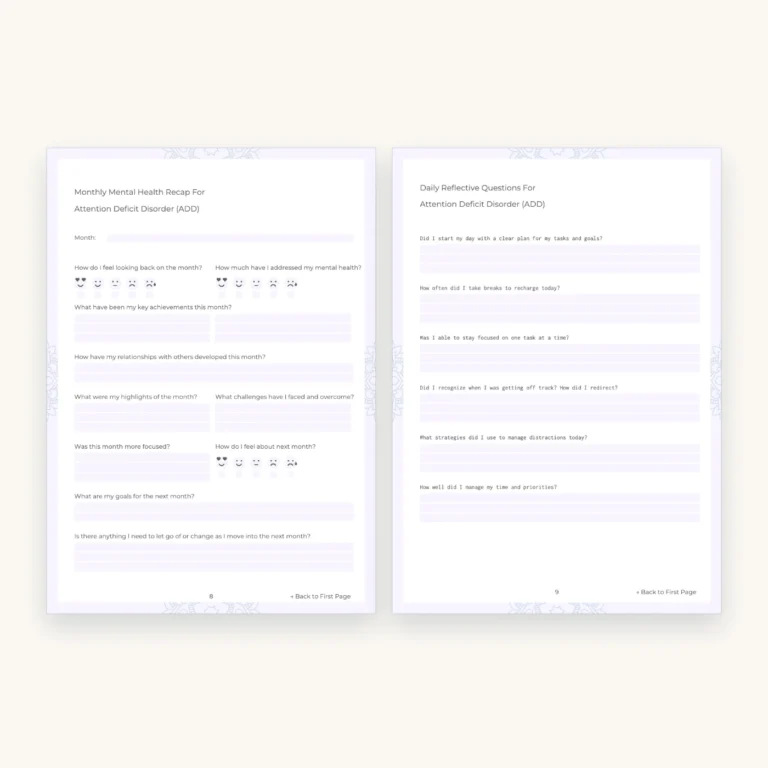
- Weekly and monthly recaps
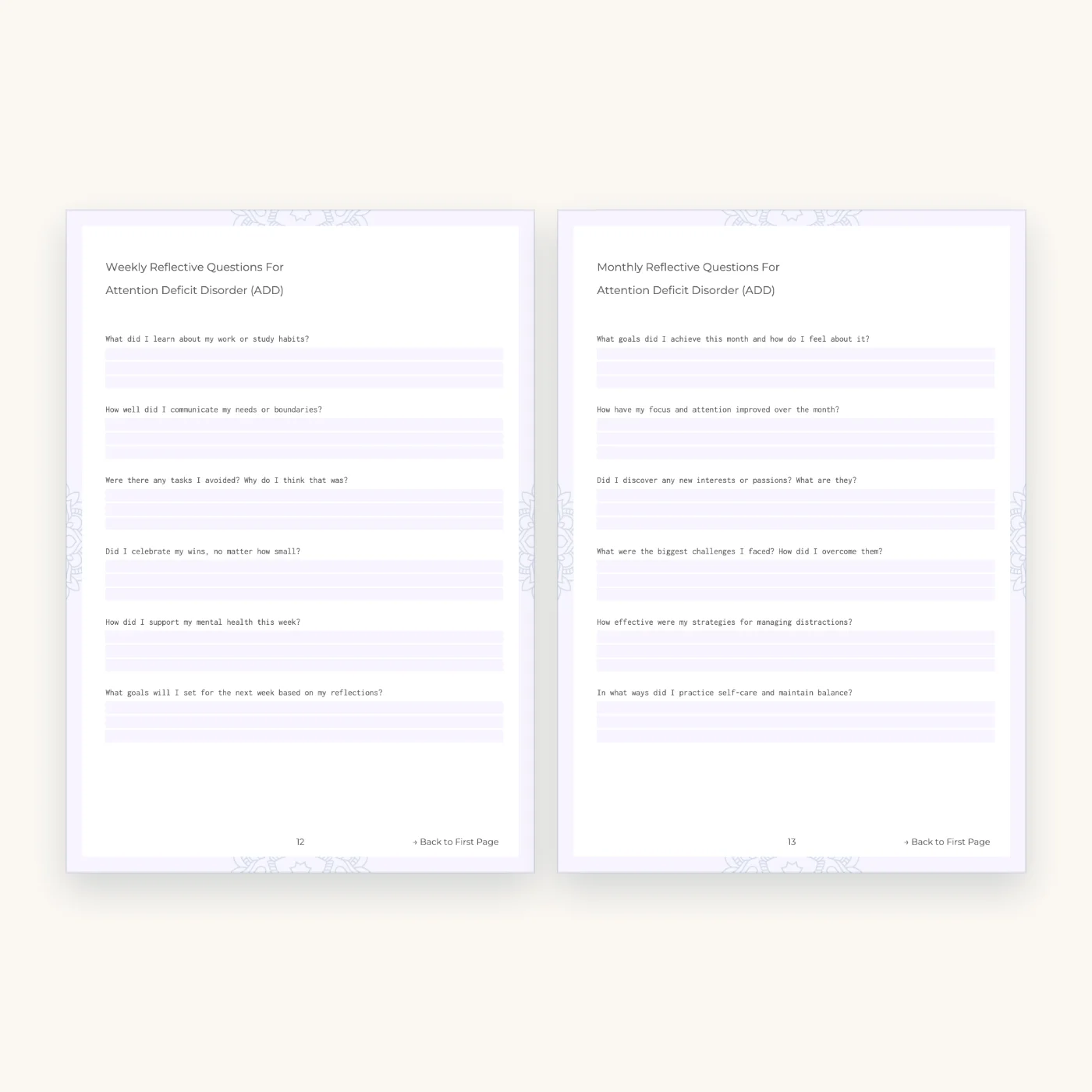
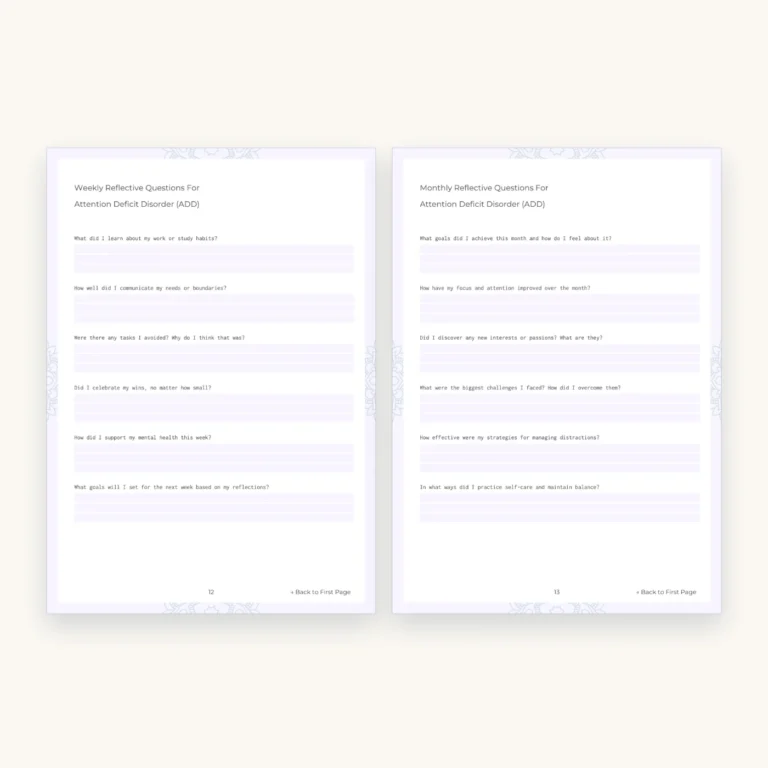
- Daily, weekly and monthly reflective questions
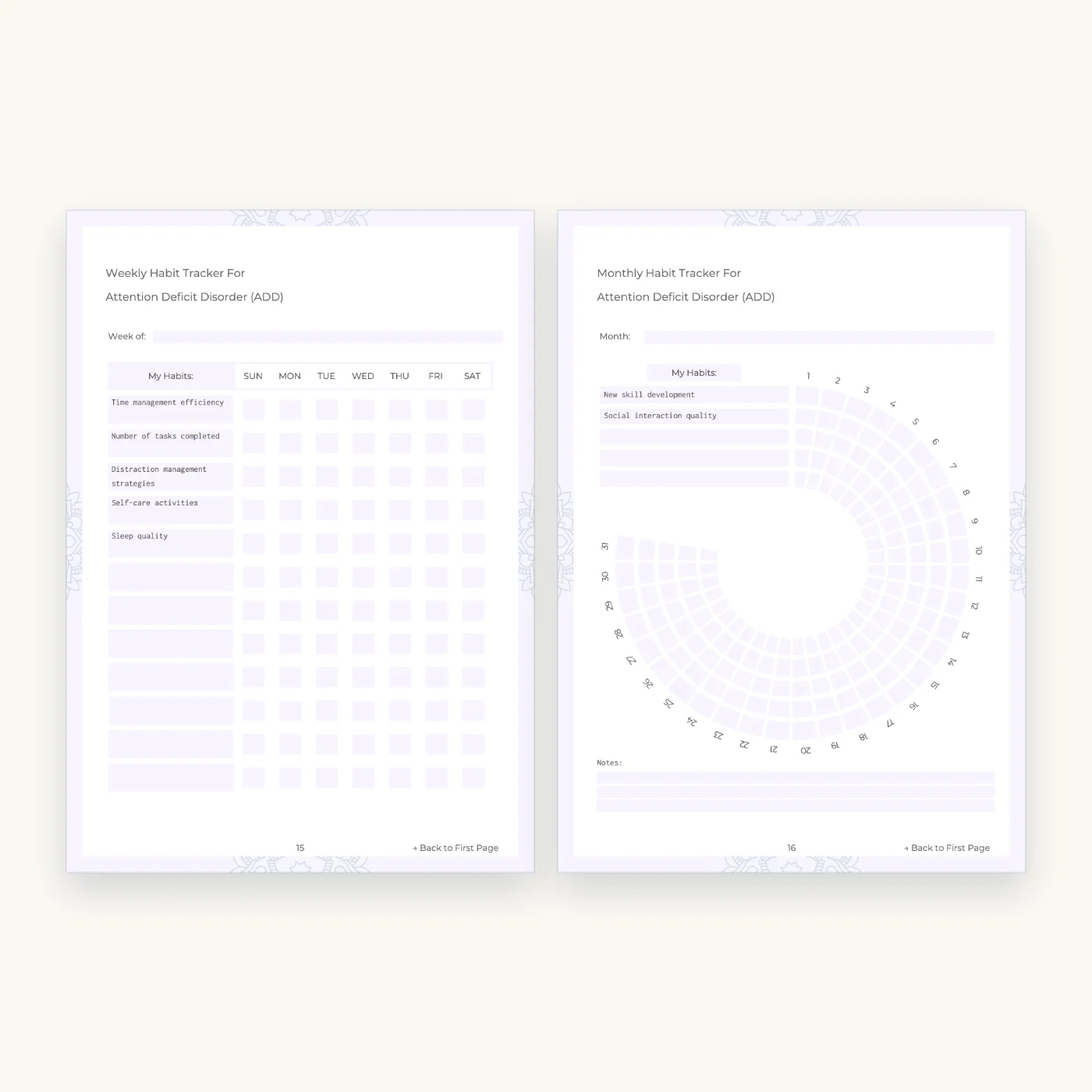
- Weekly and monthly habit trackers and emotion trackers
- Daily mindfulness, cognitive-behavioural, physical activity, social connection and creative exercises
- Overcoming negative thoughts and beliefs
- Beneficial mental health habits
- Journaling prompts and thought-challenging questions
- Affirmation cards and a notes template
ADHD worksheets for adults who drop planners by Wednesday
You buy a new planner in January, fill in the first week with care and find it under a pile of post in February. The planner asked too much of you, and the gap between writing a plan and starting it never closed.
Adults with ADHD often know what needs doing. The struggle sits with working memory and with starting the task. These worksheets keep each tool to one page. The daily journal asks a few short questions and the habit tracker is a grid. A thought record takes one belief, such as “I’ll never finish what I start”, and asks you for a small piece of evidence against it.
Who the ADHD planner suits
- Adults with an ADHD or ADD diagnosis, or those waiting for an assessment
- People who want to see how mood and habits shift across a month
- Students tracking study habits
- Counsellors who set weekly homework for clients with attention difficulties
How to use the planner without abandoning it
Start with the daily journal alone for two weeks. Add the weekly habit tracker once the journal feels automatic, and keep it to a handful of habits. At the end of each month, fill in the monthly recap and the emotion tracker side by side to see which weeks went well and why.
When a thought such as “I’m not smart enough” keeps coming back, turn to the thought-challenging questions. For planning and task-starting strategies beyond this planner, read ADHD executive functioning strategies for adults or pair it with the ADHD journaling workbook.
Questions about the ADHD worksheets and planner
What format are the ADHD worksheets?
A PDF of 40 pages. Print it at home or fill it in on screen. It downloads straight after payment.
Is this ADHD planner suitable for adults?
Yes. The yearly goals, the questions on work and study habits and the thought-challenging pages are written with adult life in mind.
Does it include a habit tracker?
Yes. It has weekly and monthly habit trackers, plus weekly and monthly emotion trackers.
Is it suitable for clients in therapy?
It is written or reviewed by a BACP registered therapist for use in sessions and for self-help at home. It supports therapy and does not replace it.
PDF, 40 pages. Print single pages or fill in on a tablet. Instant download after payment.
This workbook is an educational resource. It does not replace therapy, medical care or crisis support. If you feel unsafe, contact your GP, NHS 111 or your local emergency services.


Reviews
There are no reviews yet.