Description
Five minutes of writing, one page at a time
Thirty tabs open, three tasks started, none finished. The journal you bought in January has four entries.
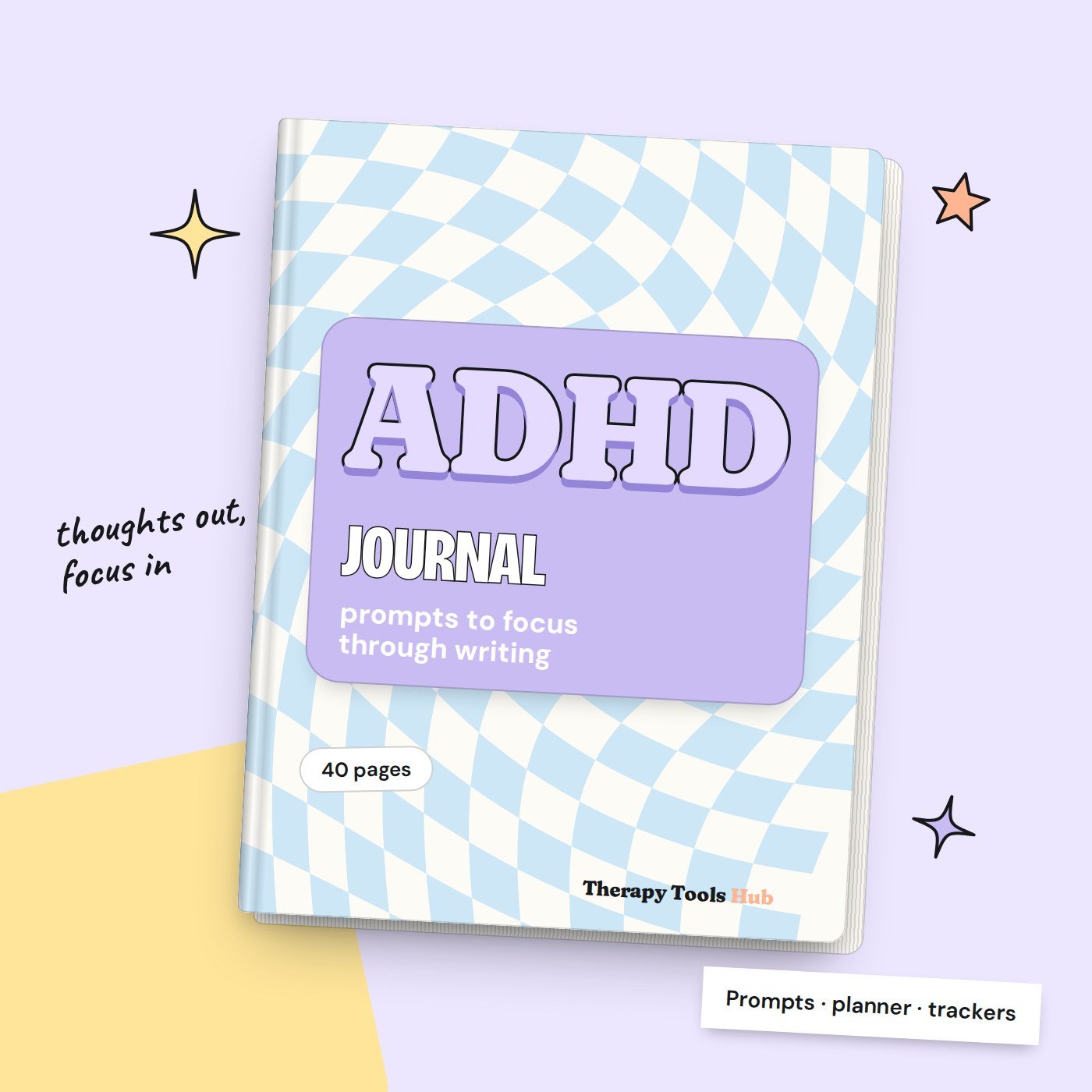
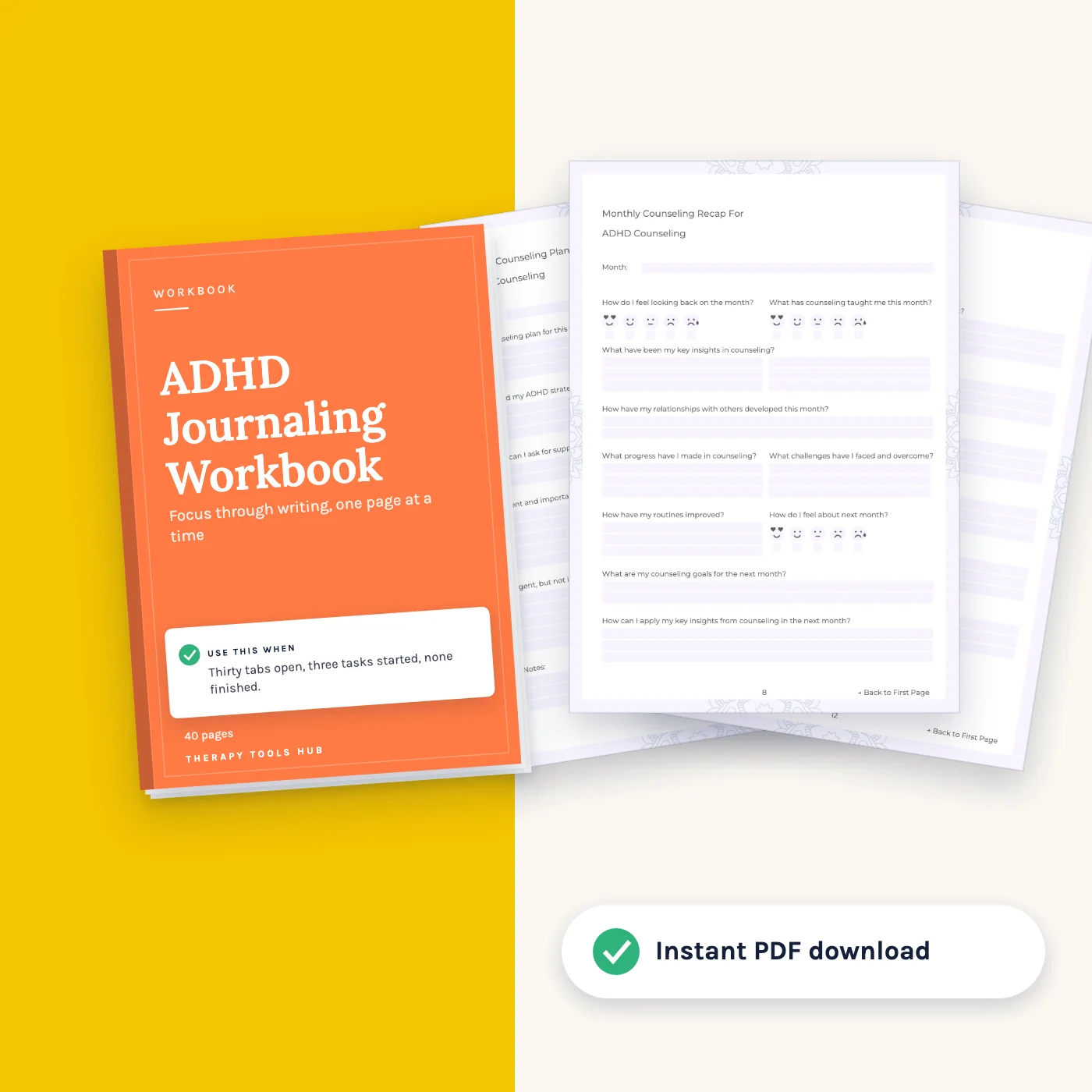
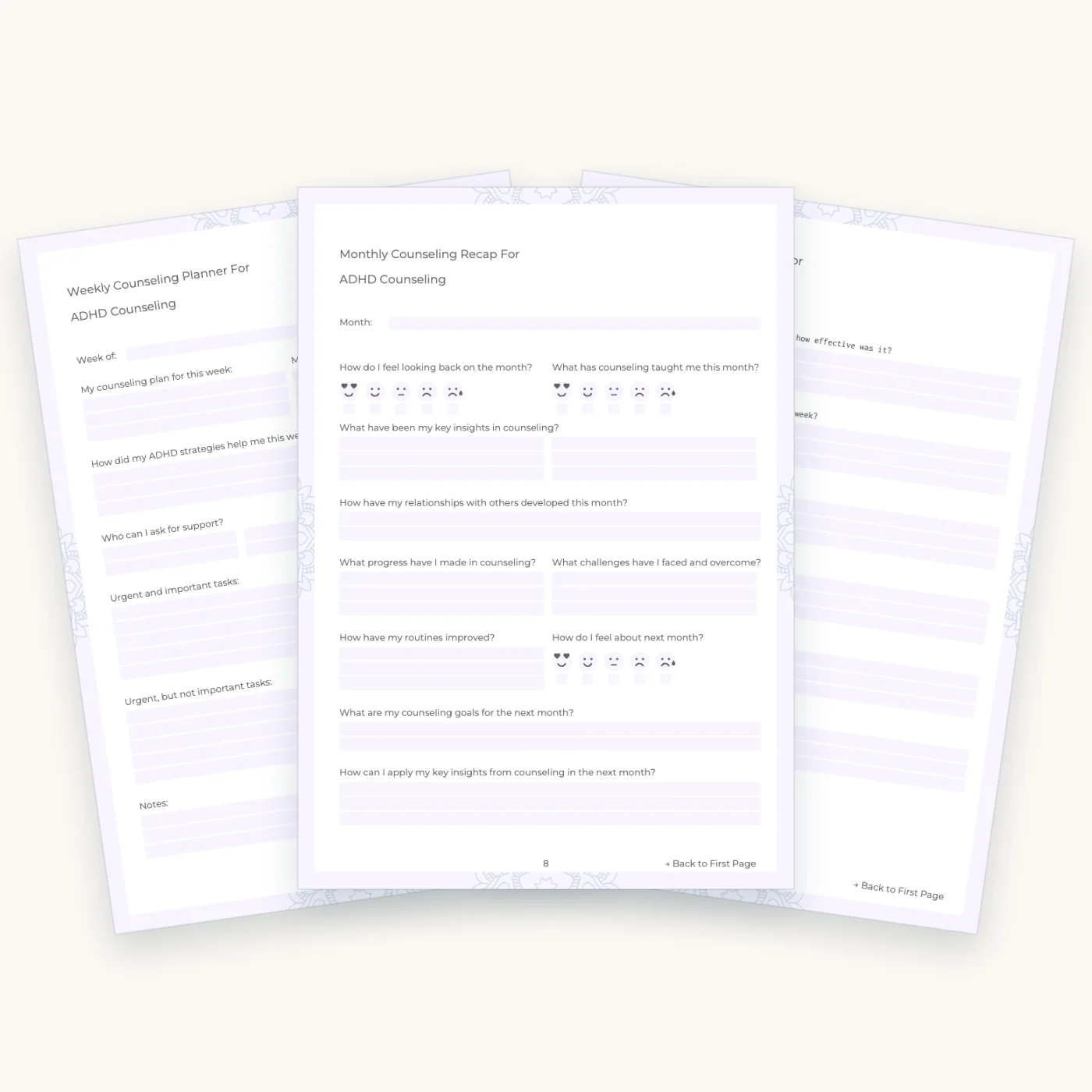
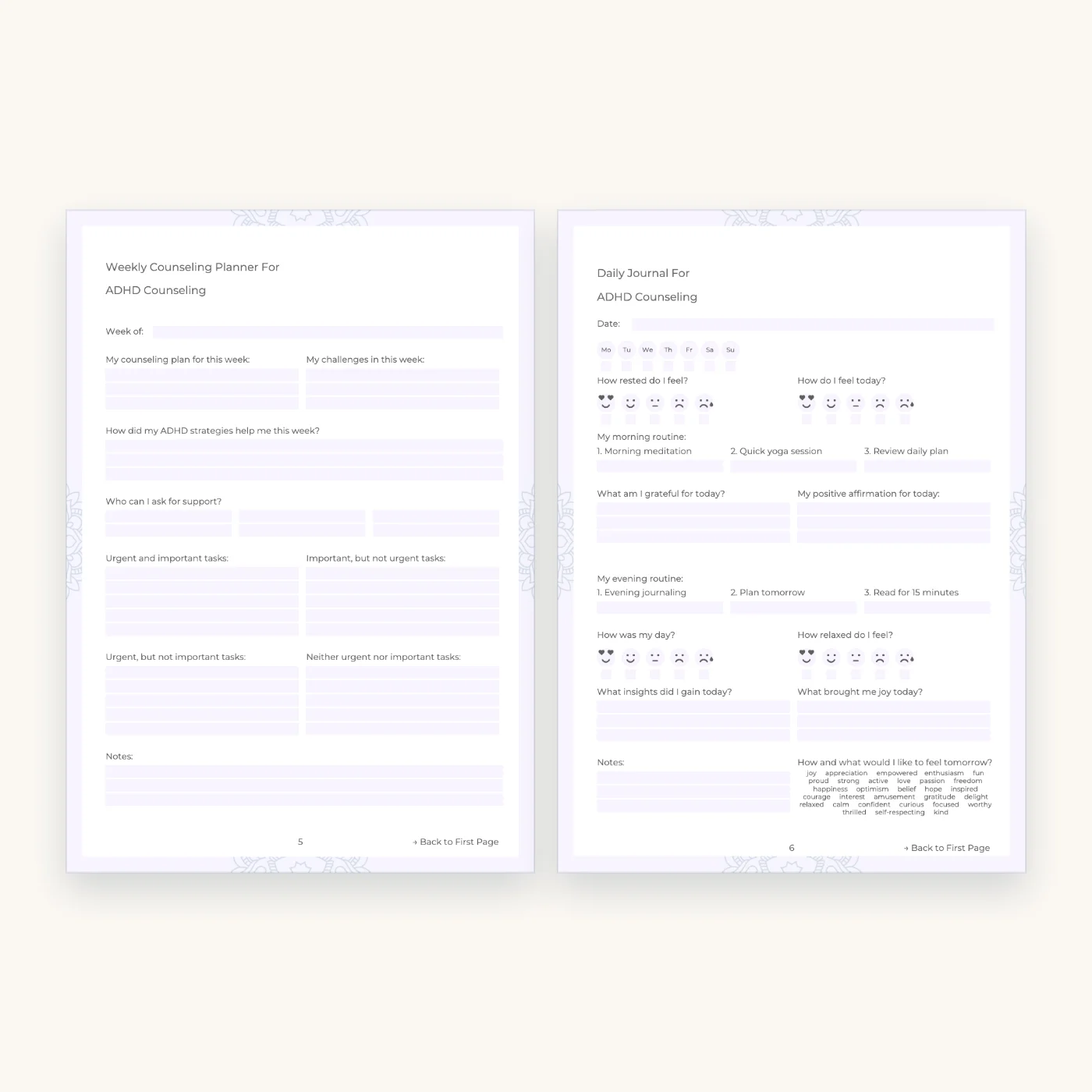
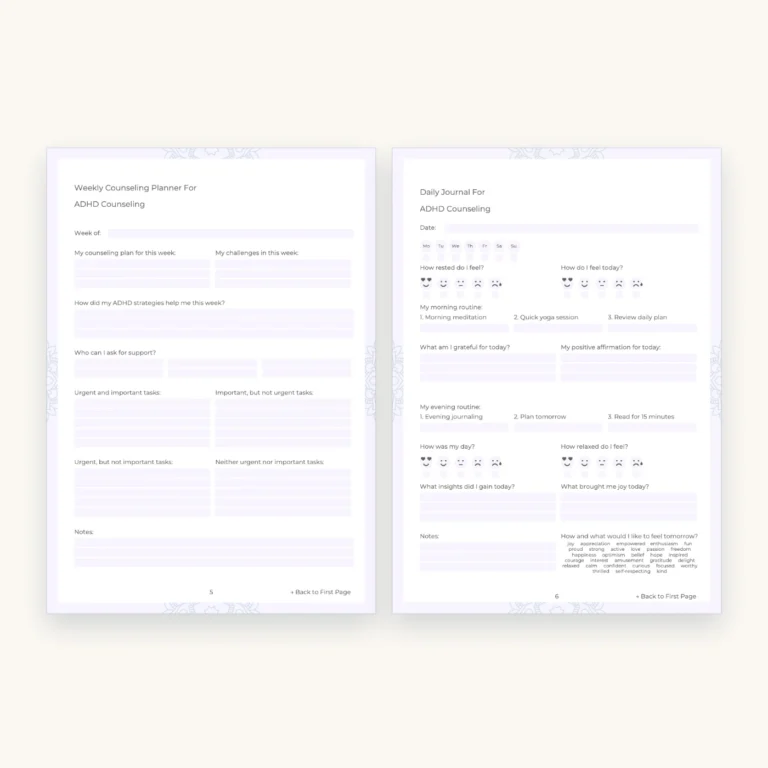
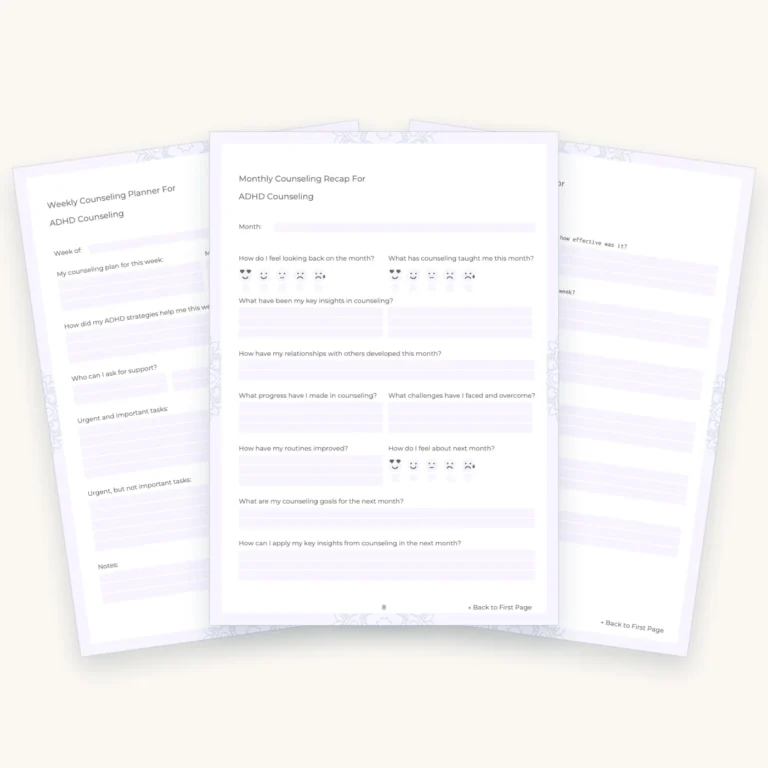
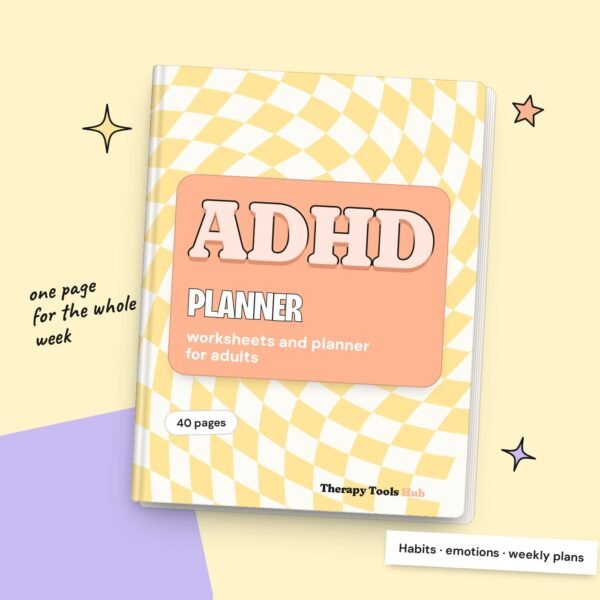
This 40-page workbook is built for a mind which resists long routines. Each page is one short task: a daily journal box, a weekly recap, a reflective question, a habit tracker. Print the page you need, set a timer for five minutes and stop when it rings. Counsellors and ADHD coaches use the same pages as between-session homework.
Inside this workbook
- Best practice for using the pages
- Yearly reflection and goals
- Weekly planner and daily journal
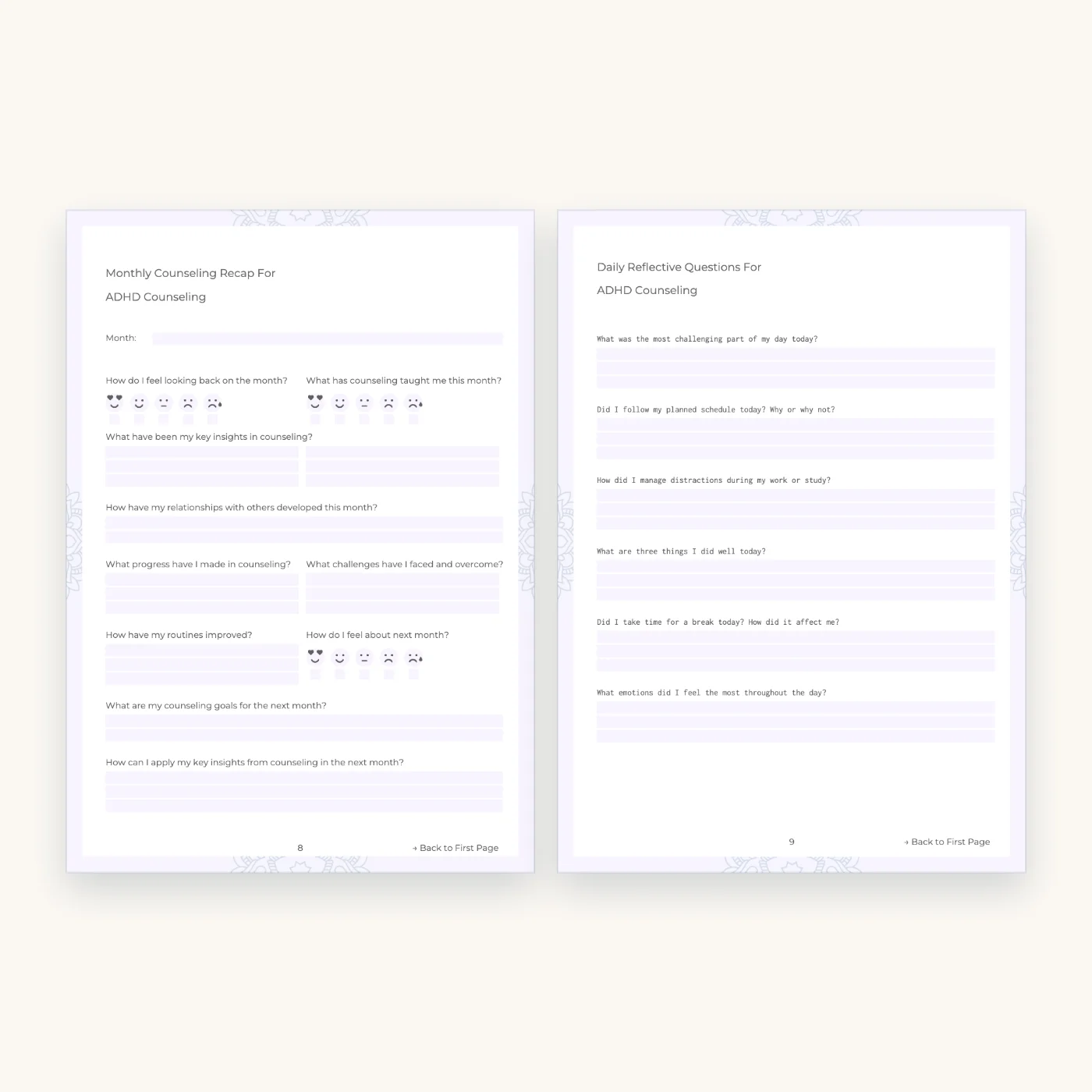
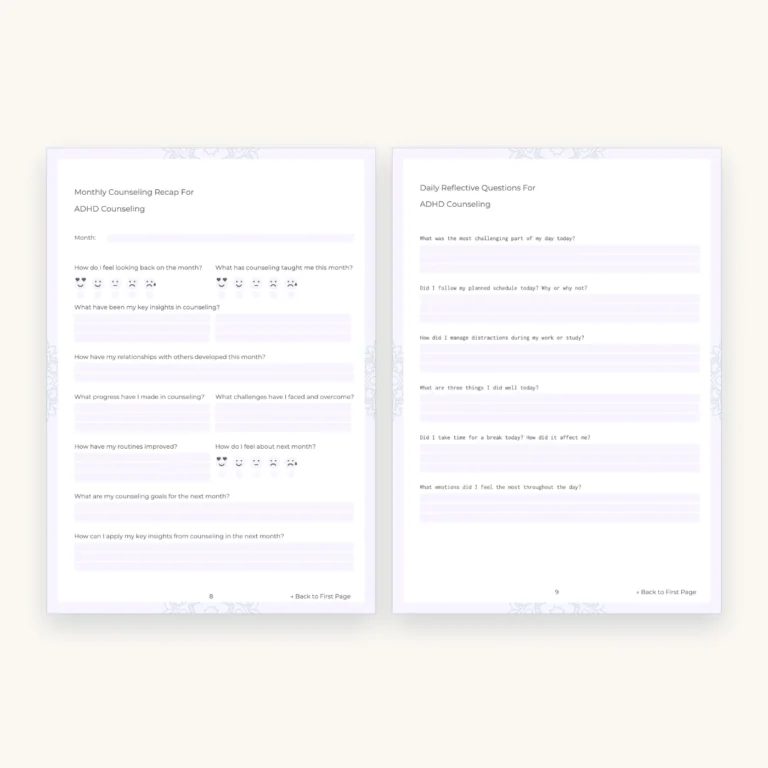
- Weekly and monthly recaps
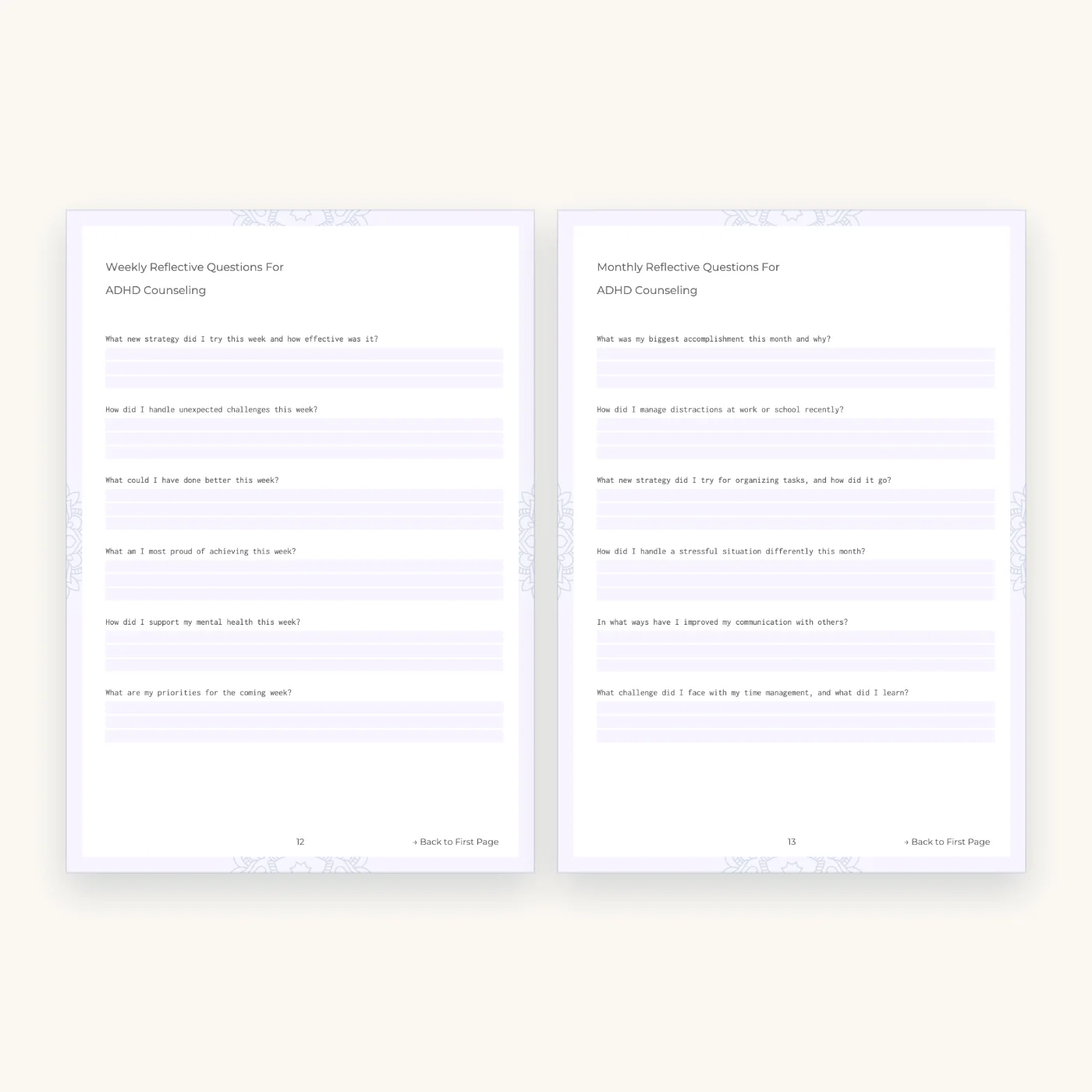
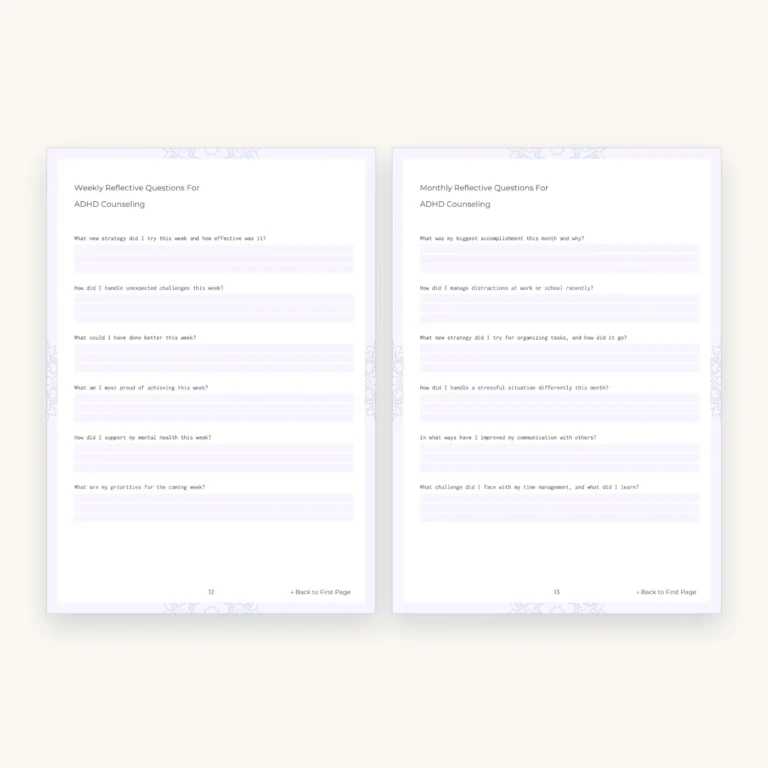
- Daily, weekly and monthly reflective questions
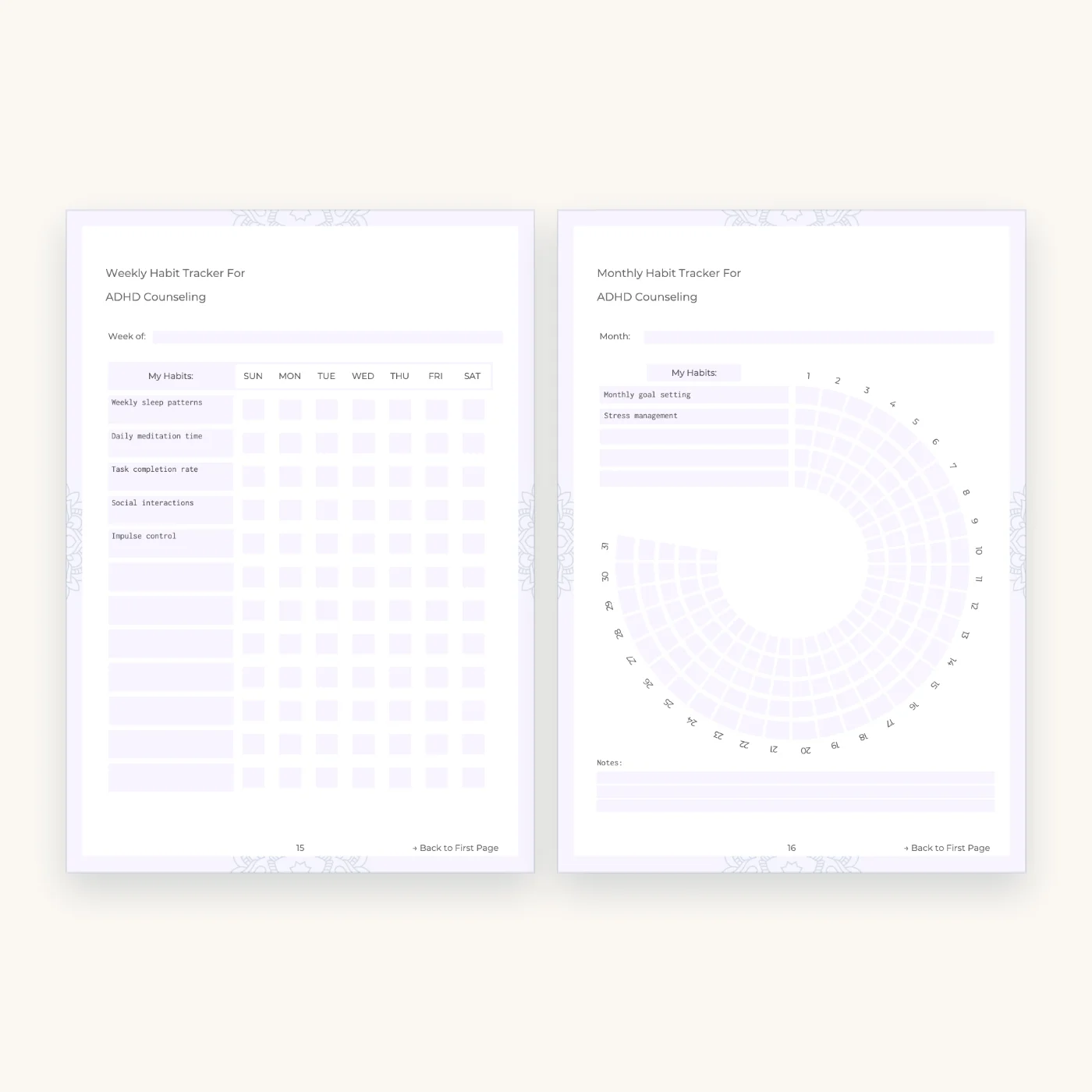
- Weekly and monthly habit trackers and emotion trackers
- Daily exercises: reflection, stress reduction, problem solving, communication, creative expression
- Overcoming negative thoughts and beliefs
- Daily, weekly and monthly journaling prompts
- Thought-challenging questions
- Positive affirmation cards and a notes template
ADHD journal prompts for a busy mind
It is ten at night, and you remember the email you meant to send at nine this morning. Long journal routines tend to collapse within days when you have ADHD. Short prompts last longer because each one asks for a single answer.
The workbook keeps every page small. A daily prompt asks which task you completed today, and you write two lines. Weekly prompts look at your biggest challenge. Thought-challenging questions such as “Am I mind reading or predicting the future?” help you test old beliefs like “I’m not good enough”.
Who this ADHD journal suits
- Adults with ADHD who abandon long journals after a week
- Students who want a weekly planner and a habit tracker in one place
- Counsellors and ADHD coaches setting homework between sessions
- Anyone who wants to track emotions month by month
Making the journal template work for you
Read the best practice page first. Then print the yearly reflection and fill in your goals. Each morning, complete the daily journal box with a five-minute timer running, and stop when it rings. On Sundays, fill in the weekly recap and the habit tracker.
When a negative belief returns, turn to the overcoming negative thoughts pages and the thought-challenging questions. Cut out the affirmation cards and keep one in your wallet. For planning help outside the journal, see the ADHD worksheets and planner or the guide to ADHD executive functioning strategies for adults.
Questions about the ADHD journaling workbook
What format is it?
A 40-page PDF. Print it at home or fill it in on screen. It downloads straight after payment.
What are good ADHD journal prompts?
Short, specific prompts work best. Examples from the workbook ask which task you completed today, your biggest challenge this week and your top accomplishments this month.
Is there an ADHD journal template for daily use?
Yes. A daily journal page, a weekly planner and a notes template sit alongside weekly and monthly habit and emotion trackers.
Is it suitable for use with clients?
It is written or reviewed by a BACP registered therapist for use in sessions and for self-help at home.
PDF, 40 pages. Print single pages or fill in on a tablet. Instant download after payment.
This workbook is an educational resource. It does not replace therapy, medical care or crisis support. If you feel unsafe, contact your GP, NHS 111 or your local emergency services.


Reviews
There are no reviews yet.