New: Now, Mapped. 60 hard everyday moments, one next step each. See inside

Drama Triangle Worksheets: Victim, Rescuer, Persecutor

You step in to help, end up blamed, and next month it happens again. These drama triangle worksheets help you identify the Victim, Rescuer and Persecutor roles in your relationships and practise stepping out of them.

Use this when

You step in to help, end up blamed, and next month it happens again.

£15.00

About this download

Name the role, then step out of it

You step in to help your sister, end up blamed, and next month the same scene plays again with a different cast. The roles rotate. The drama stays.

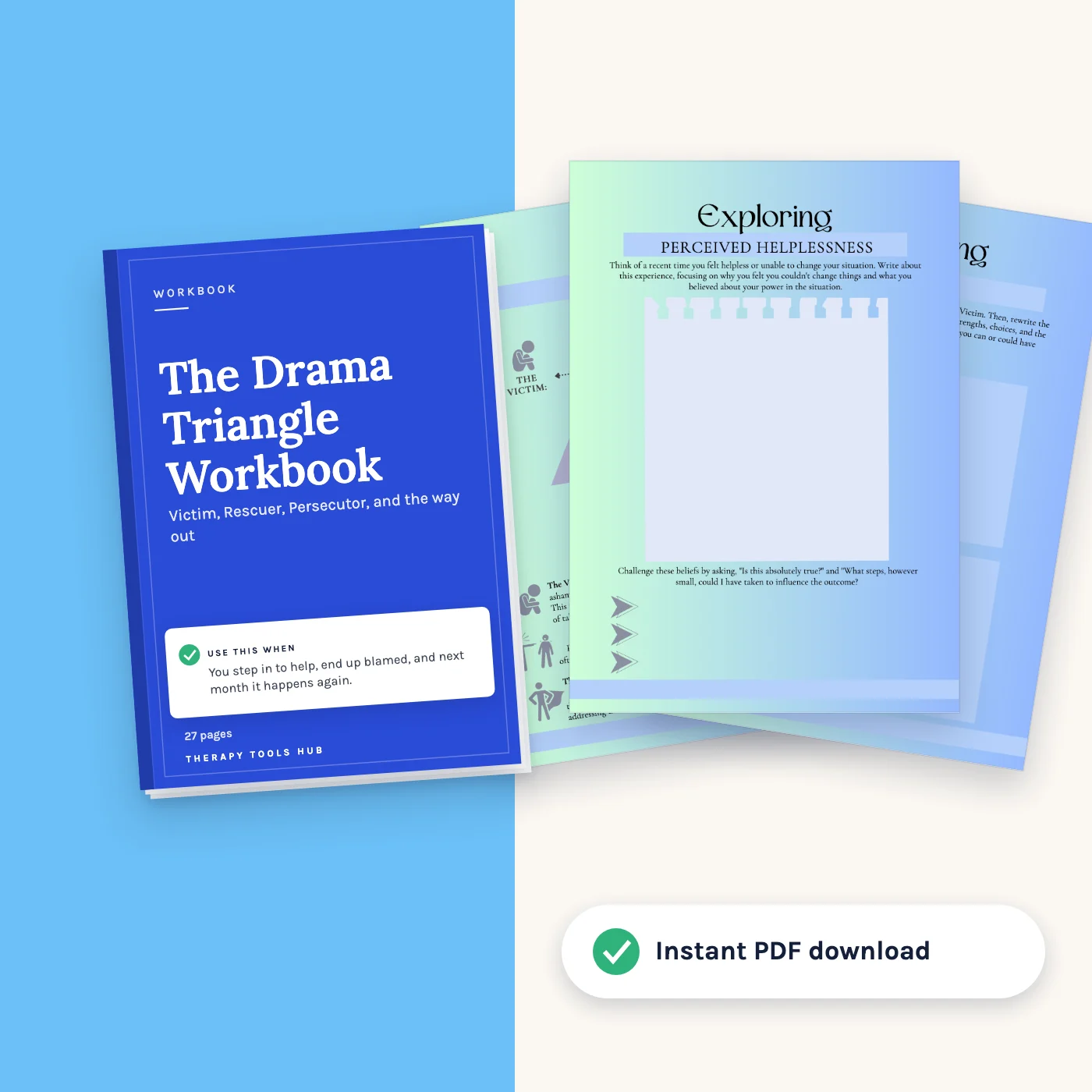
This 27-page workbook explains the three roles of the drama triangle, Victim, Persecutor and Rescuer, with an info sheet and a set of exercises for each. You track the critical thoughts, the payoffs and the needs underneath each role, then learn how the roles shift mid-argument. It closes with The Empowerment Dynamic, the three roles which replace them.

Inside this workbook

  • What is the drama triangle, and the roles explained
  • The Victim: the blame game, perceived helplessness, the needs behind victimhood, reauthoring your story
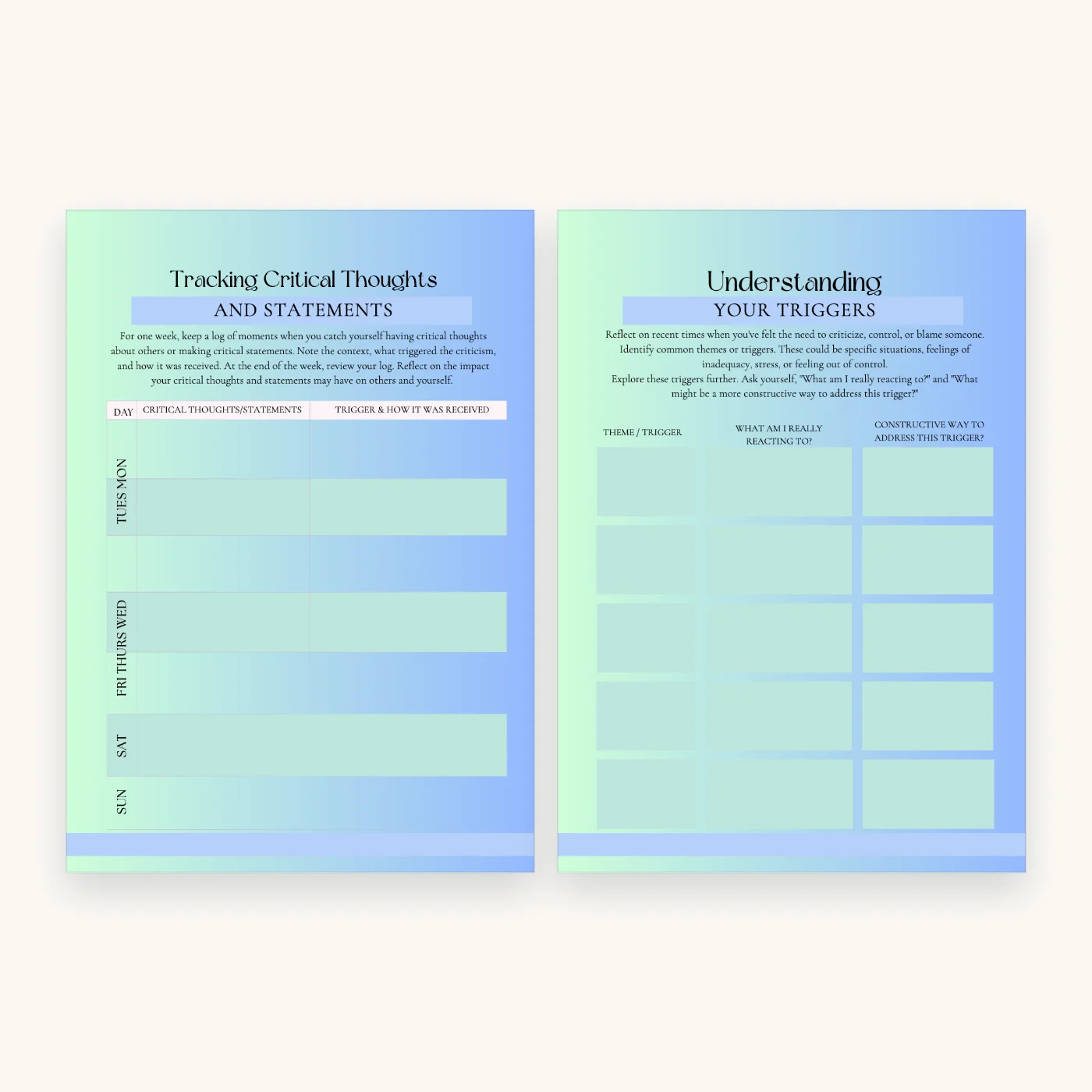
  • The Persecutor: tracking critical thoughts, understanding your triggers, practising empathy, from blame to accountability
  • The Rescuer: exploring the payoff, the impact on relationships, boundaries and self-care, empowerment versus rescuing
  • The fluid nature of the roles and dynamics of role shifts
  • Breaking the cycle and the impact on personal wellbeing
  • The Empowerment Dynamic: the Creator, the Challenger and the Coach
  • Reflective journal prompts

What is the drama triangle?

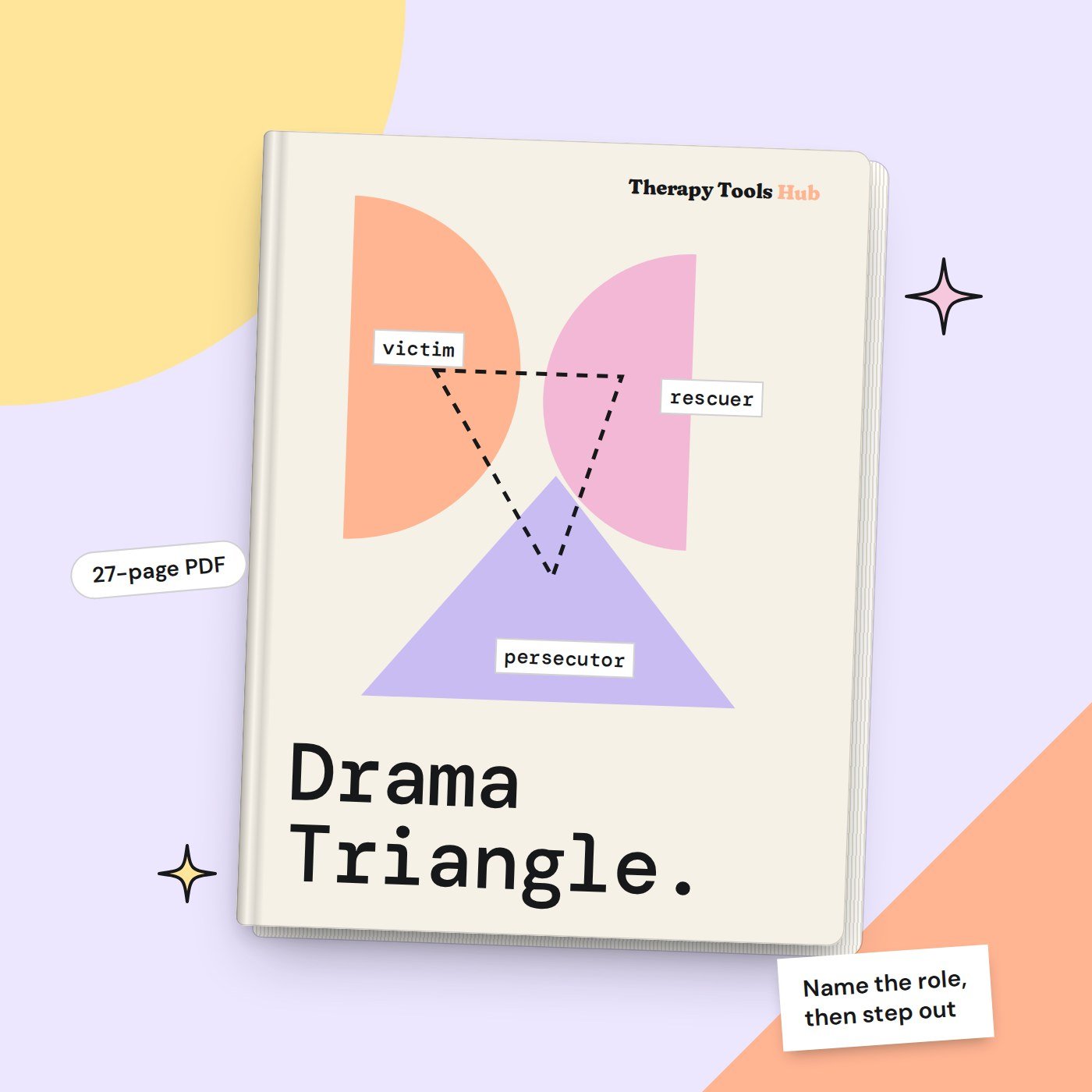
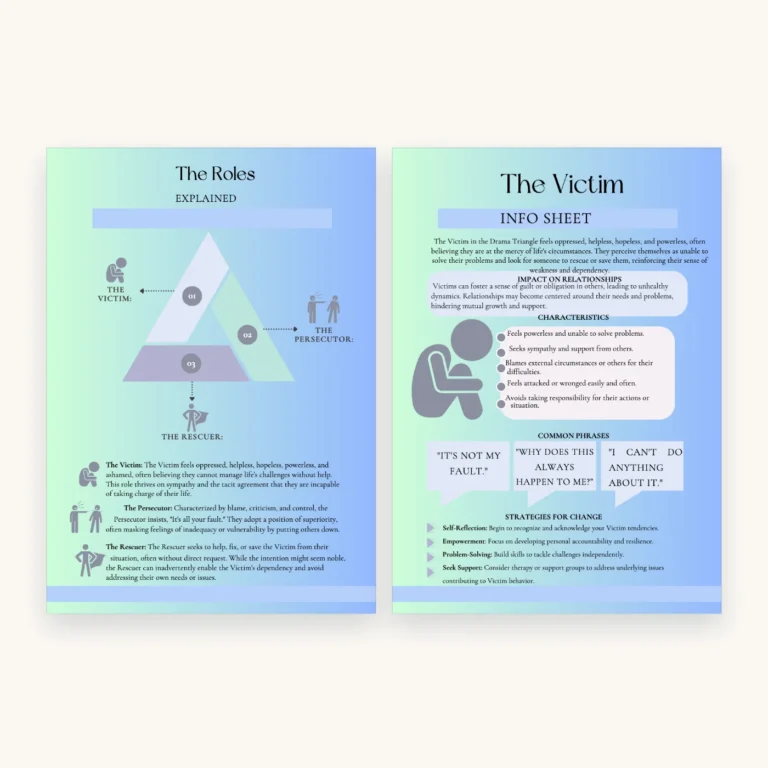
The drama triangle, also called the Karpman drama triangle or the victim triangle, is a model of conflict described by psychiatrist Stephen Karpman in 1968. It maps three roles people fall into when a relationship gets tense: the Victim (“poor me”), the Persecutor (“it’s your fault”) and the Rescuer (“let me fix it”).

None of these is a personality type. They are positions we step into, often without noticing, and most of us move through all three in the same argument. The pattern keeps going because each role needs the others. The Rescuer needs someone to save, the Victim needs someone to lean on or blame, and the Persecutor needs someone in the wrong. Step out of one corner and the whole triangle slows down.

Drama triangle examples you might recognise

  • At home: you sort out your brother’s debt again (Rescuer), he forgets to say thank you, and you snap at him (Persecutor). Later you tell a friend nobody ever helps you (Victim).
  • In a couple: one partner says “I can never do anything right”, the other goes from comforting to criticising in the same evening.
  • At work: a manager covers for a struggling colleague, resents the extra hours, then complains about them in a team meeting.

Who these victim triangle worksheets are for

  • Adults who notice the same fight repeating with a partner, parent, sibling or colleague
  • People who over-help, then feel resentful or used
  • Anyone working on boundaries, people-pleasing or codependency
  • Therapists, counsellors and coaches who want a structured handout for sessions or homework

How to use the worksheets

Start with the role you recognise most. Read its info sheet, then work through its four exercises over a week, one a day. The tracking sheets work best filled in close to the moment, while the argument is still fresh. Then turn to the Empowerment Dynamic pages, where the Victim becomes the Creator, the Persecutor becomes the Challenger and the Rescuer becomes the Coach, and plan one small change for the next time the pattern starts.

In therapy, the worksheets work well as homework between sessions. The client brings a filled-in sheet, and the session starts from a real example rather than a summary. If the pattern sits close to people-pleasing, read The Version of You Who Shows Up to Be Liked. For the arguments themselves, the conflict resolution worksheets for adults pair well with this workbook.

Questions about the drama triangle worksheets

Is the victim triangle the same as the drama triangle?

Yes. “Victim triangle”, “Karpman triangle” and “drama triangle” all name the same model of three roles: Victim, Persecutor and Rescuer.

Are these worksheets suitable for therapy clients?

Yes. The workbook is written or reviewed by a BACP registered therapist, for use in sessions and for self-help at home.

What is the way out of the drama triangle?

The Empowerment Dynamic, developed by David Emerald, offers three healthier roles: Creator instead of Victim, Challenger instead of Persecutor and Coach instead of Rescuer. The last section of the workbook walks you through each one.

What format is it?

A 27-page PDF. Print it at home or fill it in on screen. It downloads straight after payment.

PDF, 27 pages. Print at home or fill in on screen. Instant download after payment.

This workbook is an educational resource. It does not replace therapy, medical care or crisis support. If you feel unsafe, contact your GP, NHS 111 or your local emergency services.
See the pages before you buy

Real pages from the file you receive. Tap a card for what is on them.

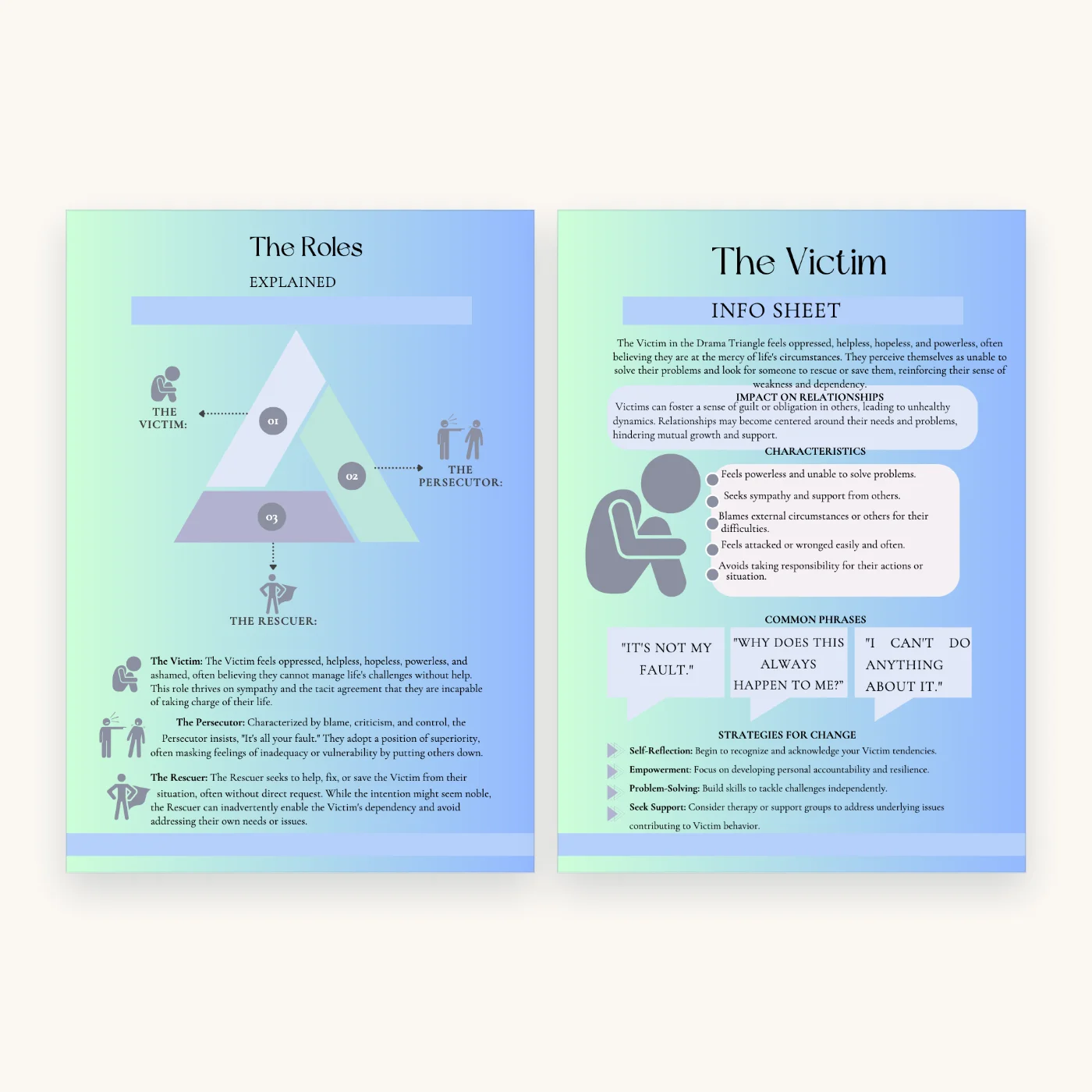
Drama Triangle Worksheets, inside pages 3 and 4

Pages 3 and 4

Tap to see what is on them

Tap to flip

Pages 3 and 4

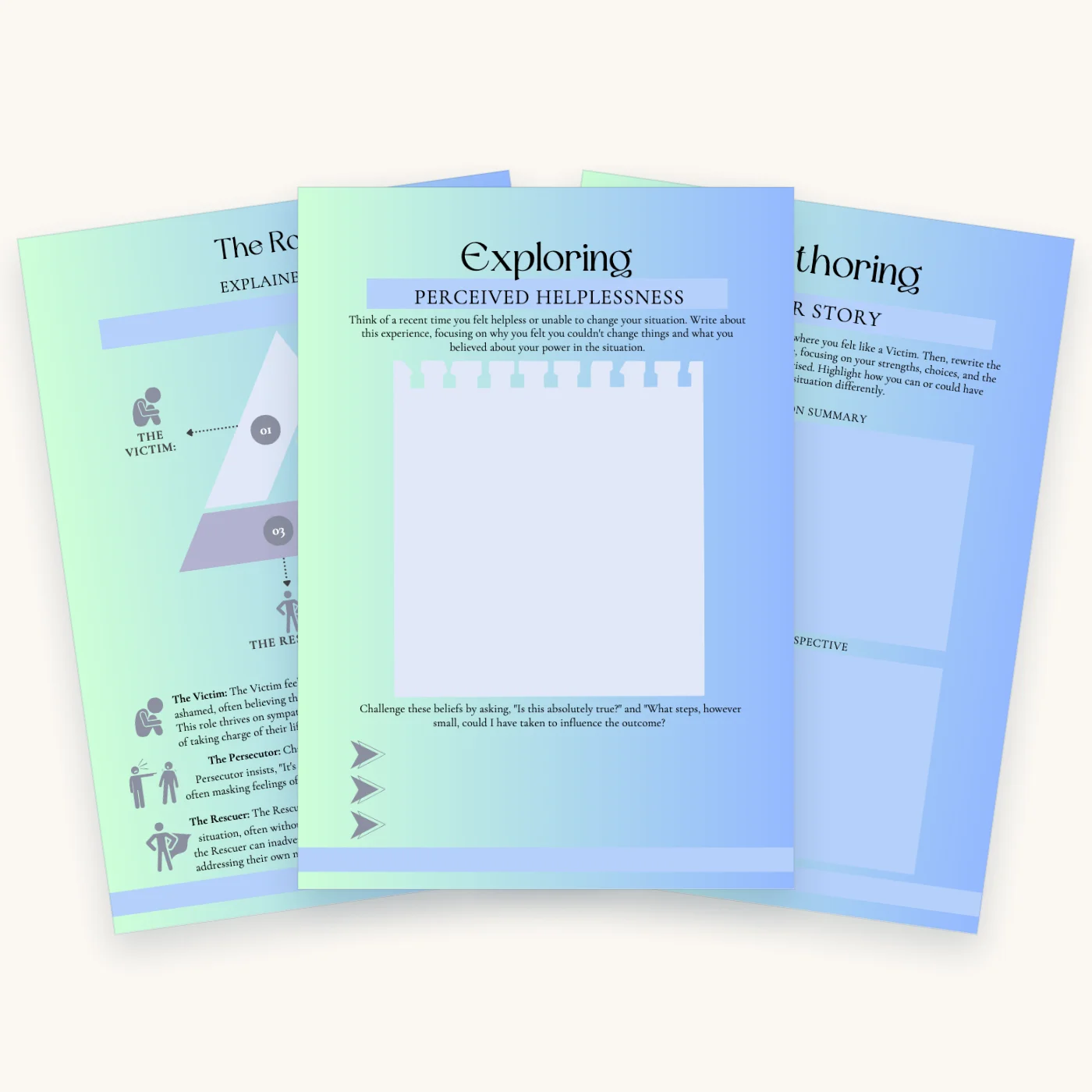
Page 3: The Roles EXPLAINED THE 01 VICTIM: THE. Page 4: The Victim INFO SHEET The Victim in the Drama Triangle feels oppressed.

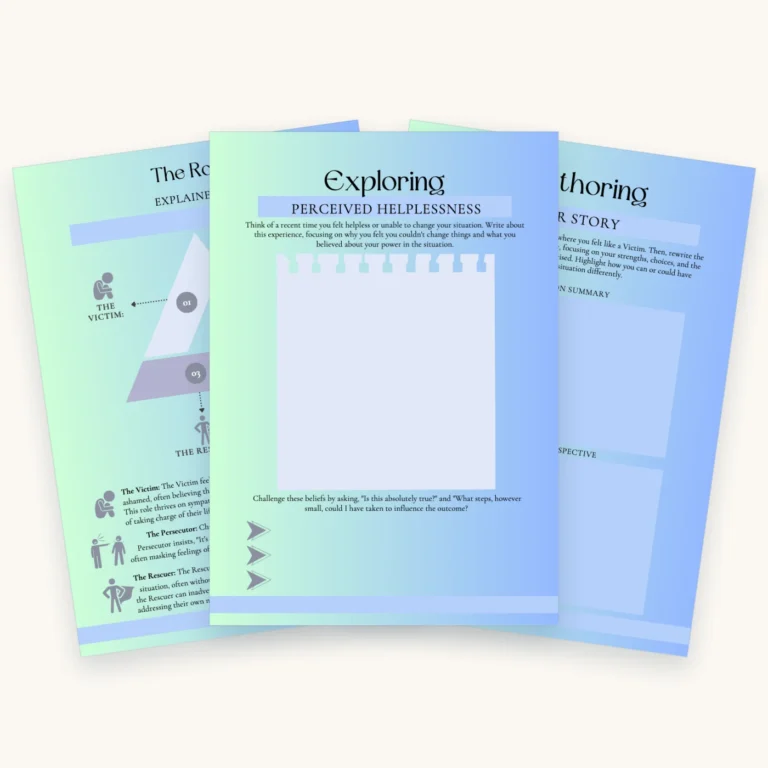
Drama Triangle Worksheets, pages 3, 6, 8 fanned out

Pages 3, 6 and 8

Tap to see what is on them

Tap to flip

Pages 3, 6 and 8

Page 3: The Roles EXPLAINED THE 01 VICTIM: THE. Page 6: Exploring PERCEIVED HELPLESSNESS Think of a recent time you felt helpl. Page 8: Reauthoring YOUR STORY Write a brief summary of a situation where you .

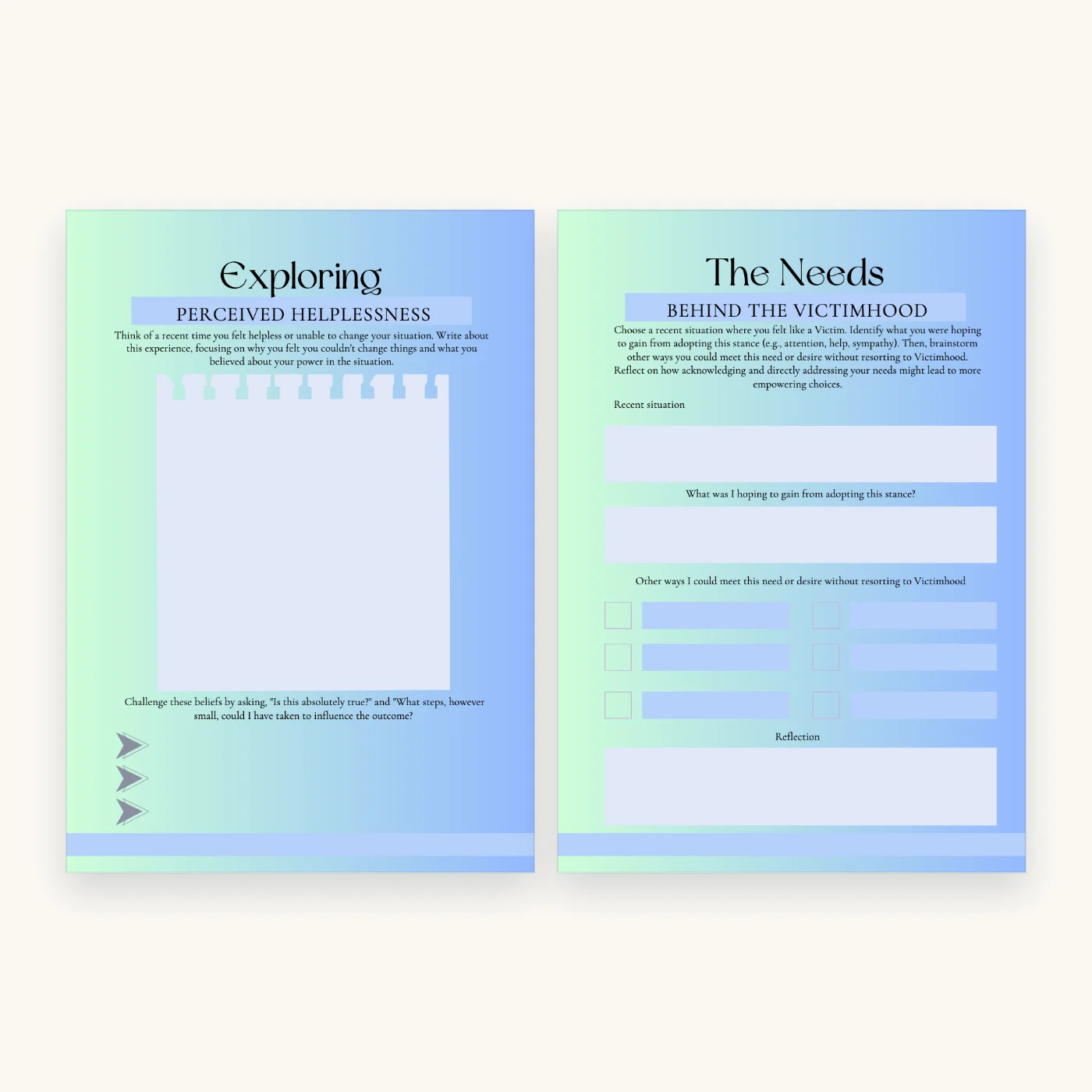
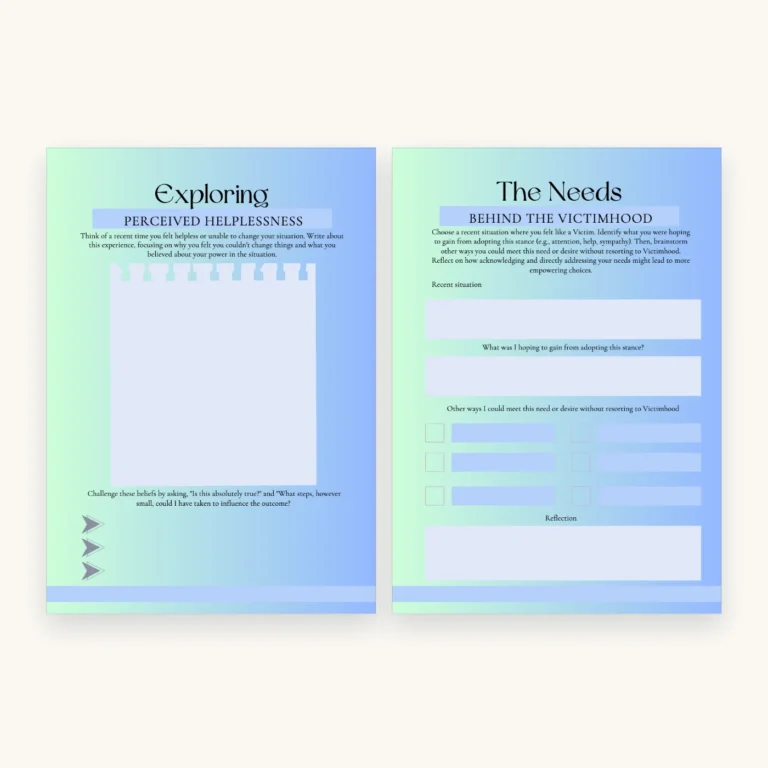
Drama Triangle Worksheets, inside pages 6 and 7

Pages 6 and 7

Tap to see what is on them

Tap to flip

Pages 6 and 7

Page 6: Exploring PERCEIVED HELPLESSNESS Think of a recent time you felt helpl. Page 7: The Needs BEHIND THE VICTIMHOOD Choose a recent situation where you fe.

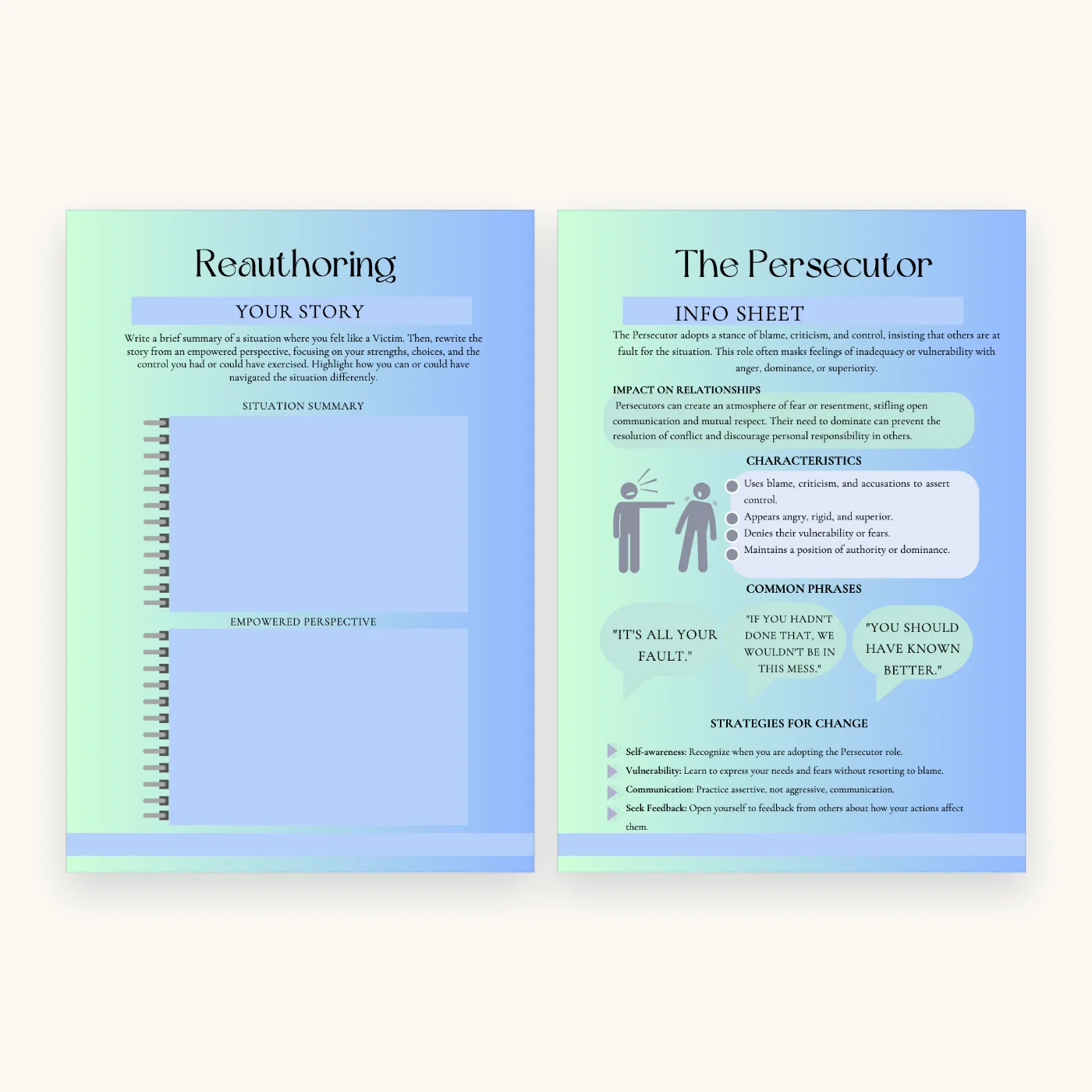
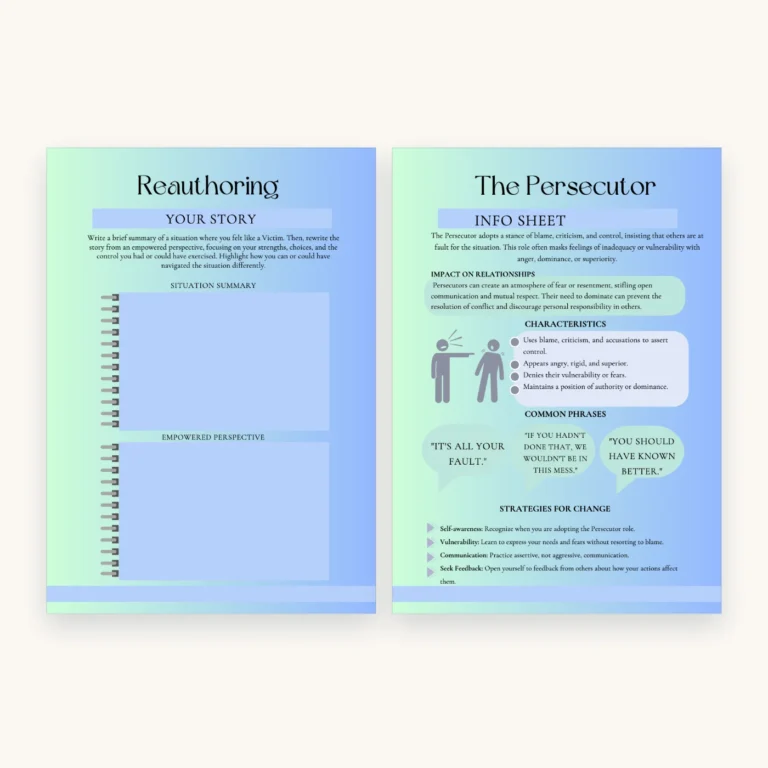
Drama Triangle Worksheets, inside pages 8 and 9

Pages 8 and 9

Tap to see what is on them

Tap to flip

Pages 8 and 9

Page 8: Reauthoring YOUR STORY Write a brief summary of a situation where you . Page 9: The Persecutor INFO SHEET The Persecutor adopts a stance of blame, cri.

Questions buyers ask

Do both partners need to take part?

No. Most of these workbooks are for one person. A change in one partner's responses often shifts the pattern between two people.

Do these replace couples therapy?

No. They help you understand a pattern and practise a new response. For entrenched conflict, betrayal or separation, see a couples therapist.

Is this suitable if my partner frightens me?

No. Couple exercises are unsafe where there is fear, control or violence. In the UK, call the National Domestic Abuse Helpline on 0808 2000 247.

How do I get the file after paying?

The download links appear on the order confirmation page and arrive by email once payment clears. No account is needed, and you keep the files.

When a worksheet is not enough

Some problems need another person in the room. Kita Tabachka, the BACP registered therapist behind this shop, works online with individuals and couples in the UK and abroad. The first consultation is free.

Description

Name the role, then step out of it

You step in to help your sister, end up blamed, and next month the same scene plays again with a different cast. The roles rotate. The drama stays.

This 27-page workbook explains the three roles of the drama triangle, Victim, Persecutor and Rescuer, with an info sheet and a set of exercises for each. You track the critical thoughts, the payoffs and the needs underneath each role, then learn how the roles shift mid-argument. It closes with The Empowerment Dynamic, the three roles which replace them.

Inside this workbook

  • What is the drama triangle, and the roles explained
  • The Victim: the blame game, perceived helplessness, the needs behind victimhood, reauthoring your story
  • The Persecutor: tracking critical thoughts, understanding your triggers, practising empathy, from blame to accountability
  • The Rescuer: exploring the payoff, the impact on relationships, boundaries and self-care, empowerment versus rescuing
  • The fluid nature of the roles and dynamics of role shifts
  • Breaking the cycle and the impact on personal wellbeing
  • The Empowerment Dynamic: the Creator, the Challenger and the Coach
  • Reflective journal prompts

What is the drama triangle?

The drama triangle, also called the Karpman drama triangle or the victim triangle, is a model of conflict described by psychiatrist Stephen Karpman in 1968. It maps three roles people fall into when a relationship gets tense: the Victim (“poor me”), the Persecutor (“it’s your fault”) and the Rescuer (“let me fix it”).

None of these is a personality type. They are positions we step into, often without noticing, and most of us move through all three in the same argument. The pattern keeps going because each role needs the others. The Rescuer needs someone to save, the Victim needs someone to lean on or blame, and the Persecutor needs someone in the wrong. Step out of one corner and the whole triangle slows down.

Drama triangle examples you might recognise

  • At home: you sort out your brother’s debt again (Rescuer), he forgets to say thank you, and you snap at him (Persecutor). Later you tell a friend nobody ever helps you (Victim).
  • In a couple: one partner says “I can never do anything right”, the other goes from comforting to criticising in the same evening.
  • At work: a manager covers for a struggling colleague, resents the extra hours, then complains about them in a team meeting.

Who these victim triangle worksheets are for

  • Adults who notice the same fight repeating with a partner, parent, sibling or colleague
  • People who over-help, then feel resentful or used
  • Anyone working on boundaries, people-pleasing or codependency
  • Therapists, counsellors and coaches who want a structured handout for sessions or homework

How to use the worksheets

Start with the role you recognise most. Read its info sheet, then work through its four exercises over a week, one a day. The tracking sheets work best filled in close to the moment, while the argument is still fresh. Then turn to the Empowerment Dynamic pages, where the Victim becomes the Creator, the Persecutor becomes the Challenger and the Rescuer becomes the Coach, and plan one small change for the next time the pattern starts.

In therapy, the worksheets work well as homework between sessions. The client brings a filled-in sheet, and the session starts from a real example rather than a summary. If the pattern sits close to people-pleasing, read The Version of You Who Shows Up to Be Liked. For the arguments themselves, the conflict resolution worksheets for adults pair well with this workbook.

Questions about the drama triangle worksheets

Is the victim triangle the same as the drama triangle?

Yes. “Victim triangle”, “Karpman triangle” and “drama triangle” all name the same model of three roles: Victim, Persecutor and Rescuer.

Are these worksheets suitable for therapy clients?

Yes. The workbook is written or reviewed by a BACP registered therapist, for use in sessions and for self-help at home.

What is the way out of the drama triangle?

The Empowerment Dynamic, developed by David Emerald, offers three healthier roles: Creator instead of Victim, Challenger instead of Persecutor and Coach instead of Rescuer. The last section of the workbook walks you through each one.

What format is it?

A 27-page PDF. Print it at home or fill it in on screen. It downloads straight after payment.

PDF, 27 pages. Print at home or fill in on screen. Instant download after payment.

This workbook is an educational resource. It does not replace therapy, medical care or crisis support. If you feel unsafe, contact your GP, NHS 111 or your local emergency services.
Reviews

There are no reviews yet.

Only logged in customers who have purchased this product may leave a review.

Kita Tabachka, BACP-registered therapistPrefer to talk it through?  Online therapy
Drama Triangle Worksheets: Victim, Rescuer, Persecutor£15.00Add to cart