Description
Prepare the conversation you keep rehearsing in the shower
You rehearse the argument in the shower, walk in calm, and say the wrong thing inside a minute. Afterwards the better sentence arrives, too late.
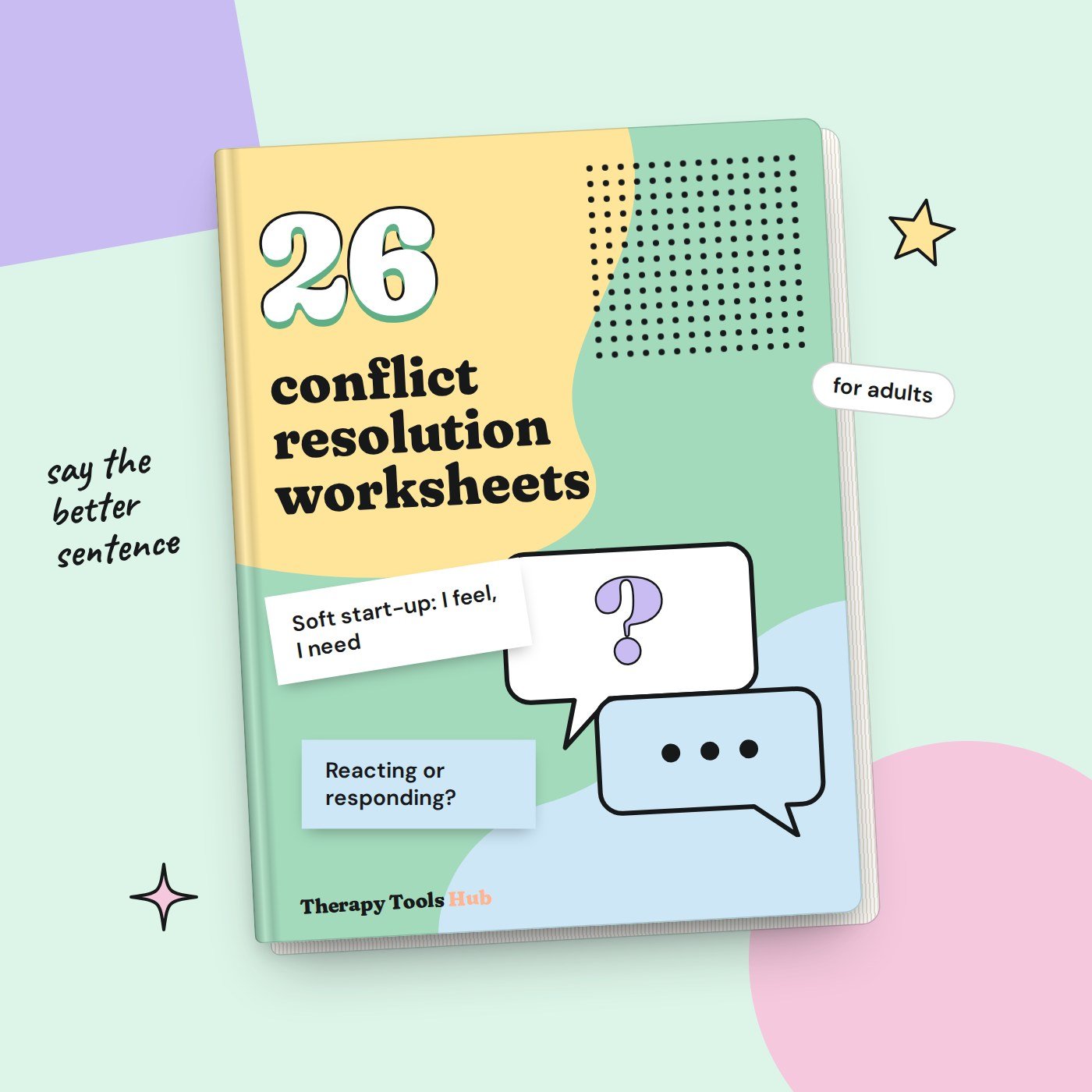
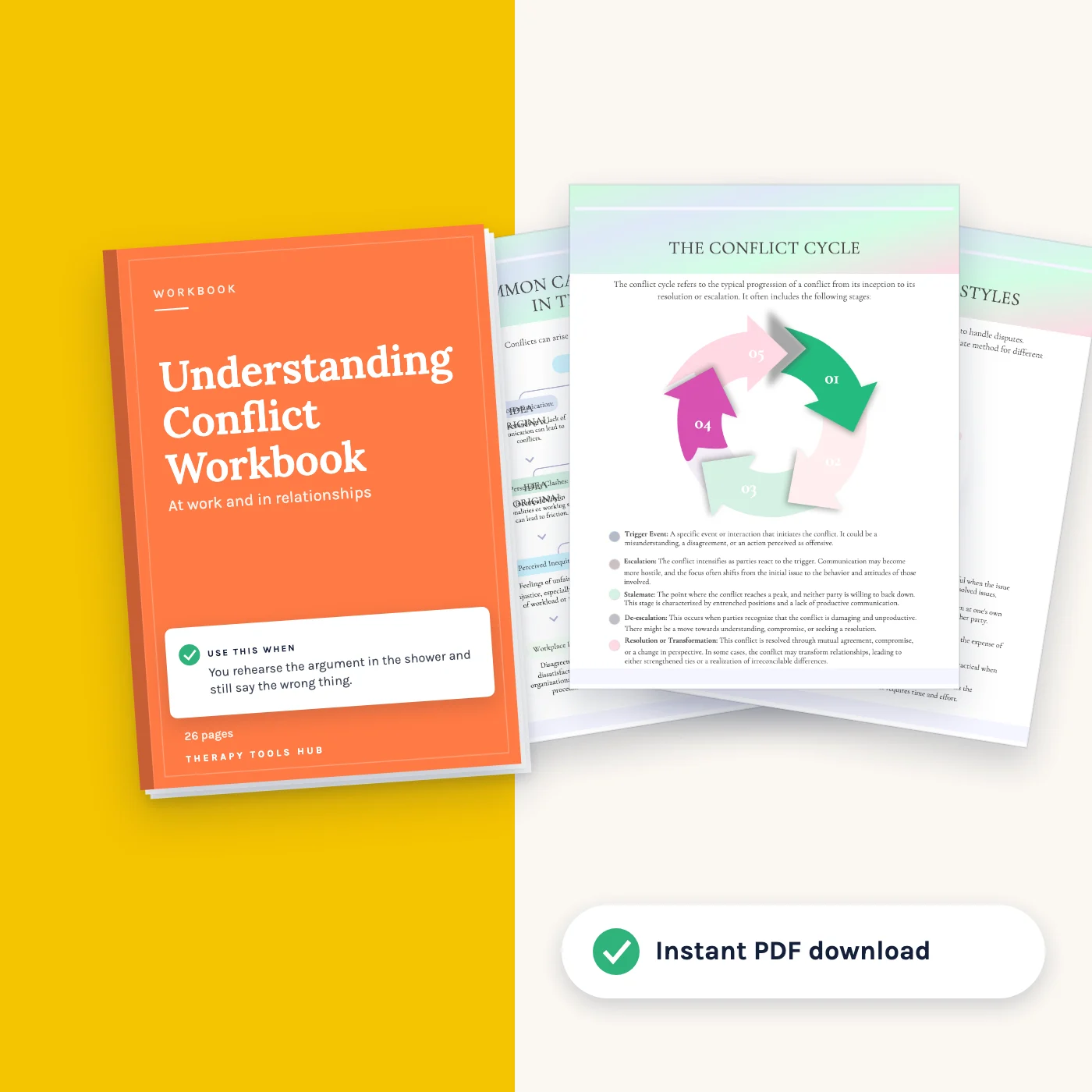
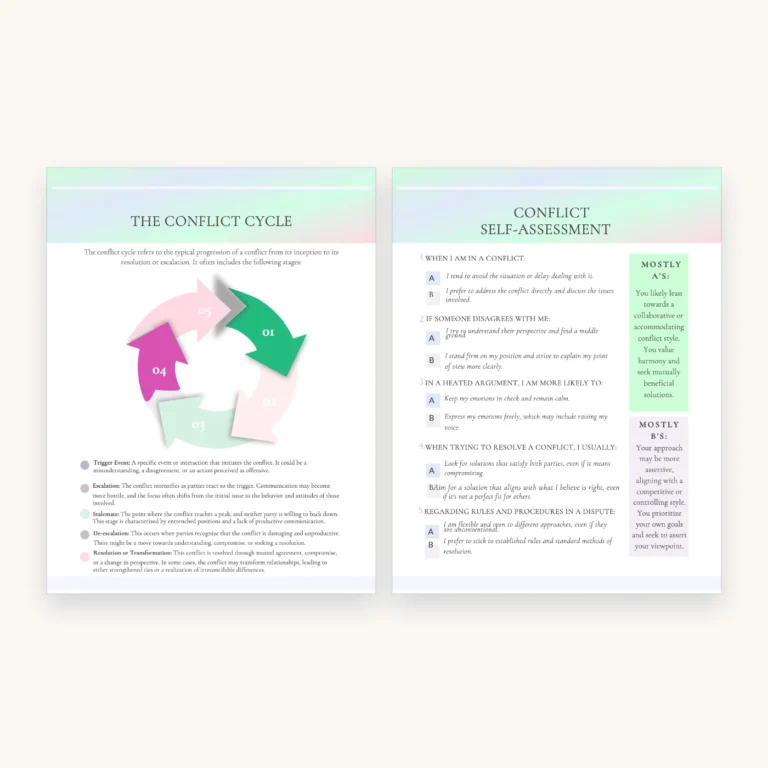
This 26-page workbook covers conflict at work and at home. It starts with a self-assessment of your conflict style and the constructive and destructive behaviours you fall into, then teaches the communication moves which change the outcome: soft start-ups, active listening, open-ended questions and reading non-verbal cues. A daily interaction log turns the theory into a fortnight of practice.
Inside this workbook
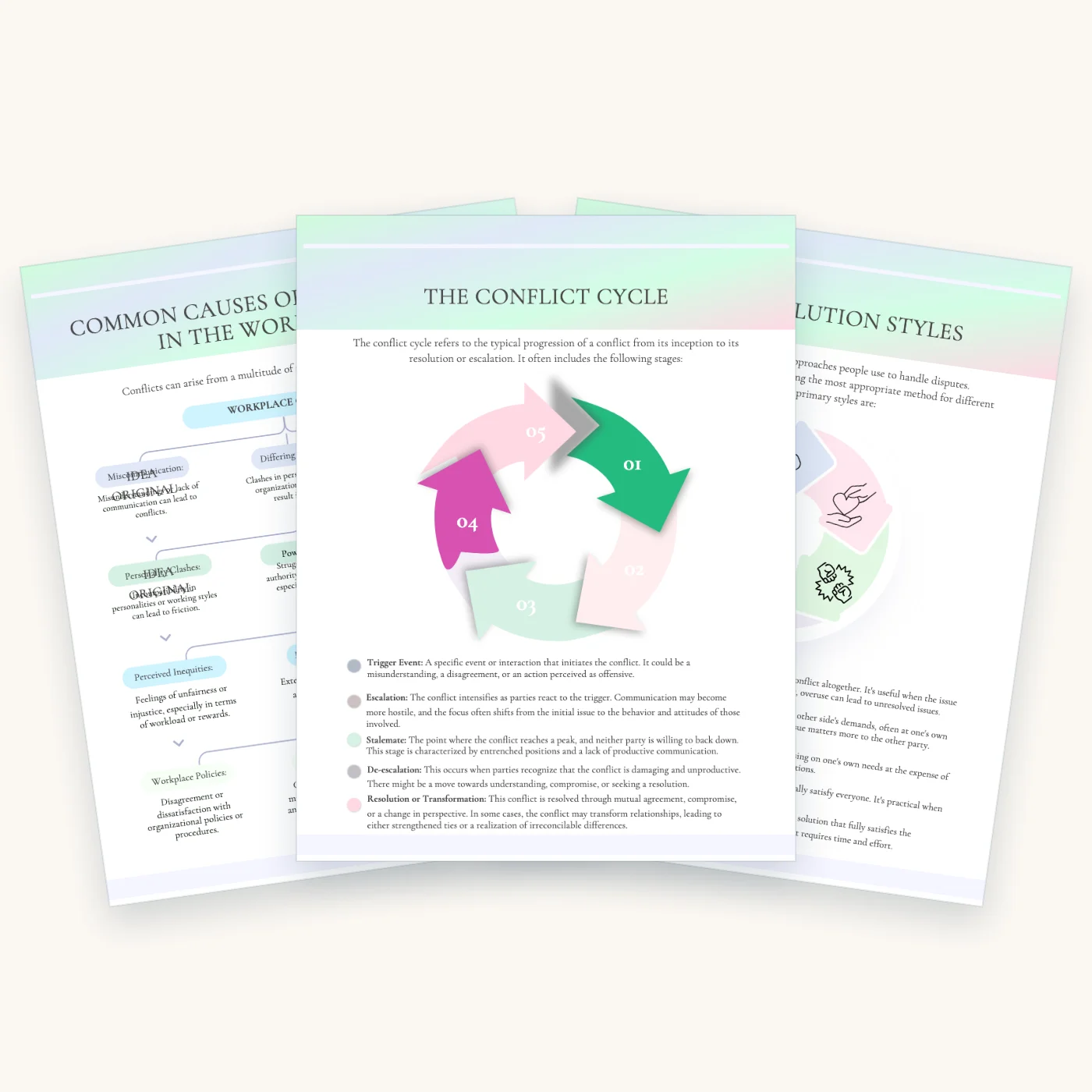
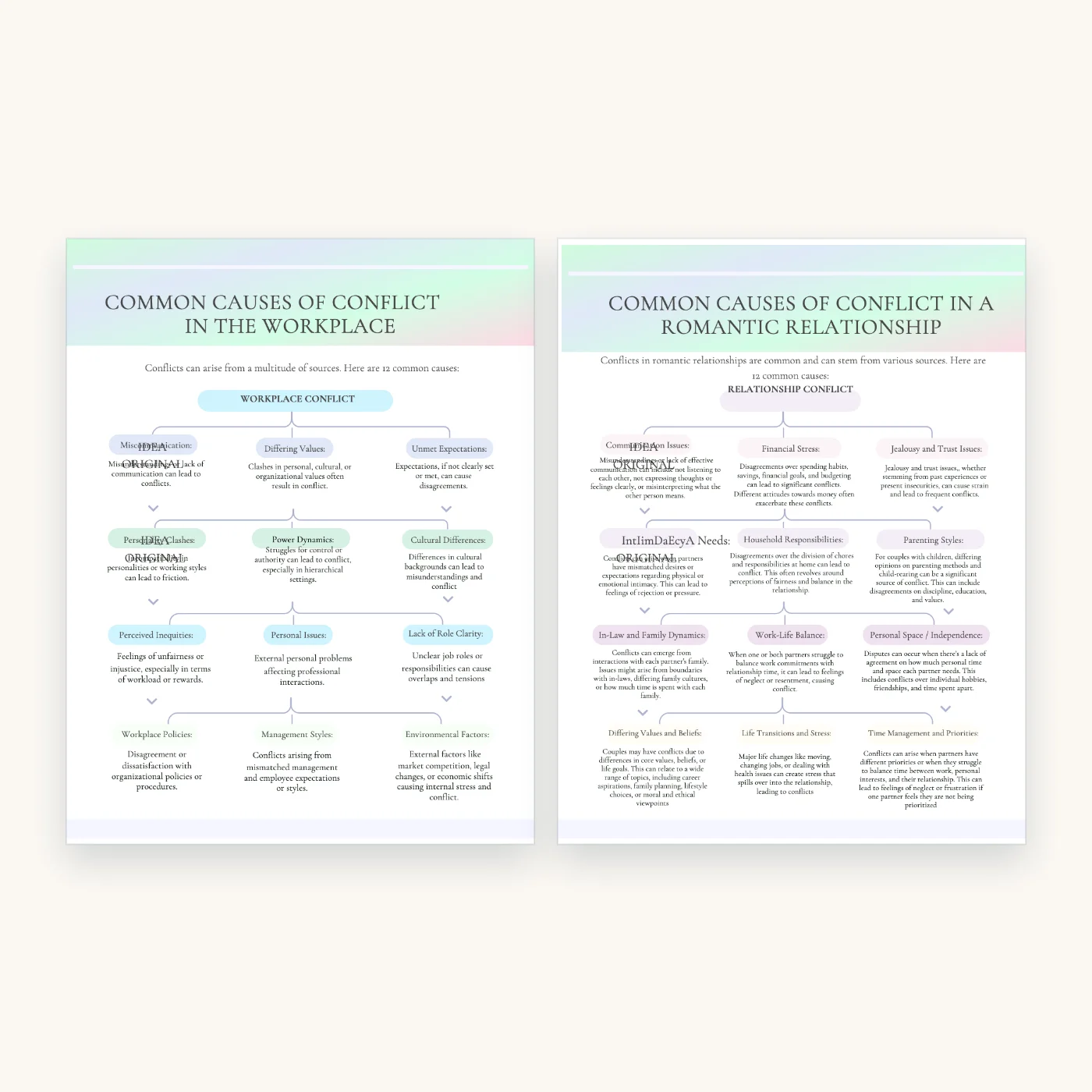
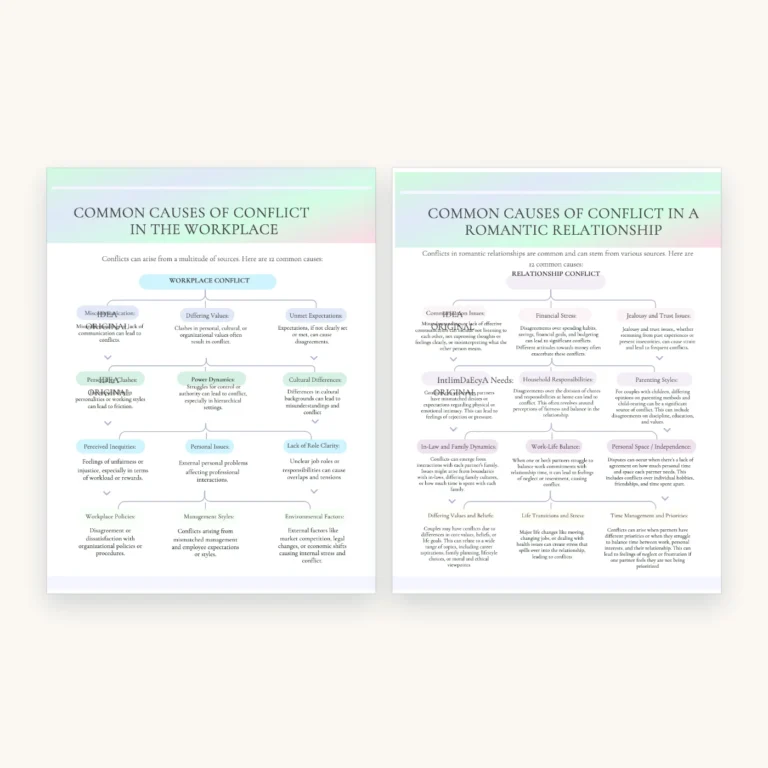
- Understanding conflict and its common causes at work
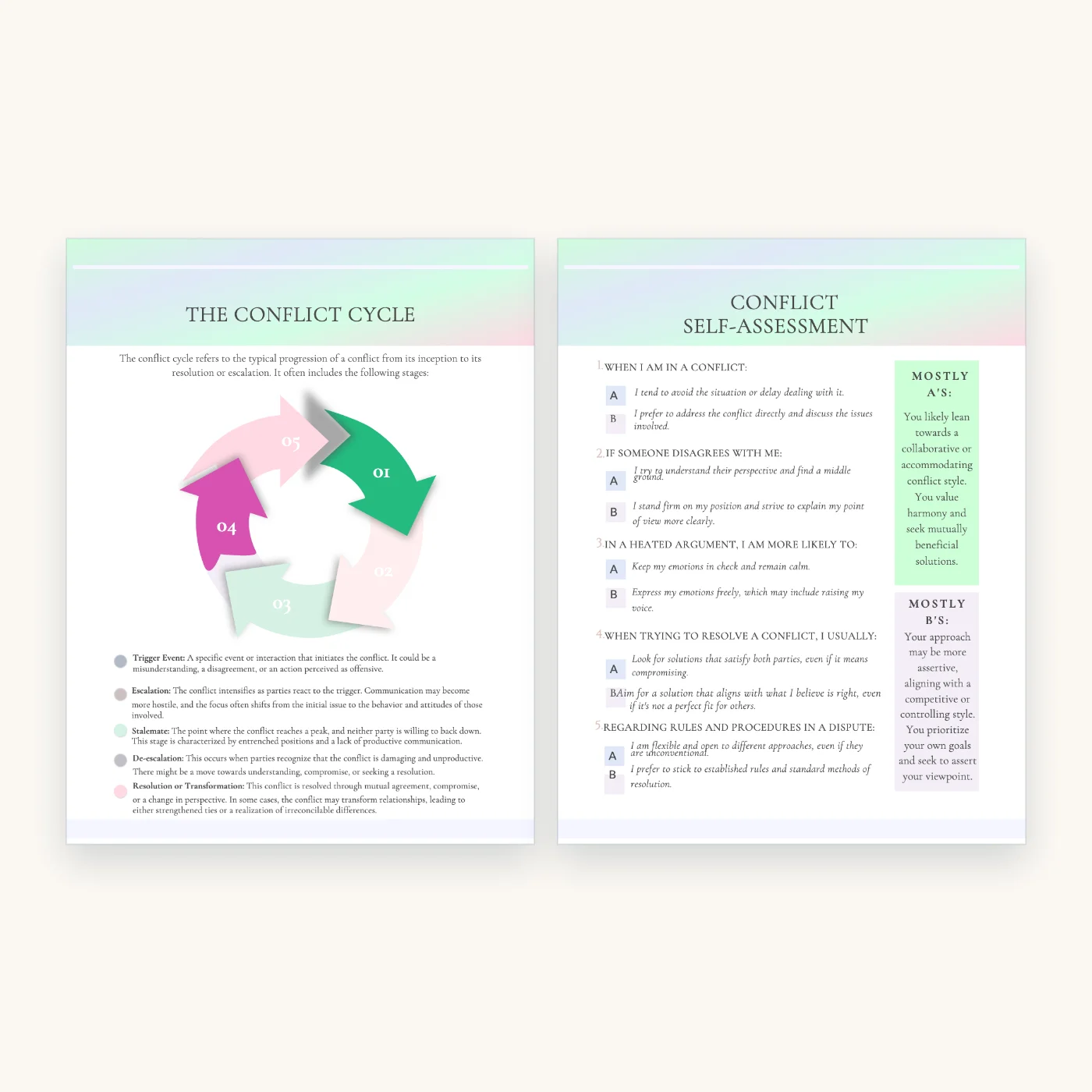
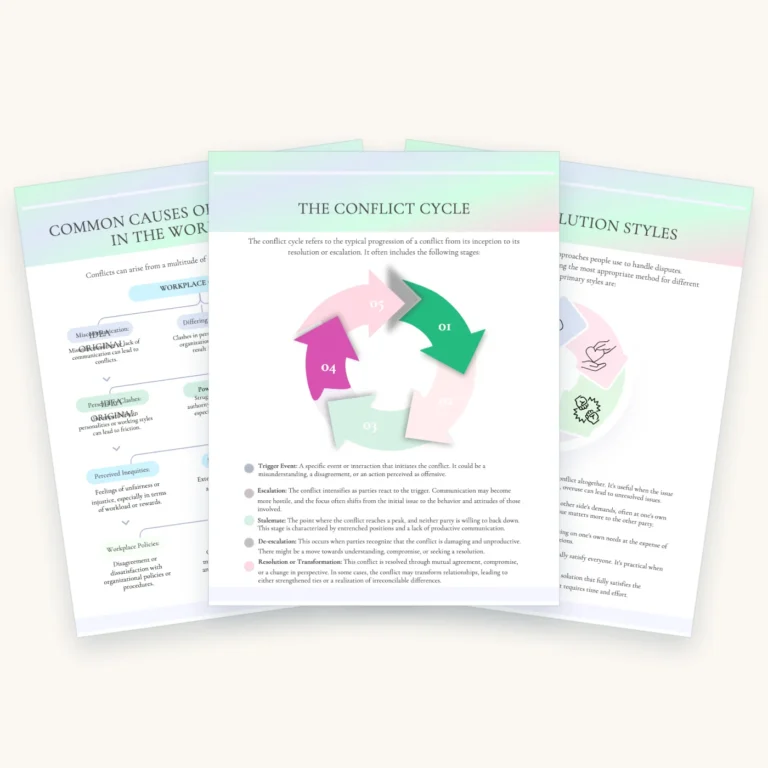
- The conflict cycle
- Conflict self-assessment and conflict resolution styles
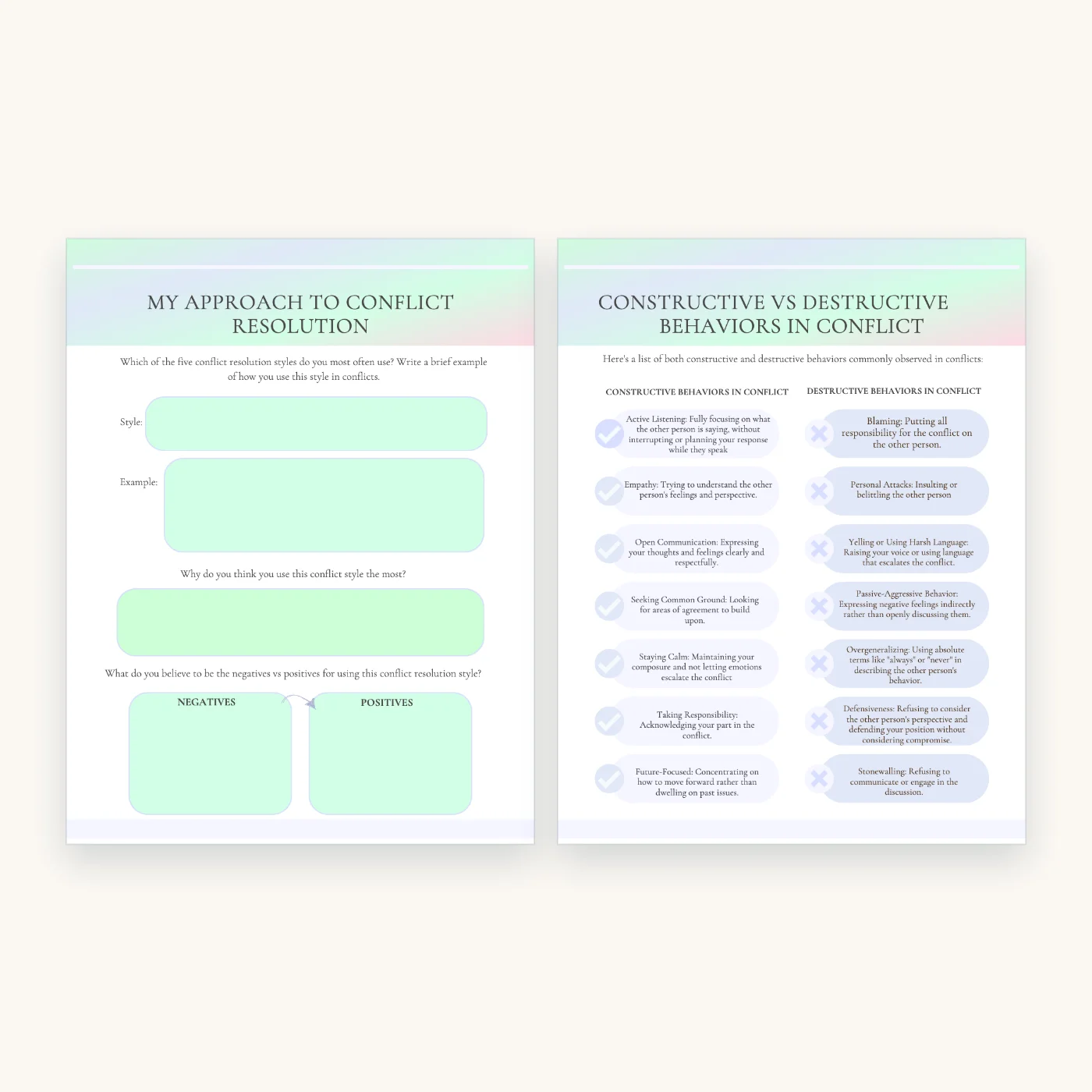
- Constructive versus destructive behaviours in conflict
- Emotional intelligence in conflict and the alternative perspective
- The difference between reacting and responding
- Daily interaction log
- Active listening and empathetic response
- Soft start-ups and non-verbal communication cues
- Initiating difficult conversations, managing emotions and staying focused
- Clear, assertive communication and open-ended questions
- Acknowledging a mistake
Conflict resolution worksheets for adults
Much conflict advice is written for children or for HR policies. These worksheets are for adults in real relationships: the partner who goes quiet, the manager who interrupts, the family group chat which flares up every Christmas. Each page takes one skill and turns it into a short exercise for ten quiet minutes.
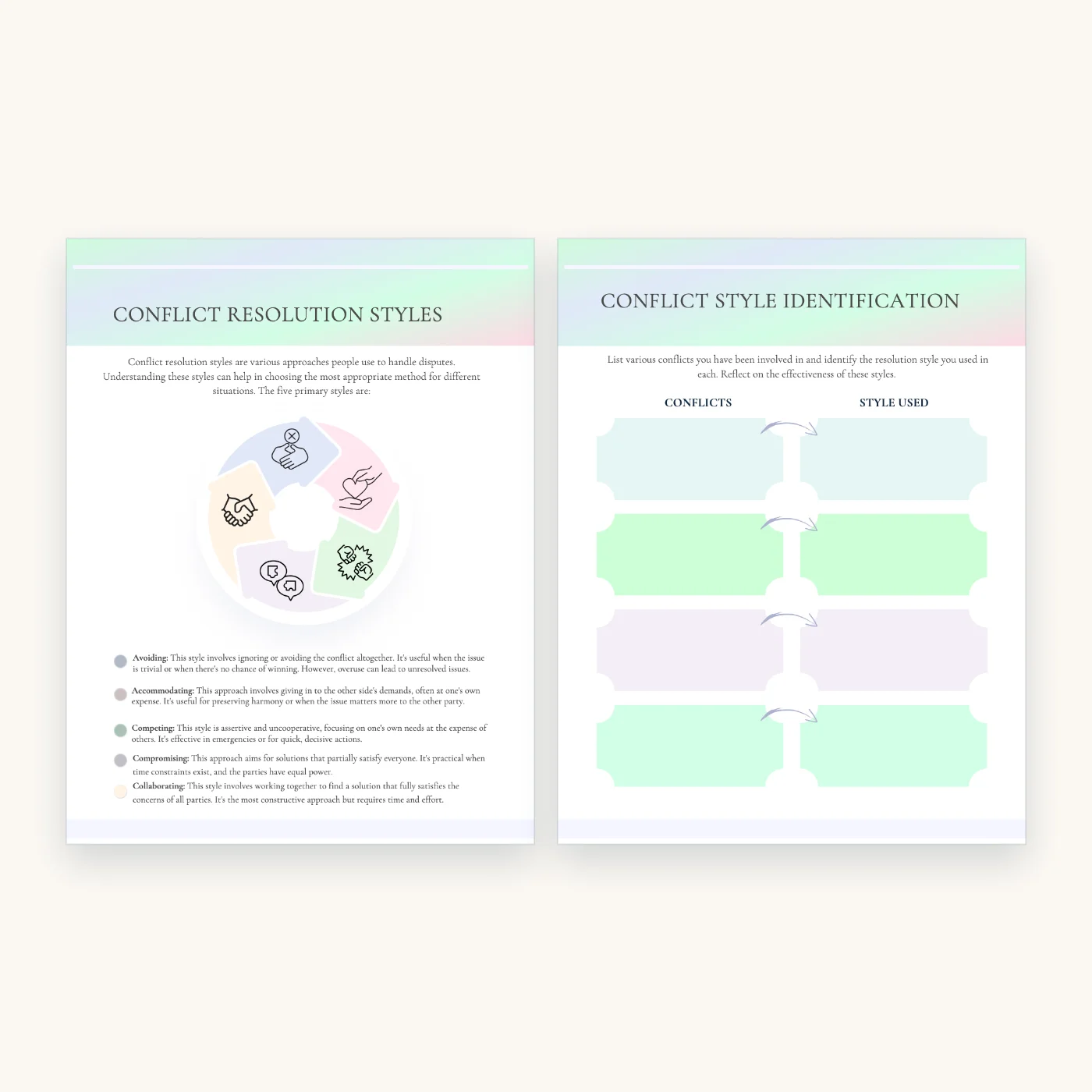
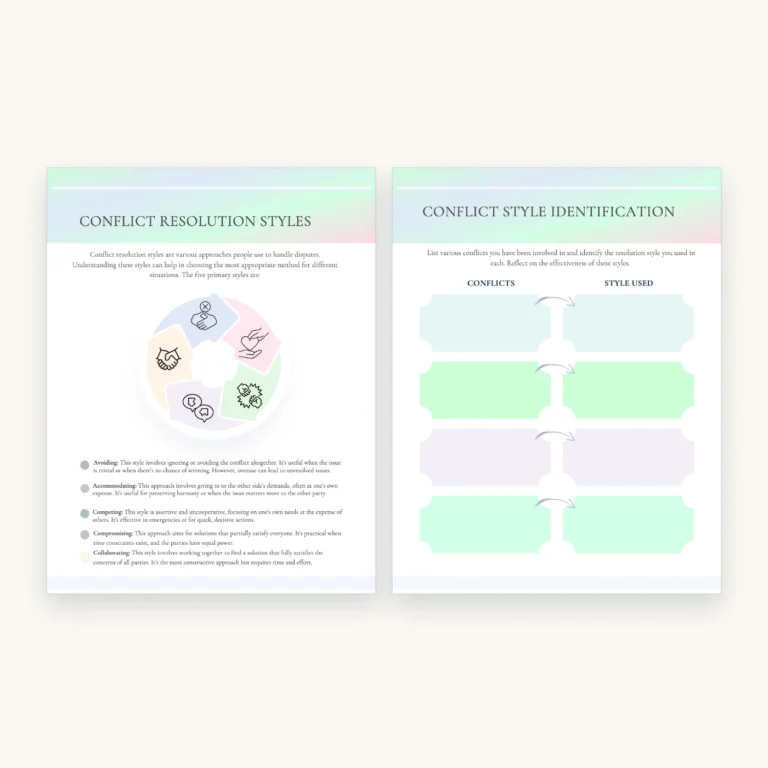
The five conflict resolution styles
The self-assessment shows which of the five classic conflict styles you lean on: avoiding, accommodating, competing, compromising or collaborating. Each style has its place. Trouble starts when one style runs everything, such as always giving in at home or always digging in at work. The style identification sheet helps you notice which one you reach for under pressure and pick a better fit next time.
Who this workbook is for
- Adults who avoid conflict until it explodes
- Couples who keep having the same argument
- Managers and team leads handling tension at work
- Therapists, counsellors, coaches and mediators who want ready-made handouts
How to use the worksheets
Take the conflict self-assessment first. Then choose one communication skill a week, such as soft start-ups, active listening or open-ended questions, and practise it on low-stakes conversations before the hard one. Fill in the daily interaction log for two weeks, noting each time you reacted and each time you responded. The gap between the two is where the change happens.
In sessions or groups, the alternative perspective sheet works well as a paired exercise. If the same roles keep repeating in your conflicts, the drama triangle worksheets help you see the pattern underneath. For couples, The Kind of Love That Lasts looks at what keeps a relationship steady after the early spark.
Questions about the conflict resolution worksheets
Do the worksheets cover workplace conflict?
Yes. They cover 12 common causes of conflict at work, plus the common causes in romantic and family relationships.
Are these worksheets suitable for therapy clients?
Yes. The workbook is written or reviewed by a BACP registered therapist, for use in sessions and for self-help at home.
What is a soft start-up?
A soft start-up opens a difficult conversation gently: you describe the situation and your feeling, then ask for what you need, without blame. Conversations tend to end the way they begin, so the first sentence matters. The workbook gives you a page to practise them.
What format is it?
A 26-page PDF. Print it at home or fill it in on screen. It downloads straight after payment.
PDF, 26 pages. Print at home or fill in on screen. Instant download after payment.
This workbook is an educational resource. It does not replace therapy, medical care or crisis support. If you feel unsafe, contact your GP, NHS 111 or your local emergency services.



Reviews
There are no reviews yet.