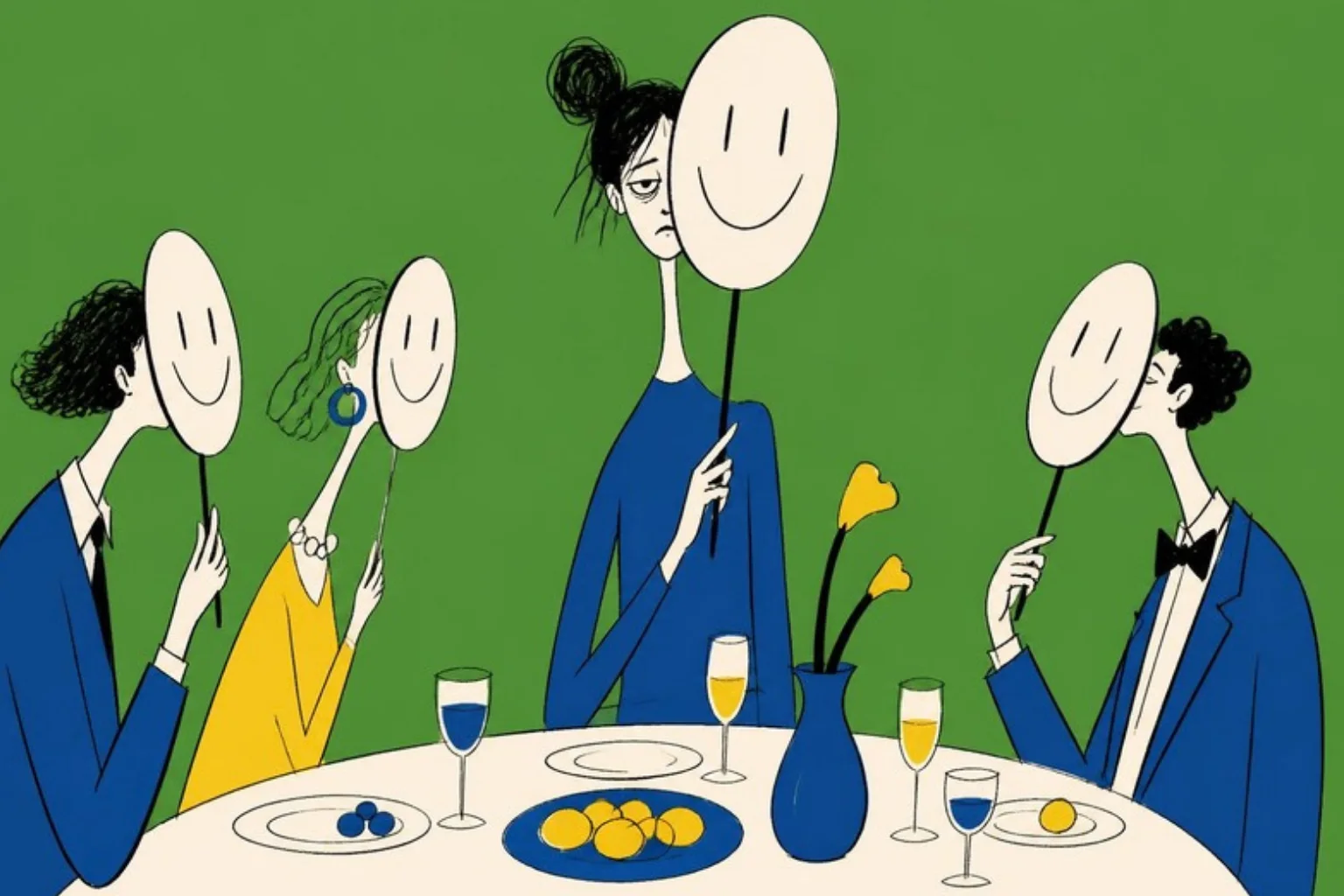
Dinner with your partner’s friends. Someone makes a joke you find cruel, and you laugh. Someone praises a film you hated, and you nod. You ask good questions all evening and answer none of them honestly. In the car home, your partner says “they loved you”, and you feel a strange, heavy tiredness.
They loved someone. You are not sure it was you.
- Most people learn their mask in childhood, to stay safe, wanted or out of trouble.
- The same mask keeps rejection away and keeps real closeness away too.
- One true sentence a day, said to someone safe-enough, starts to change it.
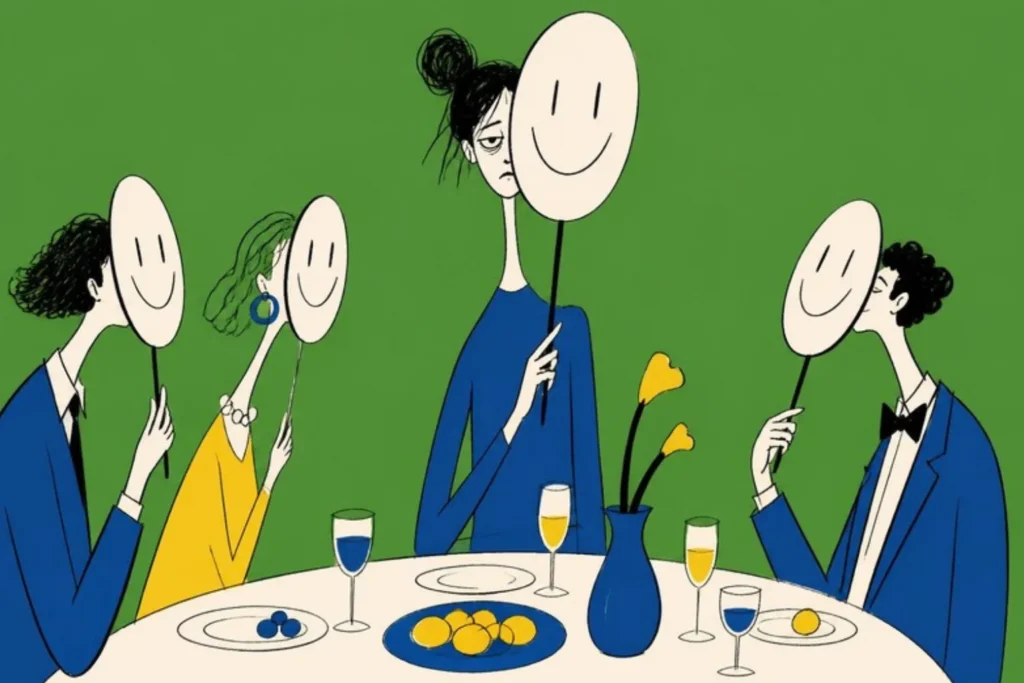
Where the mask came from
Most people learned their mask in the family they grew up in. If your father’s mood decided the evening, you learned to read the room before you entered it. If your mother needed you to be her good child, you learned to have no problems. If cleverness earned the only warm attention in the house, you learned to perform.
The mask was intelligent. It kept you safe, wanted or out of trouble. The story you built around it was simple: if they see the real me, they will leave. You have told yourself this story so many times it now feels like a fact.
What the mask costs now
A mask protects you from rejection, and it also protects you from being loved. Praise lands on the performance, so it never reaches you. Partners fall for a version of you who never needs anything, and then feel confused when resentment leaks out years later.
There is a harder truth too. A mask held long enough becomes a quiet deception. If you pretend to want the holiday, the move or the sex, your partner makes decisions on false information. Taking off the mask is partly about your own freedom and partly about honesty with the people who chose you.
Which mask do you reach for? Pick your first reaction when someone you love is upset with you.
Your mask is The Easy One. You become whatever keeps the peace, and your own wants go quiet before anyone asks. The cost: people know your usefulness and not your inner life. Practise this sentence: “Give me a minute. I want to work out what I think first.”
Your mask is The Achiever. You protect yourself with competence and with being right. The cost: the other person feels argued with when they wanted to feel heard. Practise: “Before I explain, tell me what it was like for you.”
Your mask is The Joker. Humour moves everyone away from the feeling, including you. The cost: hard conversations never finish, so they keep coming back. Practise: “I make jokes when I’m uncomfortable. I’ll stay with this one.”
Your mask is The Rock. You stay needless so nobody has to carry you. The cost: the people closest to you feel shut out of your life. Practise: “I’m not fine, actually. I don’t need fixing, I want you to know.”
Two beliefs worth turning over
Being myself means saying everything I think.
Tap to turn
Being myself means saying everything I think.
Being yourself means your words match your inner life. Discretion and honesty sit together comfortably.
If I drop the mask, people will leave.
Tap to turn
If I drop the mask, people will leave.
Some will. The people who stay will finally know who they are staying with.
One true sentence a day
For the next seven days, say one true sentence a day to someone safe-enough. Keep it small and specific:
- “I didn’t enjoy the film, actually. I found it slow.”
- “I’m tired tonight and I’d rather stay in.”
- “I laughed earlier, but the joke bothered me.”
Each evening, write down what you said, what your body did before you said it, and what happened next. Most people find the feared reaction rarely arrives. When it does, note who reacted badly. Your list becomes evidence about who has earned more of the real you. If silence from a partner sets off panic, read why an unanswered text feels like rejection next.
When the mask hides something more serious
If you wear a mask because the person at home frightens you, this is about safety first. Contact the National Domestic Abuse Helpline (0808 2000 247) before practising honesty with that person. If you often feel detached from yourself, as if watching your life from outside, or if you no longer know what you feel at all, speak to your GP or a therapist.
Downloads for this

Attachment and Abandonment Workbook: 70+ Exercises

Core Values and Beliefs Worksheets: 31-Page Toolkit
The worksheet for this
Shame Spiral Workbook: A Reflection Journal
Most masks are built to hide shame. This journal walks you through where yours began, what it protects, and how to be known at a pace your body accepts.
Questions people ask
Why do I wear a mask in relationships?
Most people learn a mask in childhood to stay safe, wanted or out of trouble. As adults, the same protection keeps rejection away and keeps real closeness away too.
Is people pleasing a trauma response?
People pleasing often begins as a survival strategy in families where someone’s mood or approval felt dangerous to lose. A therapist helps you understand your own history rather than label it.
How do I start being myself with my partner?
Start with one small true sentence a day, notice what your body does before you say it, and record how people respond. Build honesty gradually with people who have shown they handle it well.
- Jung, C. G. (1953). Two Essays on Analytical Psychology, on the persona. Collected Works, Volume 7. Princeton University Press.
- Winnicott, D. W. (1960). Ego distortion in terms of true and false self. In The Maturational Processes and the Facilitating Environment (1965). Hogarth Press.
More on this topic: relationship and attachment workbooks.