New: Now, Mapped. 60 hard everyday moments, one next step each. See inside

Shame Workbook: Shame Spiral Worksheets and Reflection Journal

One small mistake and you want to disappear for a week. This shame workbook shows you how a shame spiral builds, then gives you structured exercises and prompts to interrupt it and record your progress.

Use this when

One small mistake and you want to disappear for a week.

£5.99

About this download

Interrupt the spiral before it takes the evening

One small mistake at work and you want to disappear for a week. The thought replays on the drive home, at dinner, and again at 2am.

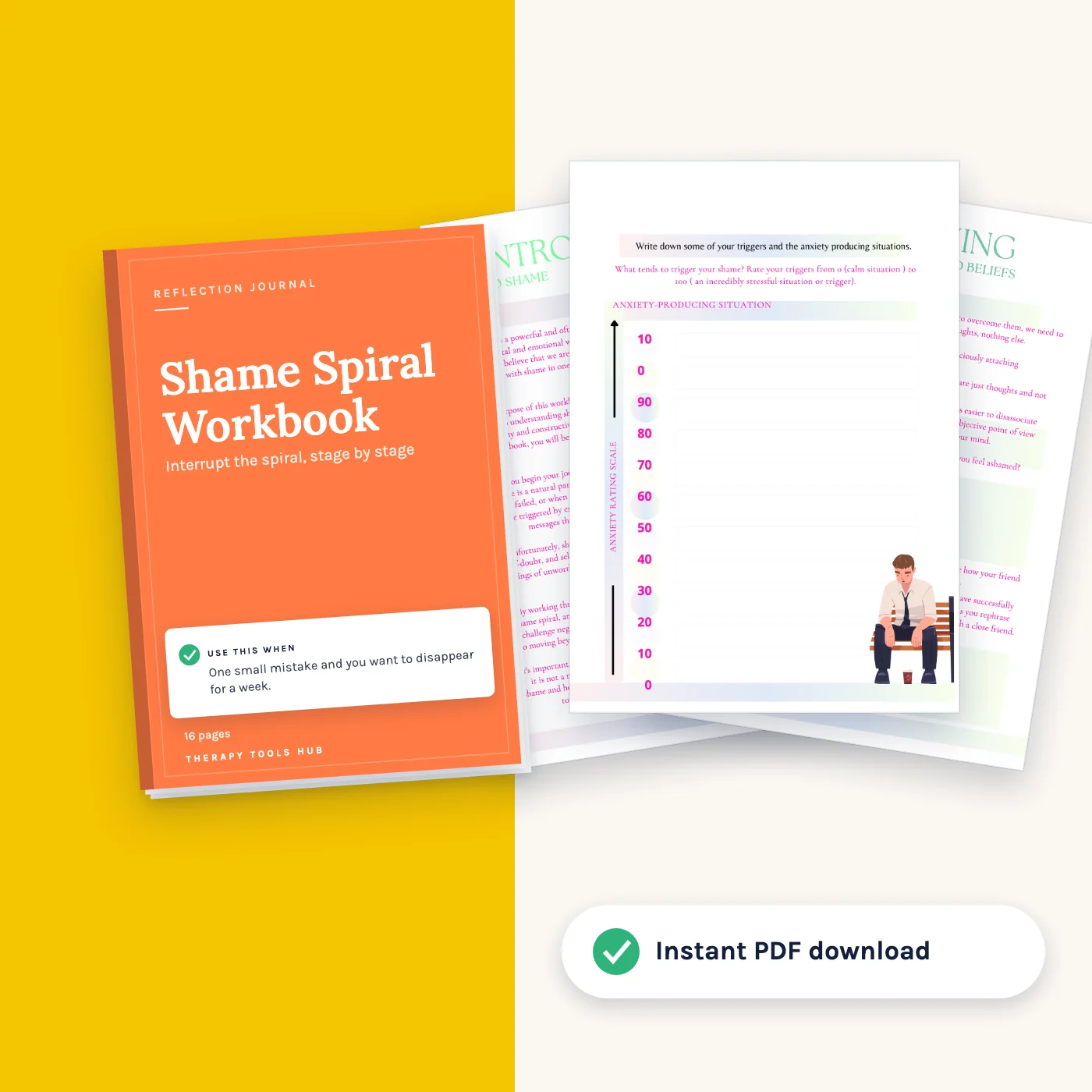
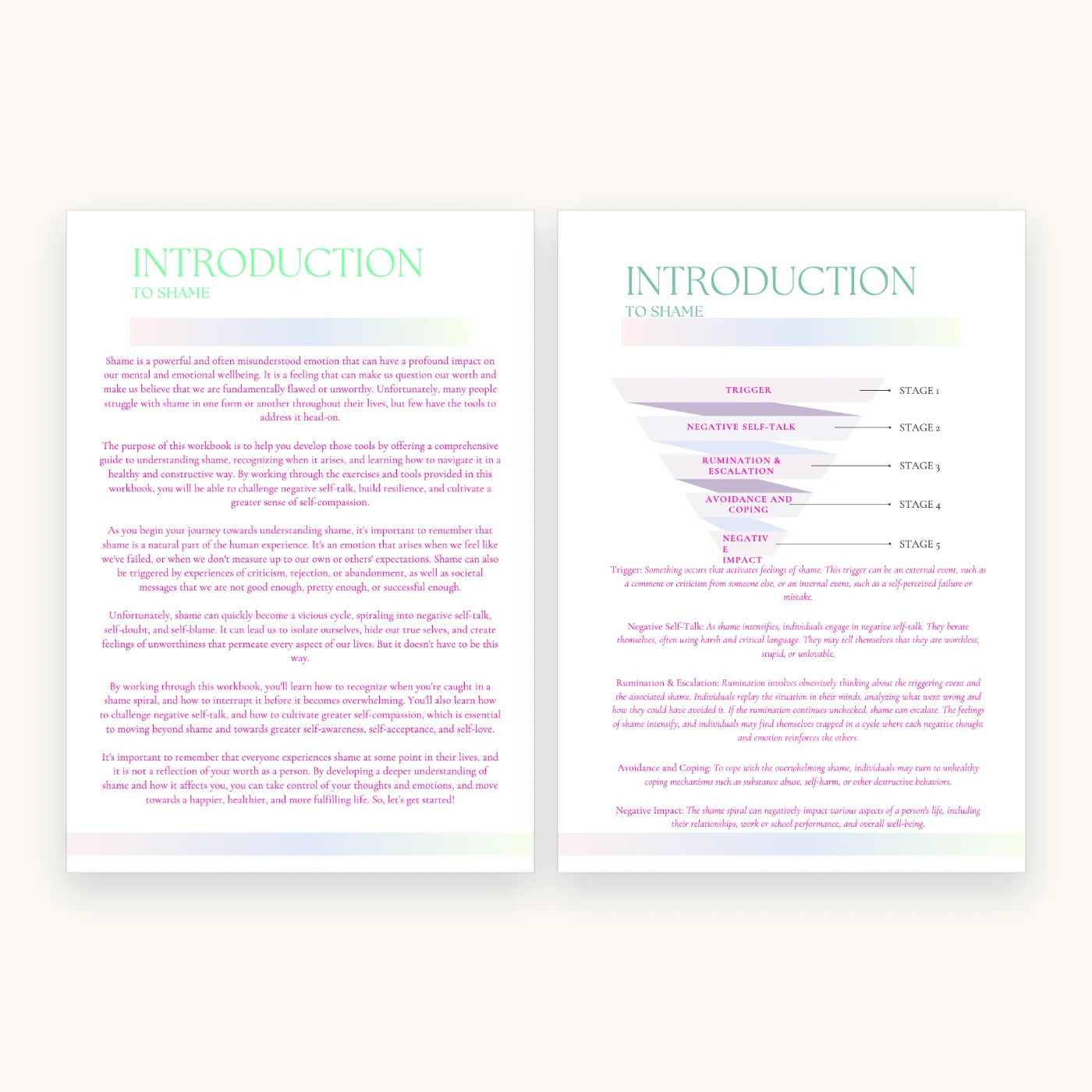
This 16-page reflection journal names the stages of a shame spiral, from trigger to negative self-talk to withdrawal, then gives you a page for each stage. You map your triggers, the people who set the spiral off, the thoughts you ruminate on and how your body reacts. It ends with an action plan and a self-compassion break you practise in under a minute.

Inside this journal

  • Introduction to shame and the stages of a spiral
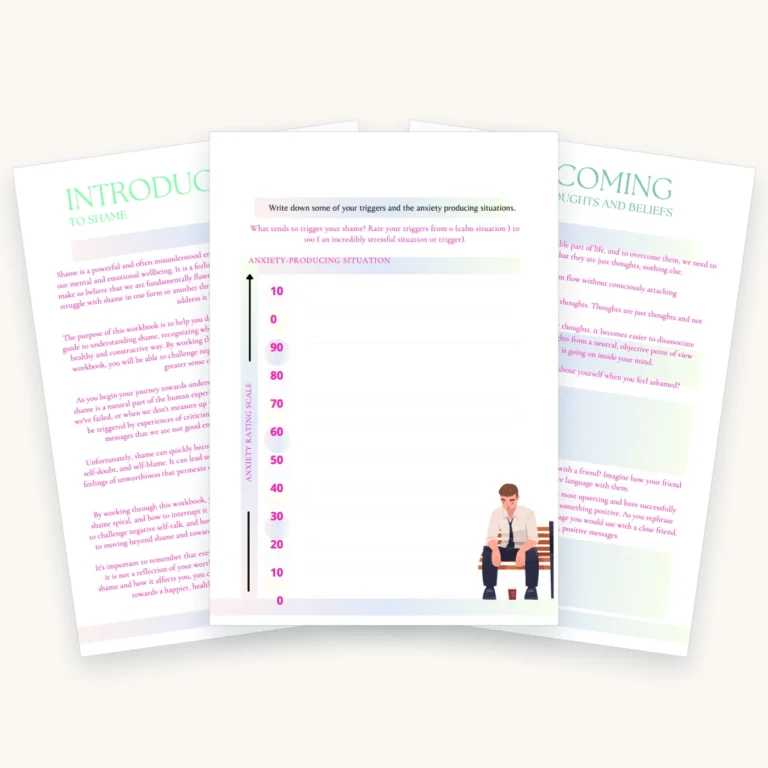
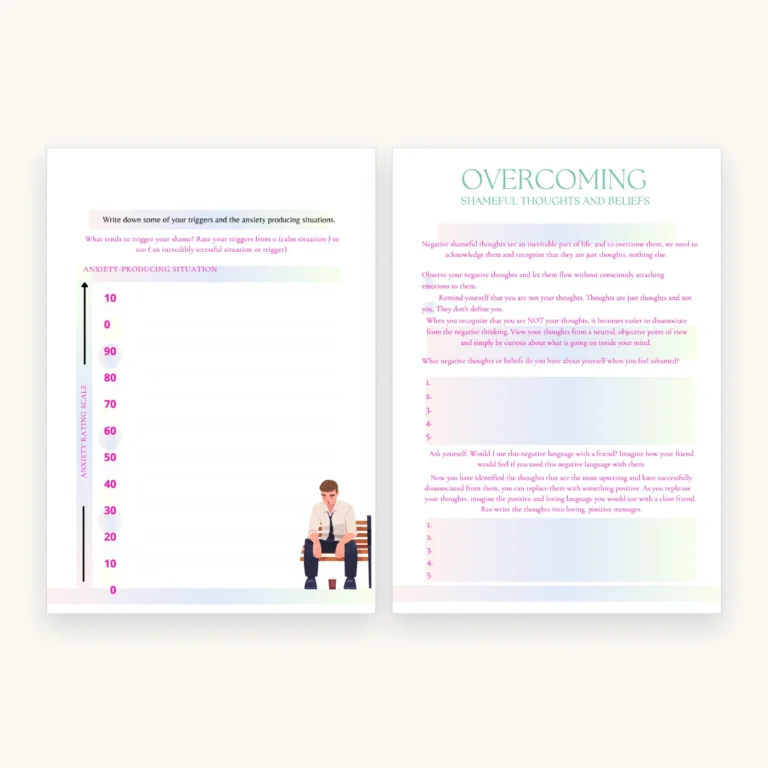
  • Your triggers
  • Overcoming shameful thoughts and beliefs
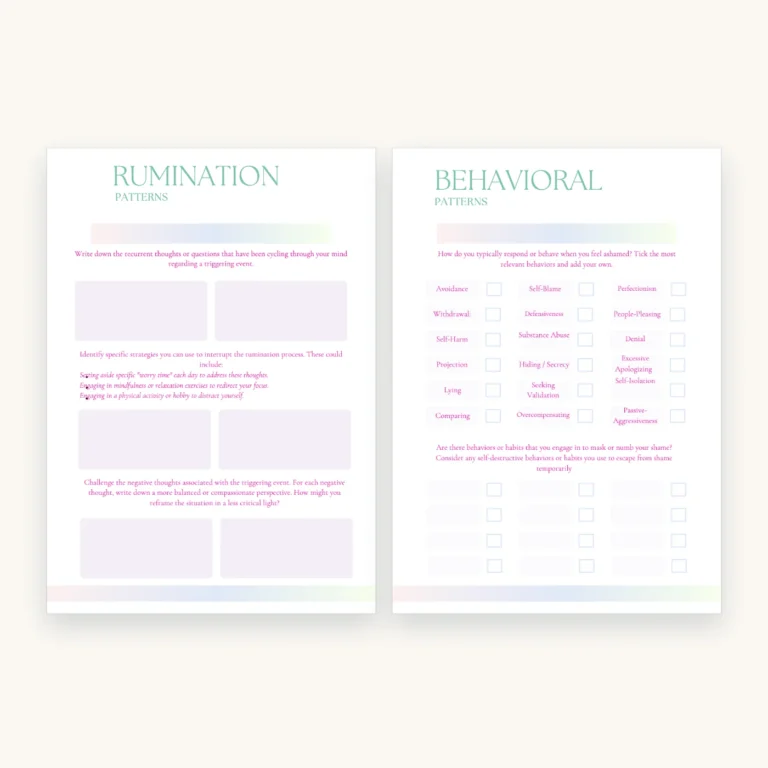
  • Rumination patterns and behavioural patterns
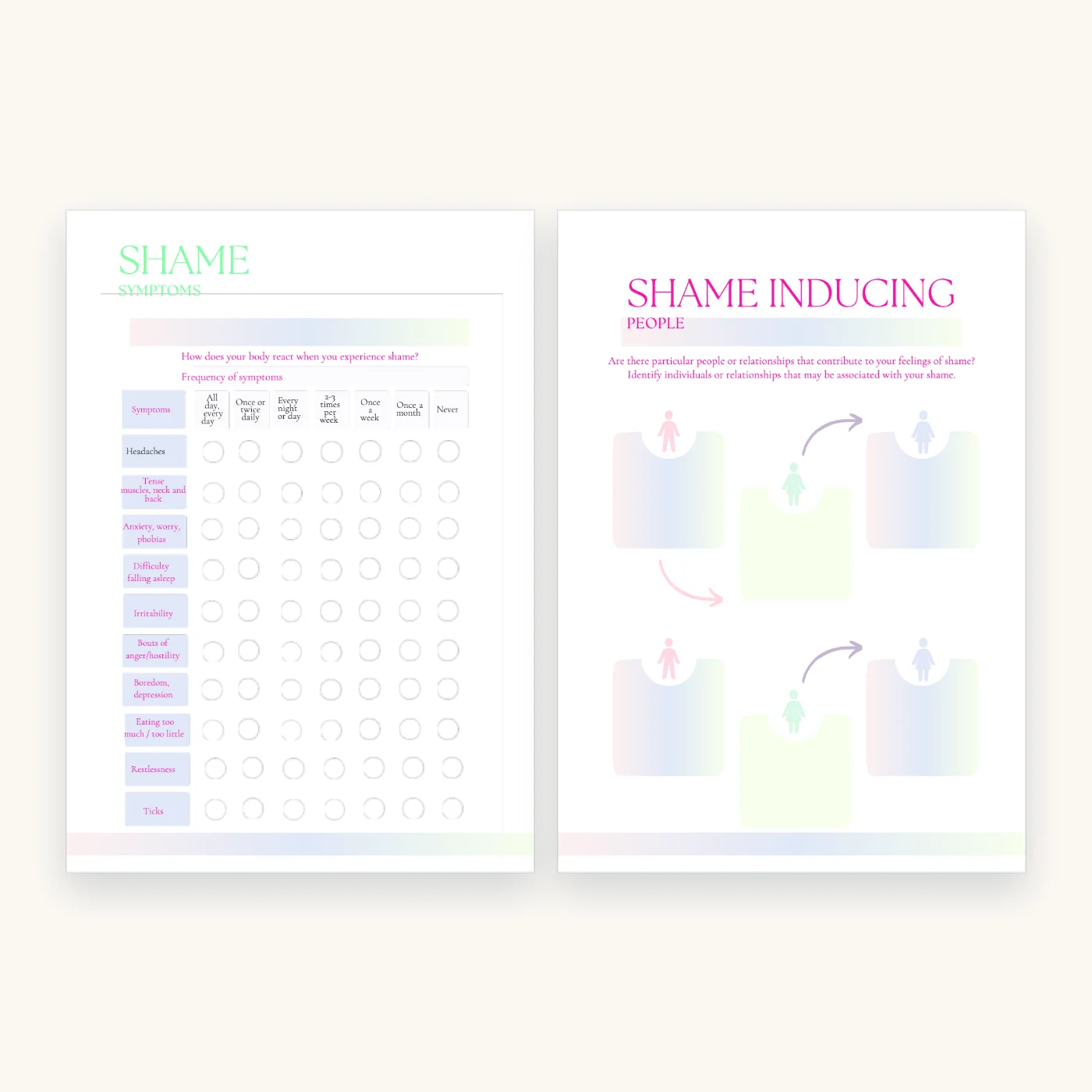
  • Shame symptoms in the body
  • Shame-inducing people and the impact on relationships
  • Self-compassion break
  • Support network
  • Action plan for preventing shame spiralling
  • Shame spiral visualisation
  • Reflective journal prompts

How shame worksheets interrupt the spiral

Your manager points out a typo in the report. By the evening you have decided you are bad at your job, and by midnight you are replaying a mistake from ten years ago. Shame moves fast from one event to a verdict about who you are.

The journal breaks the spiral into stages, starting with the trigger and moving to negative self-talk. Naming each stage on paper slows the process down. You see the gap between “I made an error” and “I am an error”, and you learn to stop there.

Who this healing shame workbook suits

  • People who withdraw for days after small mistakes
  • Anyone whose shame flares around particular people, such as a parent or a former partner
  • Clients in therapy who want homework between sessions
  • Readers who notice shame in the body first, as heat in the face or a sinking stomach

Using the 16 pages

Read the introduction to shame first. Then list your triggers and the situations which set off anxiety. Over the next week, write the recurring thoughts on the rumination page each time the spiral starts, and note what you did next on the behavioural patterns page. The shame symptoms page tracks how often your body reacts, and where.

Once you see the pattern, fill in your support network and the action plan for preventing shame spiralling. Practise the self-compassion break daily, even on calm days, so it comes easily during a hard one. If your shame links back to old trauma, the trauma survivor’s workbook covers core wounds and inner child work.

Questions about the shame workbook

What format is it?

A 16-page PDF. Print it at home or fill it in on screen. It downloads straight after payment.

What is a shame spiral?

A shame spiral starts with a trigger, moves to negative self-talk and often ends in withdrawal from people. The workbook gives you a page for each stage.

How long does the self-compassion break take?

Under a minute. Use it in the moment, then return to the journal pages later in the day.

Is it suitable for use with clients?

It is written or reviewed by a BACP registered therapist for use in sessions and for self-help at home.

PDF, 16 pages. Print at home or fill in on screen. Instant download after payment.

This workbook is an educational resource. It does not replace therapy, medical care or crisis support. If you feel unsafe, contact your GP, NHS 111 or your local emergency services.

See the pages before you buy

Real pages from the file you receive. Tap a card for what is on them.

Shame Spiral Workbook, inside pages 2 and 3

Pages 2 and 3

Tap to see what is on them

Tap to flip

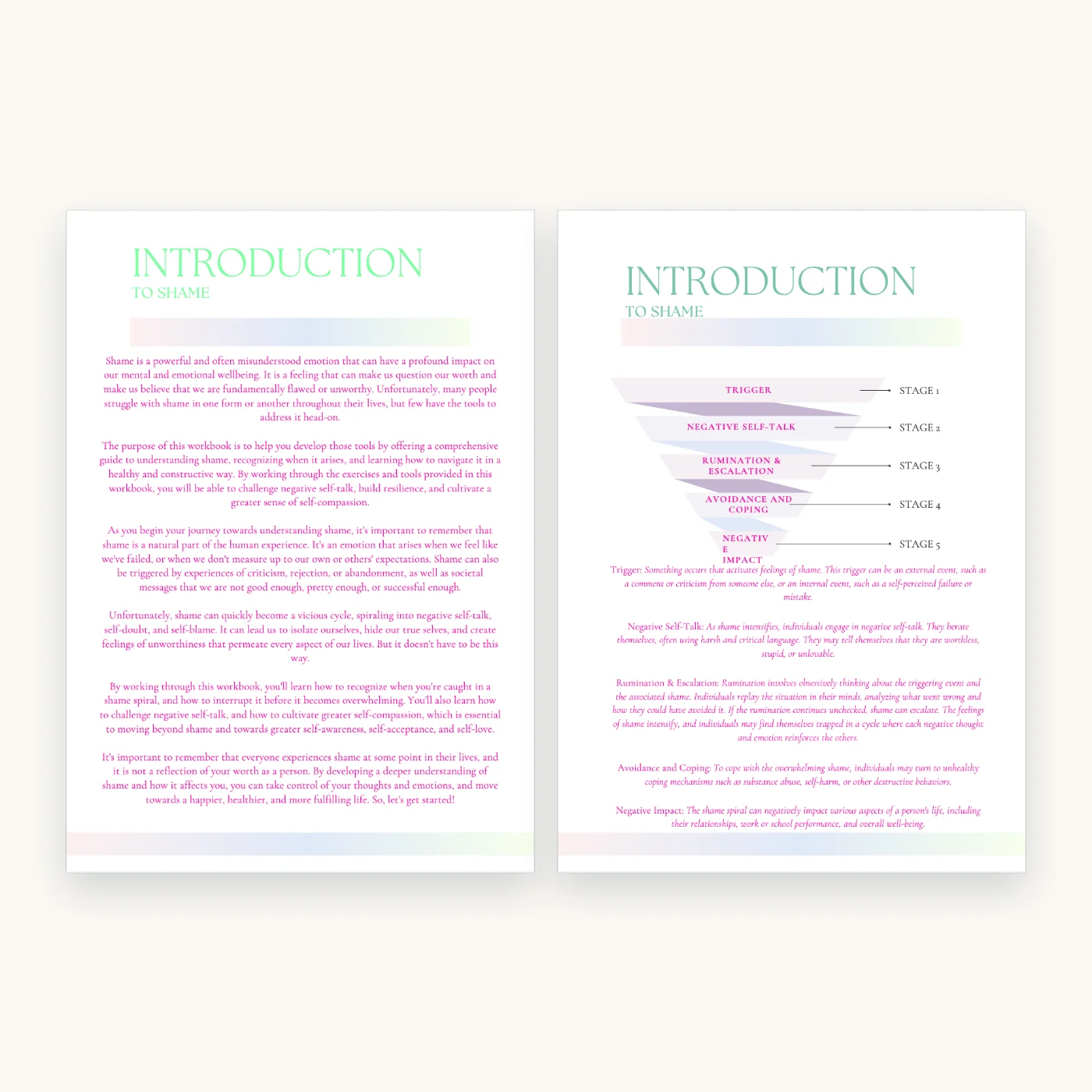
Pages 2 and 3

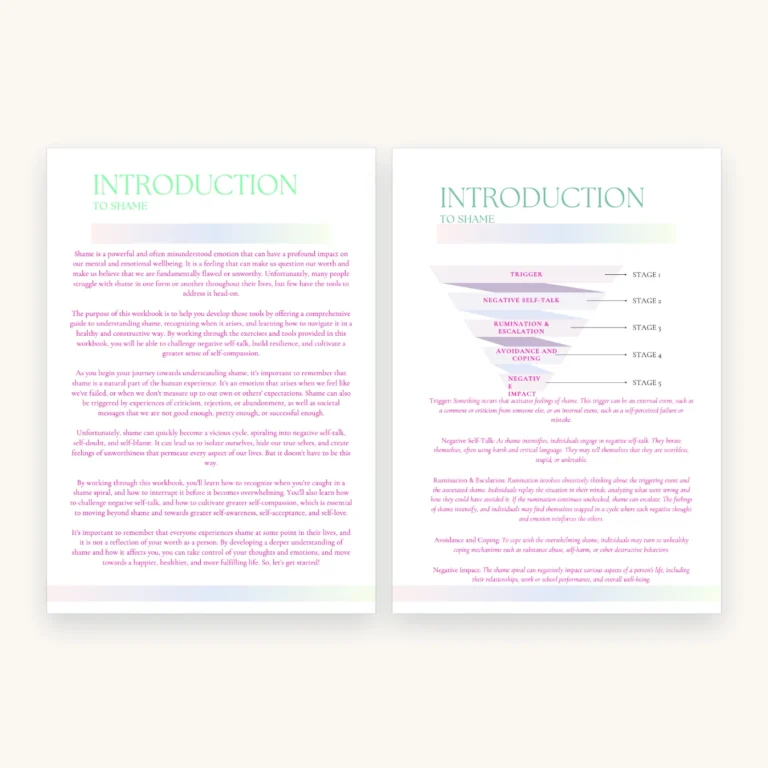
Page 2: INTRODUCTION TO SHAME Shame is a powerful and often misunderstood emot. Page 3: INTRODUCTION TO SHAME TRIGGER STAGE 1 NEGATIVE SELF-TALK STAGE 2.

Shame Spiral Workbook, pages 2, 4, 5 fanned out

Pages 2, 4 and 5

Tap to see what is on them

Tap to flip

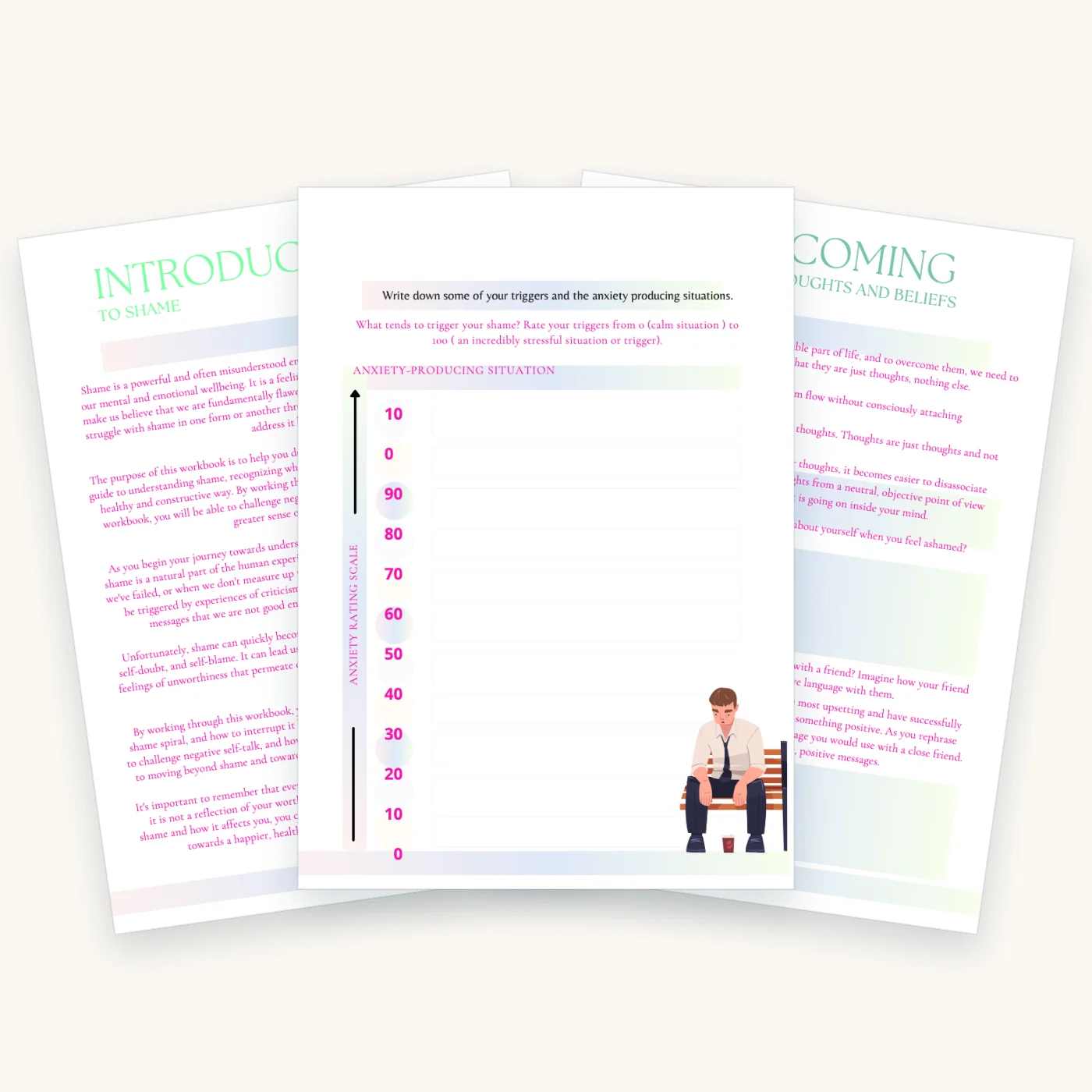
Pages 2, 4 and 5

Page 2: INTRODUCTION TO SHAME Shame is a powerful and often misunderstood emot. Page 4: Write down some of your triggers and the anxiety producing situations.. Page 5: OVERCOMING SHAMEFUL THOUGHTS AND BELIEFS Negative shameful thoughts ar.

Shame Spiral Workbook, inside pages 4 and 5

Pages 4 and 5

Tap to see what is on them

Tap to flip

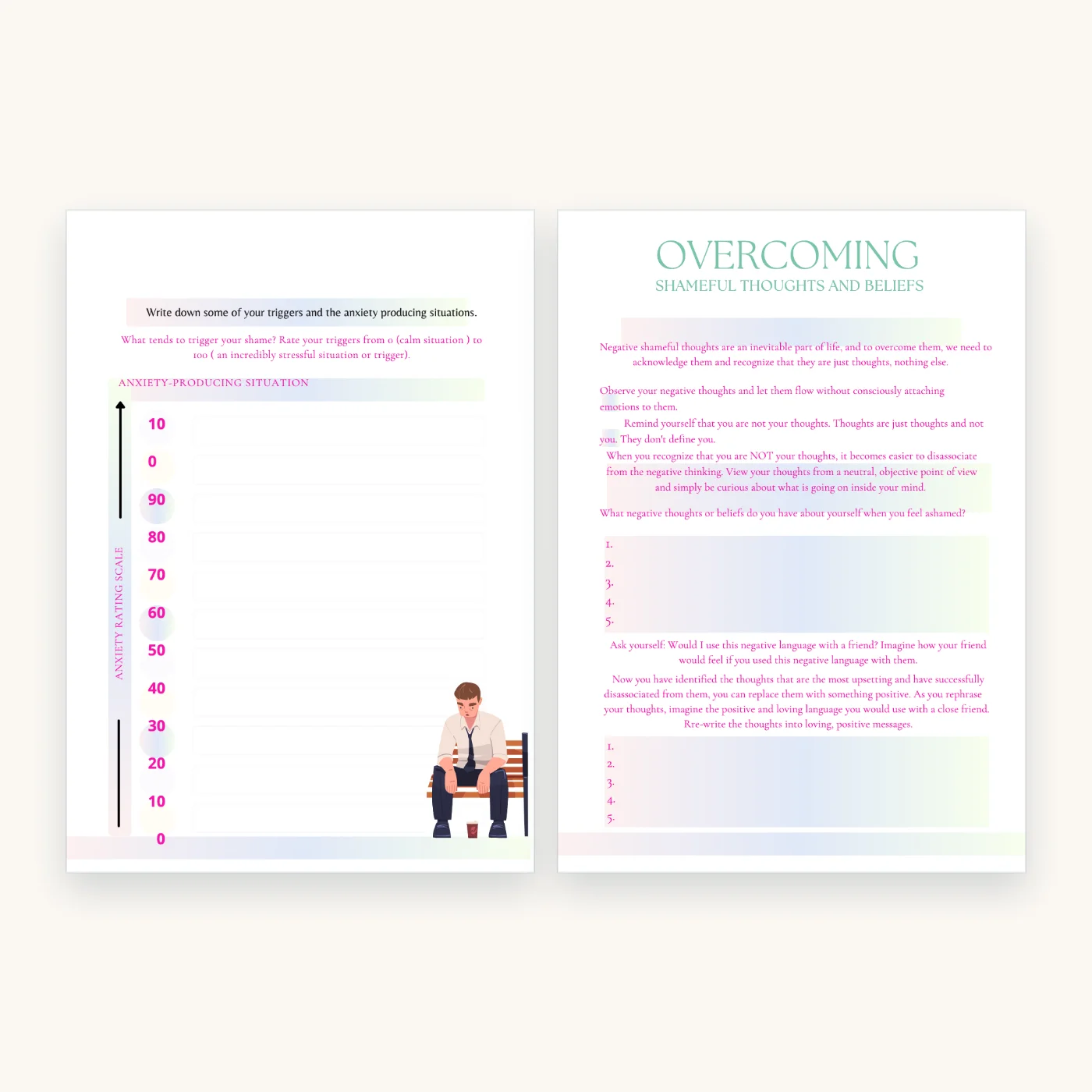
Pages 4 and 5

Page 4: Write down some of your triggers and the anxiety producing situations.. Page 5: OVERCOMING SHAMEFUL THOUGHTS AND BELIEFS Negative shameful thoughts ar.

Shame Spiral Workbook, inside pages 6 and 7

Pages 6 and 7

Tap to see what is on them

Tap to flip

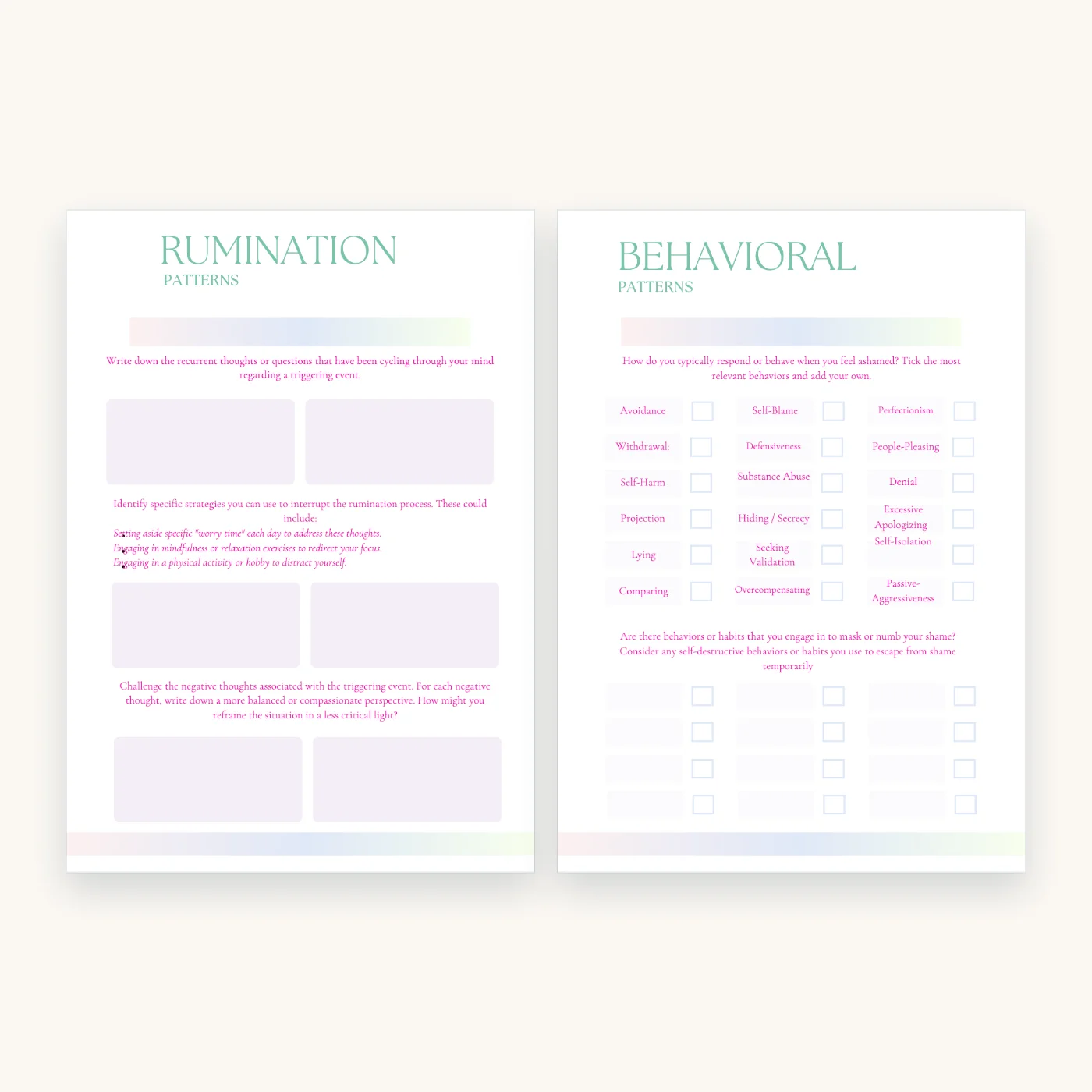
Pages 6 and 7

Page 6: RUMINATION PATTERNS Write down the recurrent thoughts or questions tha. Page 7: BEHAVIORAL PATTERNS How do you typically respond or behave when you fe.

Questions buyers ask

Does a worksheet change low self-esteem?

A worksheet helps you catch the belief under the feeling and test it against evidence, a core skill in CBT. Deep shame linked to trauma or abuse needs a therapist as well.

How often should I use the pages?

Short and regular sessions work best: ten to twenty minutes, several times a week.

What format are the workbooks?

PDF. You download them after payment and keep them.

How do I get the file after paying?

The download links appear on the order confirmation page and arrive by email once payment clears. No account is needed, and you keep the files.

When a worksheet is not enough

Some problems need another person in the room. Kita Tabachka, the BACP registered therapist behind this shop, works online with individuals and couples in the UK and abroad. The first consultation is free.

Description

Interrupt the spiral before it takes the evening

One small mistake at work and you want to disappear for a week. The thought replays on the drive home, at dinner, and again at 2am.

This 16-page reflection journal names the stages of a shame spiral, from trigger to negative self-talk to withdrawal, then gives you a page for each stage. You map your triggers, the people who set the spiral off, the thoughts you ruminate on and how your body reacts. It ends with an action plan and a self-compassion break you practise in under a minute.

Inside this journal

  • Introduction to shame and the stages of a spiral
  • Your triggers
  • Overcoming shameful thoughts and beliefs
  • Rumination patterns and behavioural patterns
  • Shame symptoms in the body
  • Shame-inducing people and the impact on relationships
  • Self-compassion break
  • Support network
  • Action plan for preventing shame spiralling
  • Shame spiral visualisation
  • Reflective journal prompts

How shame worksheets interrupt the spiral

Your manager points out a typo in the report. By the evening you have decided you are bad at your job, and by midnight you are replaying a mistake from ten years ago. Shame moves fast from one event to a verdict about who you are.

The journal breaks the spiral into stages, starting with the trigger and moving to negative self-talk. Naming each stage on paper slows the process down. You see the gap between “I made an error” and “I am an error”, and you learn to stop there.

Who this healing shame workbook suits

  • People who withdraw for days after small mistakes
  • Anyone whose shame flares around particular people, such as a parent or a former partner
  • Clients in therapy who want homework between sessions
  • Readers who notice shame in the body first, as heat in the face or a sinking stomach

Using the 16 pages

Read the introduction to shame first. Then list your triggers and the situations which set off anxiety. Over the next week, write the recurring thoughts on the rumination page each time the spiral starts, and note what you did next on the behavioural patterns page. The shame symptoms page tracks how often your body reacts, and where.

Once you see the pattern, fill in your support network and the action plan for preventing shame spiralling. Practise the self-compassion break daily, even on calm days, so it comes easily during a hard one. If your shame links back to old trauma, the trauma survivor’s workbook covers core wounds and inner child work.

Questions about the shame workbook

What format is it?

A 16-page PDF. Print it at home or fill it in on screen. It downloads straight after payment.

What is a shame spiral?

A shame spiral starts with a trigger, moves to negative self-talk and often ends in withdrawal from people. The workbook gives you a page for each stage.

How long does the self-compassion break take?

Under a minute. Use it in the moment, then return to the journal pages later in the day.

Is it suitable for use with clients?

It is written or reviewed by a BACP registered therapist for use in sessions and for self-help at home.

PDF, 16 pages. Print at home or fill in on screen. Instant download after payment.

This workbook is an educational resource. It does not replace therapy, medical care or crisis support. If you feel unsafe, contact your GP, NHS 111 or your local emergency services.

Reviews

There are no reviews yet.

Only logged in customers who have purchased this product may leave a review.

Kita Tabachka, BACP-registered therapistPrefer to talk it through?  Online therapy
Shame Workbook: Shame Spiral Worksheets and Reflection Journal£5.99Add to cart